BUCHAREST: An Iranian cleric and judge accused of corruption in Tehran and also of human rights violations by activists was found dead on Friday at a hotel in the Romanian capital Bucharest, police said.
Gholamreza Mansouri, who fled Iran last year, is among several judges accused of graft during a high-profile trial of a former senior judiciary official that began in Tehran on June 7.
Romanian police detained Mansouri earlier this month and a Bucharest court had been expected to rule next month on whether to extradite him.
Bucharest police said a hotel had found one of its guests dead in the lobby after he appeared to have fallen from a higher floor.
"It was established that the man was a 52-year-old foreign citizen under judicial control for crimes committed in another country," the police said in a statement, adding that an investigation into his death was underway.
Mansouri had been placed under a 30-day judicial control period and was being kept under surveillance. A July 10 deadline had been set for Tehran to file extradition documents.
Last week the Paris-based media freedom watchdog Reporters Without Borders (RSF) filed a complaint against Mansouri in Germany, where he was believed to have resided before travelling to Romania, accusing him of being responsible for the "arrest and torture" of at least 20 journalists in 2013.

Iranian judge accused of corruption found dead in Romanian hotel
Short Url
https://arab.news/rgqxn
Iranian judge accused of corruption found dead in Romanian hotel
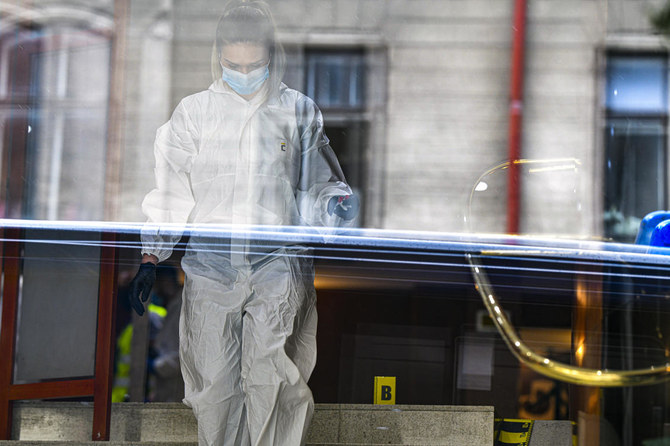
- Police said a hotel had found one of its guests dead in the lobby after he appeared to have fallen from a higher floor
- Authorities in Iran alleged Gholamreza Mansouri took about 500,000 euros ($560,000) in bribes
Mali, Burkina say restricting entry for US nationals in reciprocal move
ABIDJAN: Mali and Burkina Faso have announced travel restrictions on American nationals in a tit-for-tat move after the US included both African countries on a no-entry list.
In statements issued separately by both countries’ foreign ministries and seen Wednesday by AFP, they said they were imposing “equivalent measures” on US citizens, after President Donald Trump expanded a travel ban to nearly 40 countries this month, based solely on nationality.
That list included Syrian citizens, as well as Palestinian Authority passport holders, and nationals of some of Africa’s poorest countries including also Niger, Sierra Leone and South Sudan.
The White House said it was banning foreigners who “intend to threaten” Americans.
Burkina Faso’s foreign ministry said in the statement that it was applying “equivalent visa measures” on Americans, while Mali said it was, “with immediate effect,” applying “the same conditions and requirements on American nationals that the American authorities have imposed on Malian citizens entering the United States.”
It voiced its “regret” that the United States had made “such an important decision without the slightest prior consultation.”
The two sub-Saharan countries, both run by military juntas, are members of a confederation that also includes Niger.
Niger has not officially announced any counter-measures to the US travel ban, but the country’s news agency, citing a diplomatic source, said last week that such measures had been decided.
In his December 17 announcement, Trump also imposed partial travel restrictions on citizens of other African countries including the most populous, Nigeria, as well as Ivory Coast and Senegal, which qualified for the football World Cup to be played next year in the United States as well as Canada and Mexico.
In statements issued separately by both countries’ foreign ministries and seen Wednesday by AFP, they said they were imposing “equivalent measures” on US citizens, after President Donald Trump expanded a travel ban to nearly 40 countries this month, based solely on nationality.
That list included Syrian citizens, as well as Palestinian Authority passport holders, and nationals of some of Africa’s poorest countries including also Niger, Sierra Leone and South Sudan.
The White House said it was banning foreigners who “intend to threaten” Americans.
Burkina Faso’s foreign ministry said in the statement that it was applying “equivalent visa measures” on Americans, while Mali said it was, “with immediate effect,” applying “the same conditions and requirements on American nationals that the American authorities have imposed on Malian citizens entering the United States.”
It voiced its “regret” that the United States had made “such an important decision without the slightest prior consultation.”
The two sub-Saharan countries, both run by military juntas, are members of a confederation that also includes Niger.
Niger has not officially announced any counter-measures to the US travel ban, but the country’s news agency, citing a diplomatic source, said last week that such measures had been decided.
In his December 17 announcement, Trump also imposed partial travel restrictions on citizens of other African countries including the most populous, Nigeria, as well as Ivory Coast and Senegal, which qualified for the football World Cup to be played next year in the United States as well as Canada and Mexico.
© 2025 SAUDI RESEARCH & PUBLISHING COMPANY, All Rights Reserved And subject to Terms of Use Agreement.



