

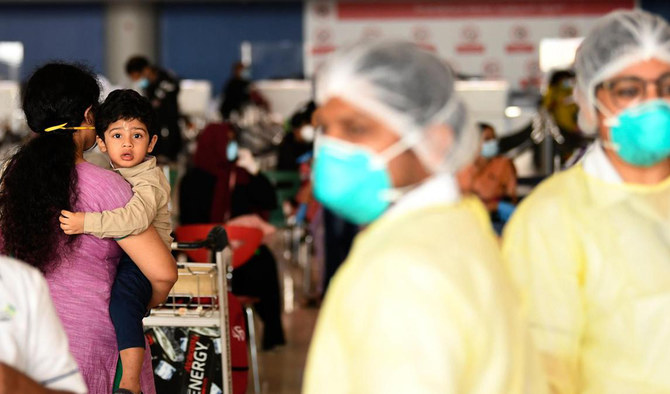

DUBAI: Earlier this month, when Dubai-based Pakistani businessman Ali Rao came across news in the media that 25 people rendered homeless by the coronavirus pandemic were sleeping in a park, he knew he had to do something to help.
On June 9, he sent members of his staff and transportation to pick them up and temporarily house them in a company home. Only 14 of the 25 homeless men initially agreed to come back with Rao’s staff that day, but as word slowly spread, another 35 men arrived. On Wednesday, 31 Pakistani nationals who had been sleeping on roadsides for more than two weeks also moved in.
Today, over 100 people of varying nationalities are staying at three shelters provided by Rao, whose company has operated in Dubai for about seven years and deals primarily in industrial housing and real estate.
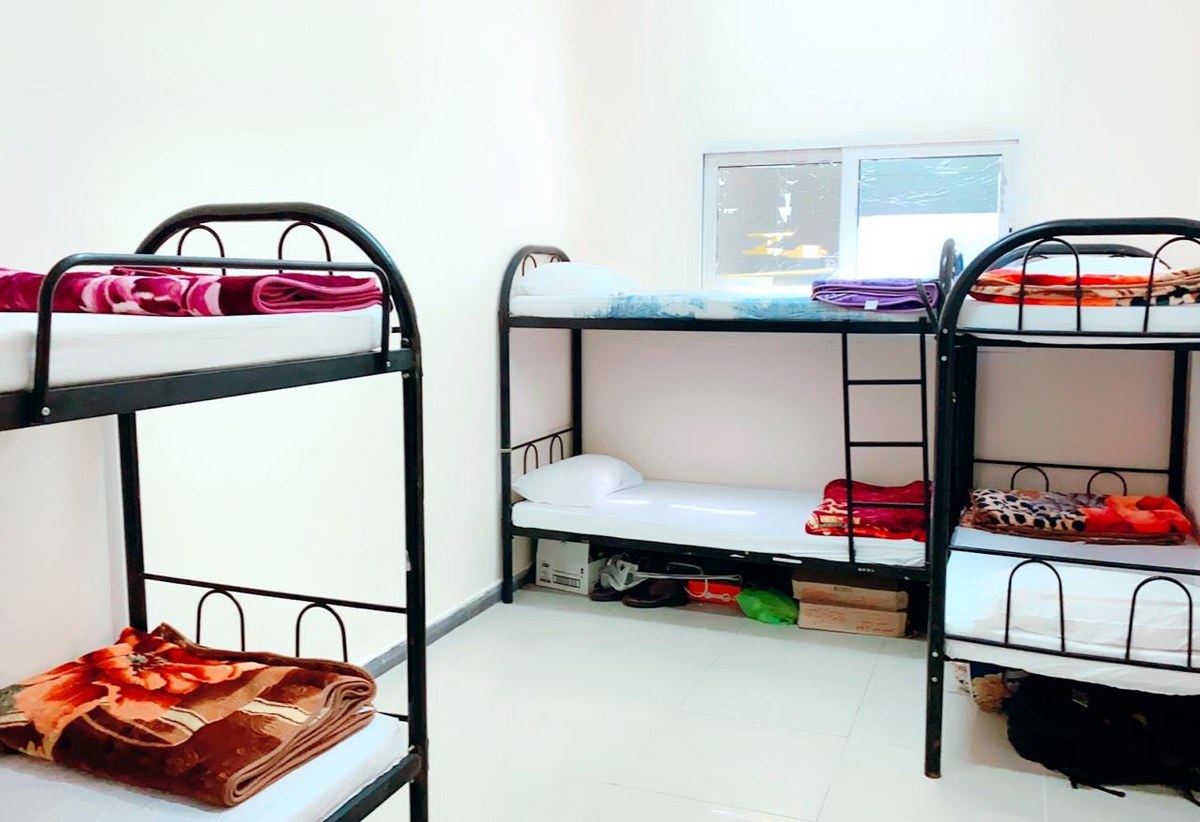
A semi-furnished room at the sharing accommodation (Supplied)
“At first [when we went to pick them up] they were hesitant and thought they were in trouble but they are settled in now,” Rao told Arab News on Thursday. Most of the homeless people he has housed recently lost their jobs and were awaiting repatriation, Rao said, adding that plane tickets to get back home cost more than most of them could afford.
“So I will also try and contribute [for their tickets] along with a few other businessmen,” he said. “But until they are able to leave, they and anyone else who does not have accommodation are welcome to use this place to stay.”
The shelters, located in Dubia’s Al Quoz, Jebel Ali and Muhaisnah areas, house up to six single men in a room. Meals are provided by a number of Dubai-based charity organizations which also carry out background checks and coronavirus diagnostic tests of those seeking accommodation.
“They are also provided with a bed, a pillow and a blanket; in other words, basic necessities including a Wifi so that they can connect with their families back home,” Rao said.
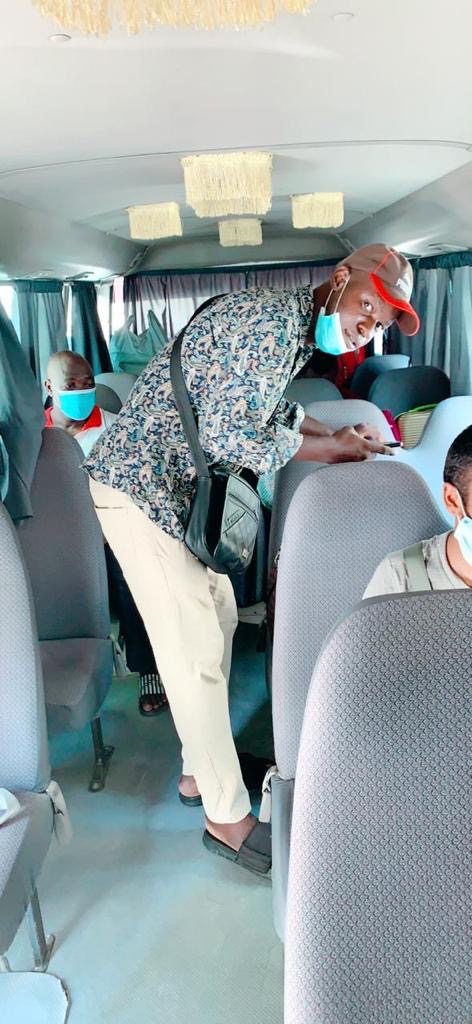
A homeless man being transported to the accommodation in Dubai on June 17, 2020. (Supplied)
As the region’s tourism and business hub with one of the world’s busiest international airports, Dubai’s economy has been hit hard by the coronavirus pandemic. To date, there are upwards of 43,000 coronavirus cases in the United Arab Emirates.
Many people have lost jobs or had incomes reduced. Tens of thousands of migrant workers, who often live in crowded shared accommodation where the virus spreads more easily, have registered to be repatriated.
One such person is Ghanian national Danie Donkar, 30, who had been sleeping in a park in Dubai for two weeks until he was offered a roof over his head by Rao.
“I was doing odd jobs at construction sites until everything shut down due to coronavirus and I neither had a place to stay nor anything to eat,” Donkar told Arab News on Thursday. “I had a flight to catch on June 16 but due to some clearance issues related to overstaying my visa, I was sent back,” he said, adding that he was comfortable at his temporary home and eagerly waiting to get back home.
Pakistani Jahanzaib Malik, 25, was working as a helper at a construction company when he lost his job and ended up sleeping in a park for a month.
“Since Ramadan, I’ve been eating food given by charities so I managed somehow,” he said. Now he is staying comfortably at Rao’s accommodation, he said, and waiting for his sponsor to sort out his passport so he can fly back home.


