Women face rise in domestic violence due to coronavirus lockdown in Yemen, report says 

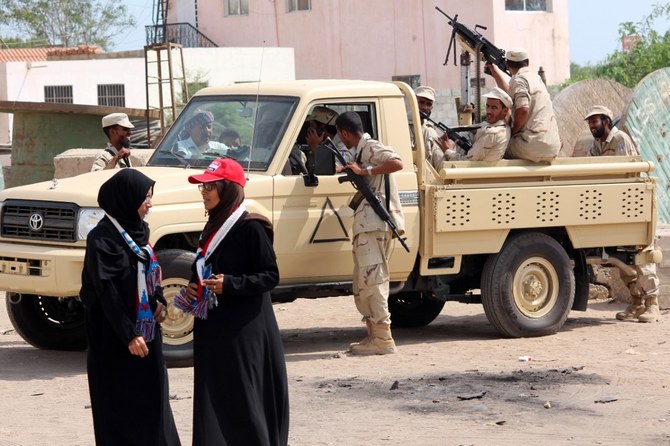
Levels of domestic violence and sexual harassment of women in Yemen are estimated to have increased by 63 percent in the last five years due to the conflict, according Yemeni Women Union. (File/AFP)
Short Url
Updated 09 June 2020
Follow

Women face rise in domestic violence due to coronavirus lockdown in Yemen, report says 

  • The restrictions of the COVID-19 lockdown and quarantine, together with extreme economic stresses, have led to dramatic jumps in incidences of domestic violence in many countries and Yemen is no exception

DUBAI: Recent reports of violence against women since COVID-19 restrictions were imposed in Yemen indicate that the levels of violence have risen further, a report published by the London School of Economics said.
The Yemeni Women Union (YWU) continues to record cases of violence against women despite the reduced opportunities women have to report violence or access services due to government restrictions, which is believed to indicate that levels of violence have increases, the report said. 
The restrictions of the COVID-19 lockdown and quarantine, together with extreme economic stresses, have led to dramatic jumps in incidences of domestic violence in many countries and Yemen is no exception, Noha Yehya of the YWU said.
Levels of domestic violence and sexual harassment of women in Yemen are estimated to have increased by 63 percent in the last five years due to the conflict, according to the report. 
The YWU believes the shifting roles of security forces in imposing COVID-19 restrictions present further risks to women in countries like Yemen where there are “few curbs on power and widespread impunity.”
Amid the attempt by the government to contain the spread of the virus, YWU warned that services to prevent violence and support survivors have reduced. 
The demands of the coronavirus response have already led to a diversion of funding away from services for women and girls, according to the report. 
The United Nations agency for sexual and reproductive health agency, UNFPA, estimates that without adequate funding, 48,000 women could die due to a lack of sexual and reproductive health services.


Iraq starts investigations into Daesh detainees moved from Syria

Updated 02 February 2026
Follow

Iraq starts investigations into Daesh detainees moved from Syria

  • Those detainees are among 7,000 Daesh suspects, previously held by Syrian Kurdish fighters
  • In 2014, Daesh swept across Syria and Iraq, committing massacres and forcing women and girls into sexual slavery

BAGHDAD: Iraq’s judiciary announced on Monday it has begun its investigations into more than 1,300 Daesh group detainees who were transferred from Syria as part of a US operation.
“Investigation proceedings have started with 1,387 members of the Daesh terrorist organization who were recently transferred from the Syrian territory,” the judiciary’s media office said in a statement, using the Arabic acronym for Daesh.
“Under the supervision of the head of Iraq’s Supreme Judicial Council, several judges specializing in counterterrorism started the investigation.”
Those detainees are among 7,000 Daesh suspects, previously held by Syrian Kurdish fighters, whom the US military said it would transfer to Iraq after Syrian government forces recaptured Kurdish-held territory.
They include Syrians, Iraqis and Europeans, among other nationalities, according to several Iraqi security sources.
In 2014, Daesh swept across Syria and Iraq, committing massacres and forcing women and girls into sexual slavery.
Backed by US-led forces, Iraq proclaimed the defeat of Daesh in the country in 2017, and the Kurdish-led Syrian Democratic Forces (SDF) ultimately beat back the group in Syria two years later.
The SDF went on to jail thousands of suspected extremists and detain tens of thousands of their relatives in camps.
Last month, the United States said the purpose of its alliance with Kurdish forces in Syria had largely expired, as Damascus pressed an offensive to take back territory long held by the SDF.
In Iraq, where many prisons are packed with Daesh suspects, courts have handed down hundreds of death sentences and life terms to people convicted of terrorism offenses, including many foreign fighters.
Iraq’s judiciary said its investigation procedures “will comply with national laws and international standards.”