- Hammad Azhar says only “core operations” of mills to be privatized, land to remain in government possession
- Government recently announced “human resource rationalisation plan” for 9,350 employees widely viewed as lay offs
KARACHI: The government has decided to privatize the core operations of the country’s mega state-owned enterprise, Pakistan Steel Mills (PSM) Corporation Limited, said Federal Minister for Industries and Production Hammad Azhar while briefing the Senate on Friday.
“The previous governments failed to revive or privatize Pakistan Steel Mills which remained defunct for several years,” he said, adding: “Only the core operations of the PSM will be privatized while its land will still remain in the possession of the PSM corporation.”
Azhar told a press briefing in Islamabad on Thursday that about 15 parties were interested in taking over the operational charge of the PSM project.
“Pakistan Steel Mills is facing a loss of Rs 176 billion … Its revival plan will be presented to the federal cabinet for approval very soon,” he said while addressing the news conference.
Pakistan’s federal government on Wednesday decided to lay off some 9,350 employees of the mega state-owned entity, a step that was widely viewed as an effort to clear the way for the privatization of the mill.
The Economic Coordination Committee (ECC) gave a go-ahead to a “full and final human resource rationalization plan for the Pakistan Steel Mills employees in accordance with the judgments and observations of the Supreme Court of Pakistan and other courts hearing cases involving the PSM,” said a Ministry of Finance statement issued after the ECC meeting chaired by the prime minister’s adviser on finance and revenue, Dr. Abdul Hafeez Shaikh.
Government functionaries insist the move should not be labelled as a lay-off plan since PSM employees were getting golden handshakes for which the government had allocated Rs 19.7 billion.
“All employees will get a financial package of an average of Rs 2.3 million as compensation,” Azhar said.
Government officials also claim that the amount covers about two to three years of employees’ salaries.
“The move will help us save Rs 700 million of the people’s hard-earned taxes a month [in salaries and other expenses],” the minister for industries noted while justifying the government’s measure.
Pakistan has paid Rs 92 billion to cover the mill’s liabilities in the form of employee salaries and bailouts since 2008.
The PSM Stakeholders’ Group, a representative body of employees, pensioners, suppliers, dealers and contractors, puts the accumulated losses of the mill at about $11 billion due to the closure of plants and import of steel items.
However, it has also opposed the government’s decision to lay off works and privatize the mill.
“This is a bombshell not a golden handshake,” commented Mumrez Khan, convener of the group.
“They are not paying our arrears of Rs 85 billion and describing their Rs 18 billion as an act of generosity,” he told Arab News. “Since 2013, the dues of retired employees accumulated to Rs 22 billion as well and were not paid by anyone.”
Labor unions have suggested to adjust employees in other departments instead of laying them offs amid the coronavirus pandemic. The have also started protesting against the government in Karachi in the wake of the official decision.
“The government has turned us into scapegoats and sacrificed our interest to gobble up the precious land of the mill that is worth billions of rupees. It must understand at this stage that the virus infections are high and our protests may take a dangerous turn,” Mirza Maqsood, president of the Voice of Pakistan Steel Officers Association, told Arab News.
“Instead of total layoffs,” he added, “employees should be adjusted in other government departments.”
Chairman of the National Assembly Standing Committee on Industries and Production Sajid Hussain Turi announced to take up the matter in parliament to get “the lingering issue resolved through democratic means.”
“This should have been done through parliament. Parliament was not taken into confidence before making the decision and now this matter will be raised over there for debate,” Turi told Arab News, adding: “This is not only the issue of 9,350 people but a question of more than 100,000 families who depend on them and expect the revival of the mill.”
He said that his committee had floated recommendations for PSM’s revival, including the release of $300 million demanded by its chairman to operationalize the plant.
“Russian, Chinese and Iranian companies had offered to revive the defunct entity,” Turi, who belongs to the opposition Pakistan People Party, added. “Prime minister Imran Khan himself wanted to revive the state-owned enterprise.”
“The government doe not have a plan,” Mumrez Khan of the stakeholders’ group said, adding: “The stakeholders also submitted a revival plan that included rationalization of tariff and accountability, but the government did not pay any heed.”
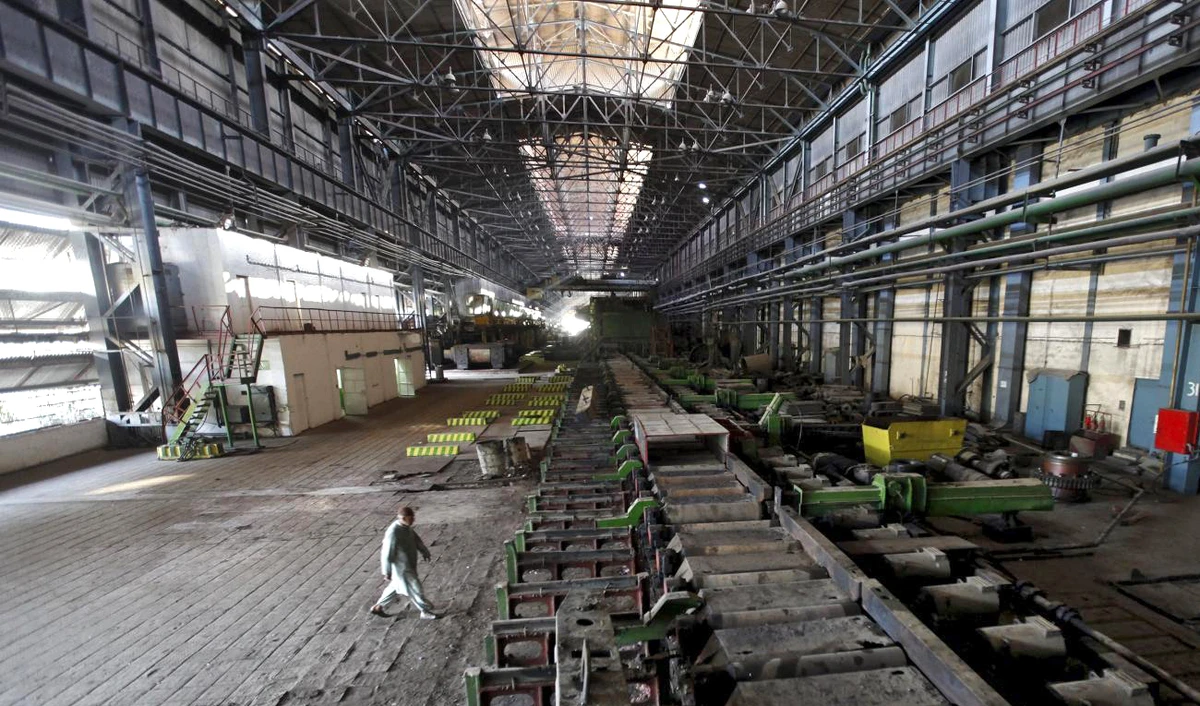
Spread over an area of 18,600 acres with 10,390 acres for the main plant, Pakistan Steel Mills is located 40 kilometers away from Karachi in the Port Muhammed Bin Qasim vicinity.
The country’s mega corporation witnessed a decline in its production between 2008 and 2015 before it was shut down when it failed to pay Rs 20 billion in gas bills, according to the stakeholders’ group.
The PSM has a production capacity of 1.1 million tons of steel that is extendable to 3 million tons per annum. The main products of the mill include coke, pig iron, billets, cold rolled sheets, hot rolled sheets and galvanized sheets.