KARACHI: Pakistan’s Oil and Gas Regulatory Authority (OGRA) on Wednesday sought an explanation from three oil marketing companies for failing to maintain their reserves as consumers continued to suffer due to a shortage of gasoline across the country after the government decided to ease lockdown restrictions.
“We have taken notice of the situation and engaged a third party to probe the situation. We have also issued show cause notices wherever we felt the stocks were not properly available,” OGRA’s senior executive director Imran Ghaznavi told Arab News, adding: “We have issued notices to Shell, Total-Parco, and Attock Petroleum.”
According to a statement released by the Ministry of Finance, the country’s Economic Coordination Committee (ECC) also discussed the shortage of petrol in some cities on Wednesday and instructed the Ministry of Energy, Competition Commission of Pakistan and OGRA to ensure that the requisite stocks were maintained by oil marketing companies and the supply to the fuel stations across the country remained regular and intact throughout the month.
The ECC chairman, Dr. Abdul Hafeez Shaikh, took a stern view of the reported petrol shortage, directing all the relevant government institutions to immediately let him know if the situation worsened any further.
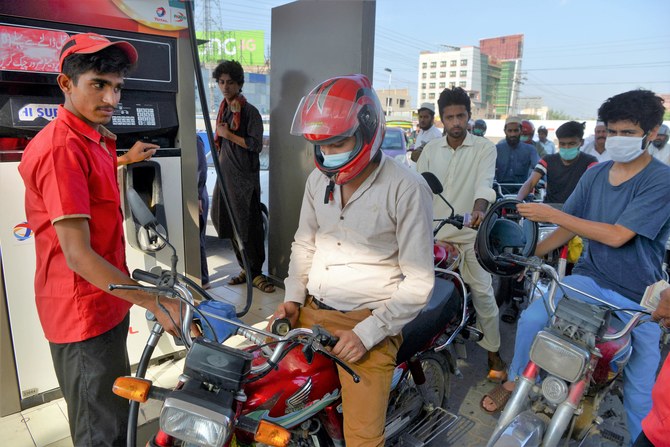
Pakistan’s petroleum consumers suffered this week as many petrol station stopped supplying fuel while others faced panic buying and long queues. Retailers say about 40 percent of the supply was disrupted after the prices of fuel were slashed by the government.
“Around 40 percent petrol stations are not supplying fuel to the consumers and this situation is persisting across the country,” Sameer Najmul Hasan, chairman of All Pakistan Petrol Retailers’ Association, told Arab News.
The situation emerged when the country’s oil marketing companies failed to maintain their required stocks for 20 days under a local law.
Retailers say the demand for petrol and diesel surged after the government announced to relax the COVID-19 lockdown and allowed public transportation to resume after almost two months of suspension.
“The oil marketing companies mostly keep stocks of petrol and diesel through imports and keep inventories toward the lower side. As the lockdown was eased and public transportation was resumed, the demand for fuel surged in the country,” Hasan noted.
Goods transporters said they were also facing problem due to the shortage of diesel, warning that the situation could have larger implications for the country’s economy if it was not duly addressed.
“We are trying to manage at present, mostly by relying on stations owned and operated by small companies, but the surge in demand is depleting the stocks and the situation is getting out of hand,” Rana Aslam, president of Karachi Goods Carrier, told Arab News.
Transporters warn that the supply of essential goods across the country will also be suspended if the situation is not properly handled.
“When oil prices are increased, the orders are immediately implemented,” Aslam added. “But when these prices are dropped, people are deprived of the benefits. The situation may also hamper the supply of essential items across the country amid the COVID-19 pandemic.”
The fuel shortage emerged despite the assurances of the petroleum division that the country had sufficient stocks of gasoline to meet the domestic requirement
OGRA officials said the oil marketing companies were legally bound to respond to the government’s call to maintain sufficient stocks of petroleum products to avoid any emergency situation. The matter is also expected to be taken up in a high level meeting on Thursday.
“A meeting is taking place tomorrow at the petroleum division and the matter will be taken up in that meeting,” Ghaznavi informed, adding: “The companies are legally obliged to overcome this shortage forthwith.”
Pakistan’s average monthly consumption of petrol before the coronavirus pandemic remained between 500,000 metric tons and 600,000 metric tons. However, the level of consumption and demand declined due to the COVID-19 outbreak. The imports of petroleum products also declined by 20 percent to $9.5 billion during July-April 2019-20 mainly due to virus-related lockdown.
Pakistan’s annual consumption of petroleum was around 19.35 million metric tons in FY19. Around 42 percent of the country’s demand was met through imported products while the remaining 58 percent was locally refined, according to the country’s credit rating agency, PACRA.


![]()

Pakistan seeks explanation from oil marketing companies amid looming fuel crisis
Short Url
https://arab.news/6bgs9
Pakistan seeks explanation from oil marketing companies amid looming fuel crisis
- Shell Pakistan, Total-Parco, and Attock Petroleum given show cause notices on failing to maintain stocks — OGRA
- Retailers say about 40 percent fuel supply was disrupted after the government slashed prices of petroleum products
Latest updates


Recommended


© 2026 SAUDI RESEARCH & PUBLISHING COMPANY, All Rights Reserved And subject to Terms of Use Agreement.