



RAWALPINDI: Azal Zahir was hours away from her dream wedding at Lahore’s Royal Palm when news broke that the event would have to be canceled due to newly-imposed social distancing restrictions, to limit the spread of coronavirus across the country.
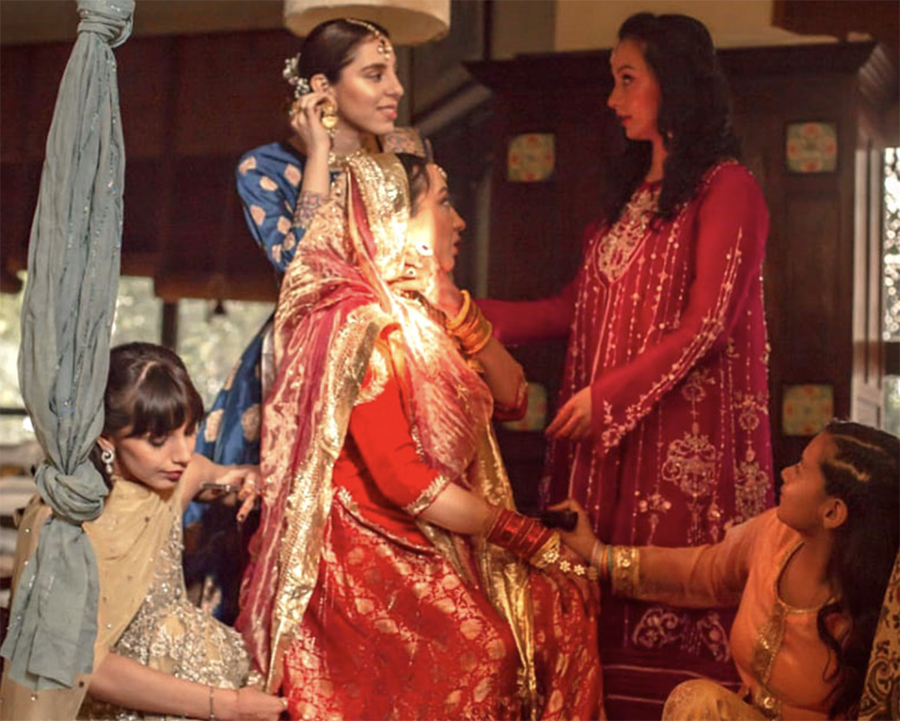
Azal Zahir is seen in the company of her sister and cousins at her wedding ceremony on March 14, 2020. (Photo courtesy: Azal Zahir)
“It was the night before the wedding which was supposed to take place at midday. I was preparing for my Mehendi (a henna-applying ritual for the bride) when we were informed that all events would have to be canceled. Pakistan was under lockdown,” Zahir, an environmentalist and educator, told Arab News over the phone on Tuesday.
This was in March when the outbreak was still in its infancy.
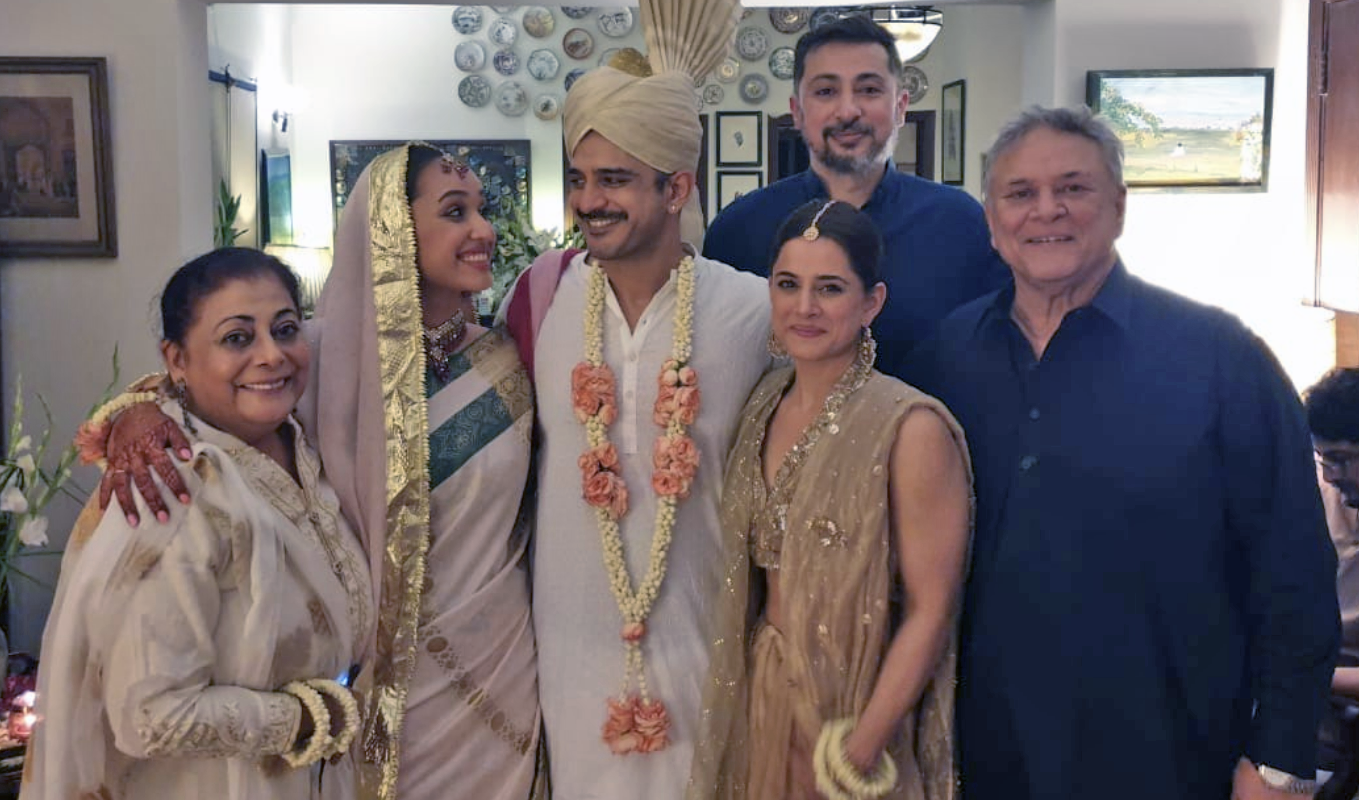
A shot of Danyal Raheal and Faryal Mehmood from their wedding at their family home in Lahore on May 29, 2020. ((Photo courtesy: Danyal Rahael/Facebook)
As of Tuesday, there were 27,850 confirmed cases and 540 deaths reported from the Punjab province of which Lahore is the capital and where Zahir’s home is based.
Zahir realized she was faced with a difficult choice – to either postpone the wedding until things became normal or to get married at home.
She said she opted for the latter, as it was a “silver lining” for the couple and their families during “the testing times.”
“I felt anxious at first. But, when I saw my mamu (maternal uncle) light the candles in the backdrop, my sister directing the event manager, my cousins grouping in the background to take pictures at home – a place where I’d made memories all my life – it was just perfect. A big wedding takes away from the little things,” she said.
Joining Zahir in her simplistic approach are several Pakistani celebrities who, just like her, chose to get married in intimate ceremonies as opposed to hosting big, fat weddings which had been the trend before the outbreak which has killed 22 in Karachi so far.
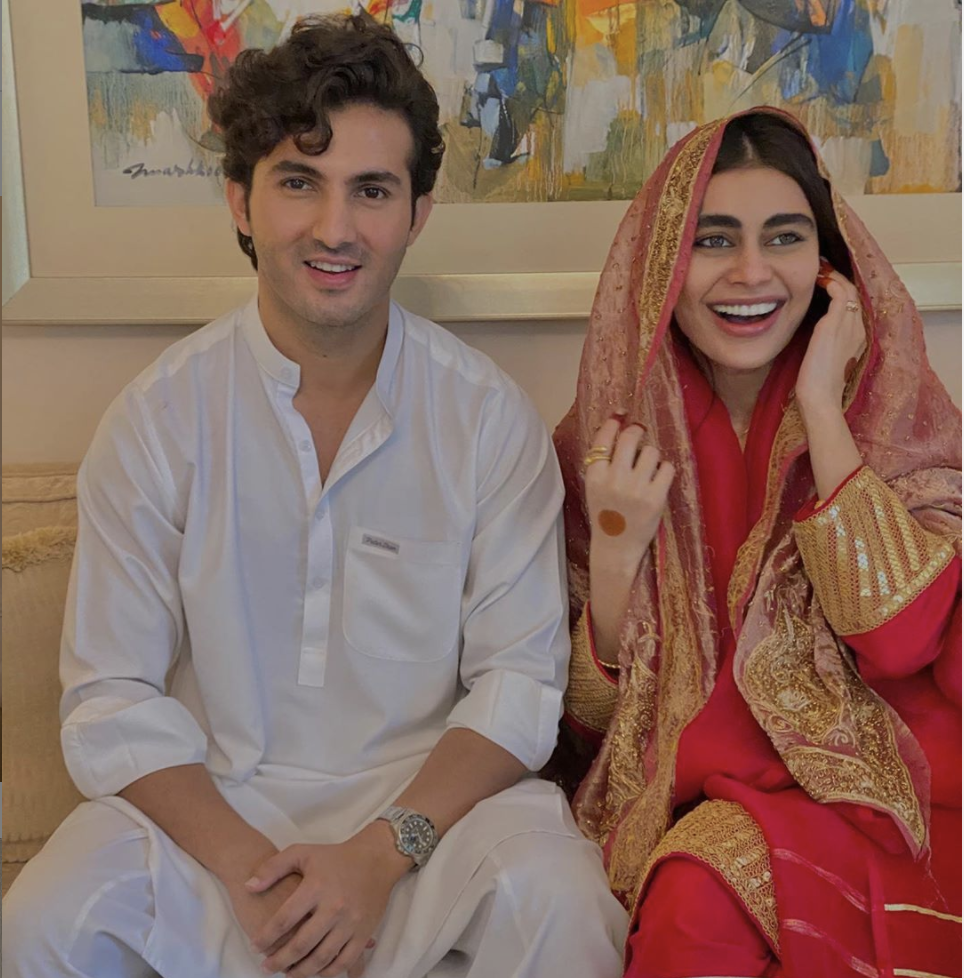
Shehroze Sabzwari and Sadaf Kanwal share intimate photos of their wedding ceremony which took place at their home in Lahore on May 31, 2020. ((Photo courtesy: Shehroze Sabzwari/Instagram)
Be it in-house wedding shots of veteran actors Samina Ahmed and Manzar Sehbai, or those shared by next-gen stars such as Hina Altaf and Aagha Ali, Shahroze Sabzwari and model Sadaf Kanwal, and Faryal Mehmood and Daniyal Raheal – there’s plenty of inspiration for all age groups on social media.
“We were planning to do it at the end of this year, but we moved the plan up instead of delaying it and decided to have a much smaller wedding,” Raheal of Teri Meri Kahaani, Dastaan and Baandi fame told Arab News over the phone.
He added that both he and Faryal had plans to host a destination wedding in Vietnam, but went back to the drawing board after the virus struck.
“My parents told me that life is short, both of them have pre-existing illnesses, and my grandmother is in the hospital these days because she’s aging and unwell. There was no point in postponing the wedding and risk not having the people I love the most not around me,” he said, adding that they hadn’t ruled out celebrating in Vietnam later either.
“We are happy to have the most important thing done, which is getting married. Wanting big celebrations are valid too,” he said.
A sentiment echoed by Rabeeya Latif, founder of a popular social media group for women in Pakistan.
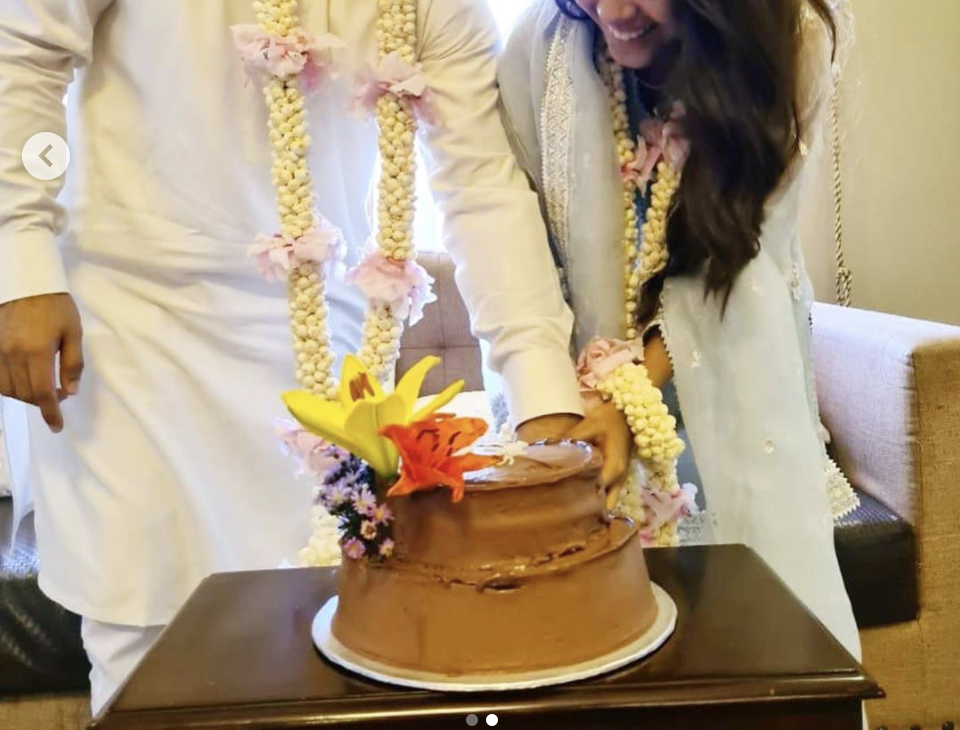
Rabeeya Latif and her fiance cut a cake after a simple, family-only wedding ceremony at their home in Karachi on May 27, 2020. ((Photo courtesy: Rabeeya Latif/Instagram)
Latif and her fiance had talked about getting engaged but decided that since “the world was not looking to get better anytime soon” they should have a small gathering at her home on May 27, right after Eid.
“It was really, really last minute but it was intimate and what it needed to be, about two families coming together,” Latif told Arab News.
As to whether any of them felt any pressure to host a big wedding, Raheal said: “The pandemic has given a break to humanity as a whole, from a lot of things..even the wedding season...I feel a lot of people feel an obligation to host a large event or the need to show people that they’re celebrating or that they’re married. But having that taken away from us, I feel, was actually a blessing.”


