- Journey to space plans on hold due to coronavirus fallout and lack of funding
- No agreement signed with UAE but collaboration on the cards for space program
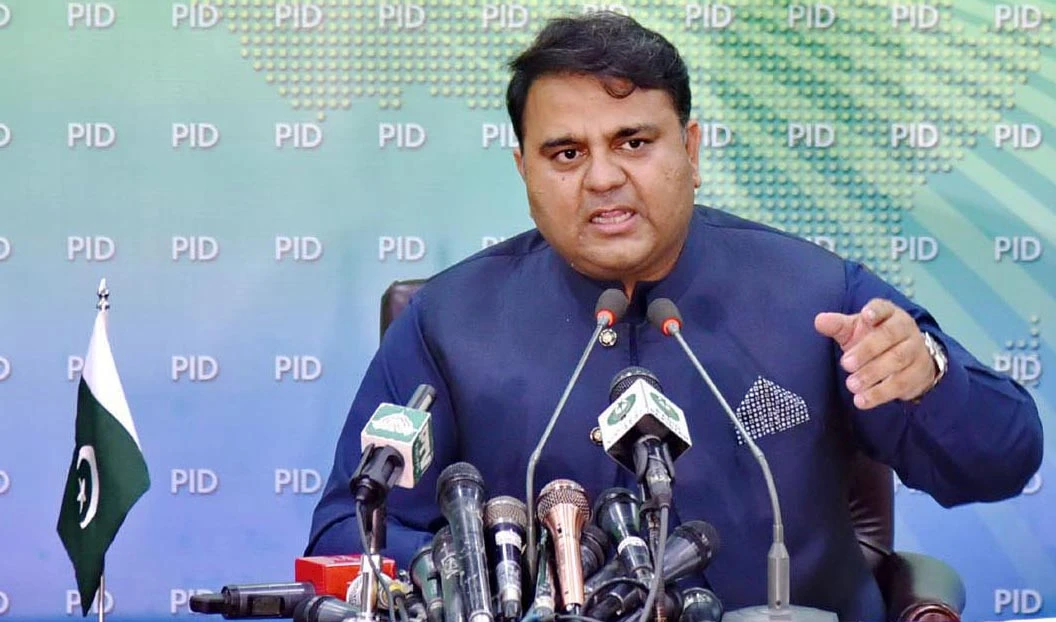
ISLAMABAD: Pakistan’s plans to send its first astronaut into space by 2022 have been placed on temporary hold, Science and Technology Minister, Fawad Chaudhry, told Arab News on Saturday.
Currently, Pakistan has four remote sensing and communications satellites in total– two ground stations and two in orbit. In July 2018, Pakistan launched two satellites with the help of China, and the same year, Chaudhry announced Pakistan was planning on sending its first astronaut on a manned mission by 2022. A contract was subsequently inked between Pakistan’s Space and Upper Atmosphere Research Commission (Suparco) and a Chinese company.
“I think we will not be able to pursue the schedule [of sending astronaut to space] due to COVID-19 and it may be delayed by a year,” Chaudhry told Arab News in an exclusive interview, and added the candidate selection process in collaboration with China had also been delayed.
“The selection process of [choosing a suitable] astronaut was scheduled to begin this year but unfortunately due to the pandemic, the selection process has to be postponed... it was to be initiated with the partnership with China which itself has been badly affected by the coronavirus,” he said.
The science minister’s revelation came just hours before the US attempts to make history with the launch of a newly designed spacecraft by SpaceX and NASA on Saturday.
In March 2019, Suparco disclosed to Arab News that it was exploring options to collaborate with the UAE. The spokesman of Pakistan’s national space agency said huge funds and special skills were required to lift off Pakistan’s ambitious space program and that collaborating would help both the Emirates and Pakistan in space-related activities.
But no such agreement has yet been reached between military-run Suparco and the UAE.
“No agreement has been signed yet with the UAE,” Chaudhry conceded but said Pakistan wanted to work closely with the country on its space program.
“I have requested the Prime Minister’s office to bring Suparco under the fold of the ministry of science and technology so we can pursue that diligently. I hope that decision of bringing it back to the civil side will help improve the collaboration in this direction much more effectively,” Chaudhry added.
Detailing his foreign outreach plans to address Pakistan’s space challenges, he said: “We have already very close cooperation with China in the space program and I think we would like to strengthen this relationship further. But we would also like to strengthen our relationship with NASA, UAE, and other countries including private companies.”
Chaudhry stressed: “I would also like to encourage Pakistan’s private sector to come and invest in satellites because the private sector can contribute a lot, especially in the field of various types of space satellite monitoring applications which have a huge opportunity.”
“It’s a very expensive game, I would say,” he continued. “It needs loads of funding but right now we are focusing on sending solar satellites and the funding for necessary projects is available.”
He said Pakistan was not in a space race when asked whether he was concerned India would beat Pakistan in reaching the stars. Neighboring rival India is aiming to consign its own astronauts in 2022 for the country’s first human mission to space.
“We are not competing with anyone in the space program,” Chaudhry said.