

Saudis adopt new hobbies to get through quarantine

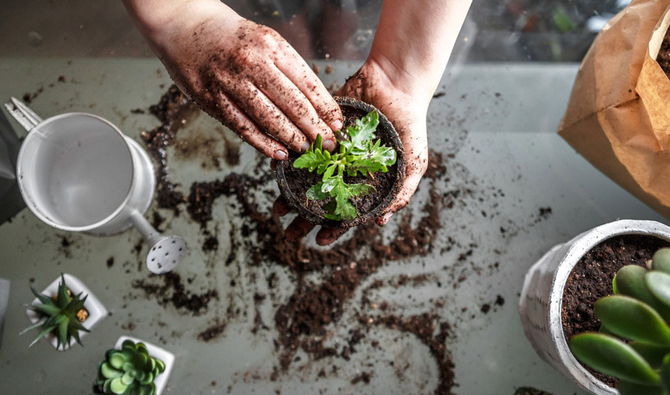
Youngsters have transformed their free time into something positive to cure their quarantine blues. (Shutterstock)
Short Url
Updated 29 May 2020
Follow

Saudis adopt new hobbies to get through quarantine

  • Many attested that it was easy to get swept up in anxiety during the self-isolation period

JEDDAH: As the novel coronavirus disease (COVID-19) continues to change people’s lives, some have decided to be proactive and pick up new hobbies to cope with the crisis.

Arab News spoke to a number of Saudi youths who have transformed their free time into something positive to cure their quarantine blues.

Many attested that it was easy to get swept up in anxiety during the self-isolation period but suggested some things people could do to mitigate the worst of its effects.

Razan Sijeeni, graphic design lecturer from Jeddah, chose gardening as an escape. Feeling a need to connect to the earth, she began to research.

Sijeeni began to take an interest in plants a few years back, buying a simple potted one from IKEA to decorate her office, or learning more about the environment sweet potatoes needed in order to thrive. 

“I began researching quite a lot, visiting gardening nurseries and purchasing little plants like jasmine, basil and aloe vera back when curfew began after 6 p.m.,” she told Arab News.

Sijeeni was surprised to see her small plants survive longer the more she took care of them.

“Gardening is a very therapeutic process, and watching something come to life through your care has been extremely rewarding,” she said.

“At some point, one of the flowers I had planted some two months prior bloomed; I’d completely forgotten about it. I saw it across my balcony and did a double take because just the night before, there had been nothing there at all.”

Gardening has given Sijeeni much to reflect on. She said it has given her a chance to give back to nature “on a very small scale.”  The task is also time consuming, so it takes her mind off the quarantine-induced anxiety.

“Gardening also teaches you a lot about patience and about yourself. The life of a plant is much like the life cycle of a person. There are moments of glory, where you’re blooming and shining, and then there are very dark moments. It’s the natural order of things,” she said.

Even after strict curfew hours were implemented throughout the Kingdom, Sijeeni did not abandon her new hobby. 

She began using vegetables and fruits, eggshells, and potato and banana peels to recreate healthy soil at home.

A tip she gives to all those interested in gardening is to use cinnamon as it seems to prevent the growth of fungus on plants.

Gardening is a very therapeutic process, and watching something come to life through your care has been extremely rewarding.

Razan Sijeeni, Graphic design lecturer

“Plants don’t just die out. If you’re careful with them when they start to wither, you can work on them, trimming their dead leaves and watering them. You might find that they surprise you,” Sijeeni added.

Nora Al-Nahi, a 28-year-old Saudi from Jeddah who works in the training department at a local company, began to use a diary for sketching and journaling.

“It’s been a blessing,” she told Arab News. “I’ve always needed time to sit down and release my inner artist, and now I have plenty of it.”

Al-Nahi used to draw a lot as a teenager, but growing up came with increased responsibilities, and soon enough university and work got in the way of her artistic endeavors.

“I finally put to use a sketchbook a friend got me for my birthday a few years ago, and I doodle in it and create characters. I then use my other journal to decorate it with scrap photos or stickers I’d collected over time,” she said.

Writing her emotions down, whether positive or negative, has helped Al-Nahi to relax.

“It’s a form of self-expression. It brings out emotions I didn’t even know I was bottling up and holding on to. It really is therapeutic,” she added.

Mona Sulaiman, 22, picked up a few coloring books and began adding color to each page little by little. The English major student said that the task distracted her from everything that was happening.

“I just wanted something to keep me busy. I had no idea it would turn into a full-blown hobby. It has consumed my life. I began testing watercolors, mixing and matching various coloring and dotting styles,” she said.

She added: “It definitely helps lessen my anxiety, and it’s a really fun activity to share with younger siblings or between parents and children.”


Aloula partners with Saudi Music Hub to amplify young voices

Updated 4 sec ago
Follow

Aloula partners with Saudi Music Hub to amplify young voices

  • 2-month vocal program places children in spotlight
  • Program culminates in performance of Saudi national anthem

JEDDAH: A new choral initiative launched by Aloula, in partnership with the Saudi Music Hub, has brought youngsters aged 9-18 into a structured vocal training program that will culminate in a performance of the Saudi national anthem.

The two-month initiative, which was launched in November, is one of the first children’s choral programs led by a nonprofit organization in Saudi Arabia.

In the rehearsal room, 75 children are learning how to sing the Saudi national anthem “Aash Al-Maleek,” and “Watani Al Habib” in a full choral arrangement.

Among the singers is 14-year-old Nawaf Al-Qahtani,  who said the experience had helped him grow as a performer. (Supplied)

Participants attend vocal training sessions three times a week, from Monday to Wednesday, focusing on technique, listening skills, and ensemble performance.

Speaking to Arab News, Abir Abusulayman, the CEO of Aloula, said the project was designed to include children more directly in the Kingdom’s cultural transformation.

She said: “The Kingdom is living a beautiful cultural moment right now, and we didn’t want our children to watch it from the sidelines; we wanted them to be part of it.

HIGHLIGHTS

• The two-month initiative, launched by Aloula in partnership with the Saudi Music Hub, is one of the first children’s choral programs in Saudi Arabia.

• Abeer Ibrahim, a vocal and singing instructor at the Saudi Music Hub, is among the educators working closely with the group.

“It felt like the perfect way to bring them together, build their confidence, and let them experience something joyful and memorable.”

Founded in 1962, Aloula works with children and families through early-intervention programs to strengthen academic, creative, and social skills. The initiative reflects the organization’s broader focus on confidence-building and participation through creative experience. 

Aloula children rehearsing the Saudi national anthem with instructor Abeer at the Saudi Music Hub. (Supplied)

Abusulayman said music offered lessons that extended beyond performance, and added: “Music opens something special inside a child. It teaches them to listen, to express themselves, to work as a team, and to trust their own voice. These creative experiences help children feel seen and give them skills that stay with them far beyond the classroom.”

Abusulayman said the benefits of the venture extended well beyond the final performance.

She said: “Academically, music helps with focus and memory. Socially, it teaches them to work together and support one another. And on a personal level, it gives them a moment in their lives where they feel proud, capable, and celebrated. Many of these children have never been on a stage before; this can be the spark that pushes them to dream bigger.”

The Saudi Music Hub, an education and training institution affiliated with the Music Commission under the Ministry of Culture, was established in 2022. (Supplied)

Abeer Ibrahim, a vocal and singing instructor at the Saudi Music Hub, is among the educators working closely with the group. A graduate of the Egyptian Conservatory, Ibrahim specializes in vocal training and music theory for young singers. 

“This experience gave me very beautiful feelings and emotions while working with children,”  Ibrahim told Arab News.

“From the very beginning they showed clear enthusiasm and joy, and I discovered wonderful talents and voices despite their young age. That small voice gave me a very powerful feeling, and I am extremely happy with it. We will present even better work in the future.”

Ibrahim also noted the significance of working with the national anthem, and she said: “Performing the Saudi national anthem instills in children a deep sense of belonging and pride in their country and culture,” adding that it helped young participants understand their role within the larger community. 

Among the singers is 14-year-old Nawaf Al-Qahtani,  who said the experience had helped him grow as a performer.

He described the experience as transformative, and said: “What I liked most was the interaction with the instructor, and we learned many things that will benefit us in the future.”

He added: “I learned how to control my vocal range, how to sing properly, how to face an audience, and I learned about the vocal ranges of the national anthem.”

Ibrahim described Al-Qahtani as one of the program’s strongest voices, noting that the anthem’s arrangement was adapted to suit his vocal range. 

The initiative is part of Aloula’s wider portfolio of educational and creative programs. These include a robotics program, in which children design interactive projects, as well as community exploration activities that introduce participants to major cultural and sporting events in Jeddah.

The Saudi Music Hub, an education and training institution affiliated with the Music Commission under the Ministry of Culture, was established in 2022. 

With headquarters in Riyadh and branches in Jeddah and Alkhobar, the hub provides musical instrument instruction, choir training, and performance workshops, with a focus on developing local talent.

For Abusulayman, the partnership reflects the value of collaboration between cultural and social organizations. 

“When we combine our strengths, we create opportunities that our children may not otherwise have,” she said. “I truly believe this kind of collaboration can open new doors for the whole nonprofit sector.”