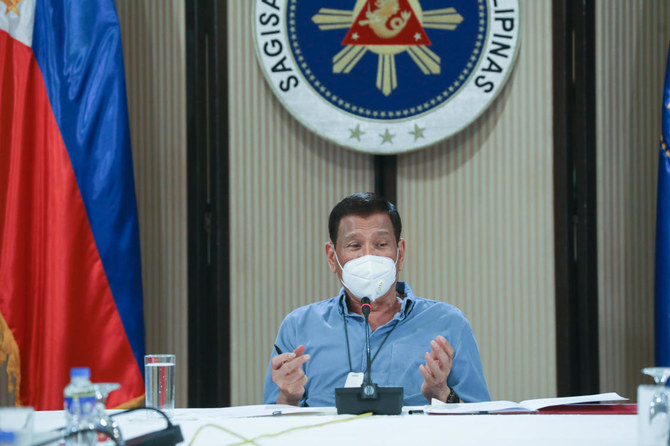
MANILA: Philippine President Rodrigo Duterte has given his government a week to process some 24,000 repatriated Filipino workers stuck for weeks on cruise ships or in coronavirus quarantine, so they can finally go home.
Thousands are aboard cruise vessels off Manila Bay or stuck in hotels and crowded health facilities, some growing frustrated having tested negative for the coronavirus and completed the mandated 14-day quarantine.
Overseas Filipino Workers, or OFWs, are breadwinners and a key support base of Duterte. Their more than $30 billion of annual remittances is a key driver of the Philippine economy, sustaining millions of family members.
“The president said they can use all government resources and whatever means of transportation — bus, airplane, ships — to bring the OFWs home,” Duterte’s spokesman, Harry Roque, said on Monday.
The government is braced for hundreds of thousands more workers to return due to job losses as the coronavirus devastates economies worldwide. It has blamed the delays on a testing bottleneck.
The cruise ship cluster off Manila Bay numbered 29 vessels on Monday, none with passengers aboard. They contain thousands of Filipino crew still awaiting coronavirus tests, many no longer receiving salaries and venting frustrations having already met conditions for release.
Crew reached by Reuters said information was scarce and prolonged isolation was taking a toll on their mental and emotional health.
Jex Bañega, a receptionist on Carnival Corp’s Pacific Explorer, said he was being well cared for, but after 35 days of quarantine, his cabin felt more like prison cell.
“We’re only thinking of going home to our families. The comfort of our homes is different,” Banega said
More than 30,000 overseas Filipinos have returned home and 515 of 27,000 tested for coronavirus were positive as of May 20, authorities said. The Philippines has over 14,000 cases, of which 868 were deaths.


![]()

Philippine President Duterte answers call of workers under COVID-19 quarantine eager to go home
Short Url
https://arab.news/p575j
Philippine President Duterte answers call of workers under COVID-19 quarantine eager to go home
- Thousands are aboard cruise vessels off Manila Bay or stuck in hotels and crowded health facilities
- The government is braced for hundreds of thousands more workers to return due to job losses as the coronavirus devastates economies worldwide


Latest updates


© 2026 SAUDI RESEARCH & PUBLISHING COMPANY, All Rights Reserved And subject to Terms of Use Agreement.