



What happened:
China’s National People’s Congress started its annual meeting.
On the political side Premier Li Keqiang announced that the country will introduce a security law for Hong Kong, which added to US-China tensions and generated a risk-off sentiment in global markets.
China abandoned its gross domestic product target for 2020. The economic growth target has been the anchor metric for Chinese economic development for decades. The consensus growth forecast of economists surveyed by Bloomberg came in at 1.8 percent for this year. New key targets are a 3.6 percent deficit, significantly up from the 2.8 percent last year and also larger than during the financial crisis.
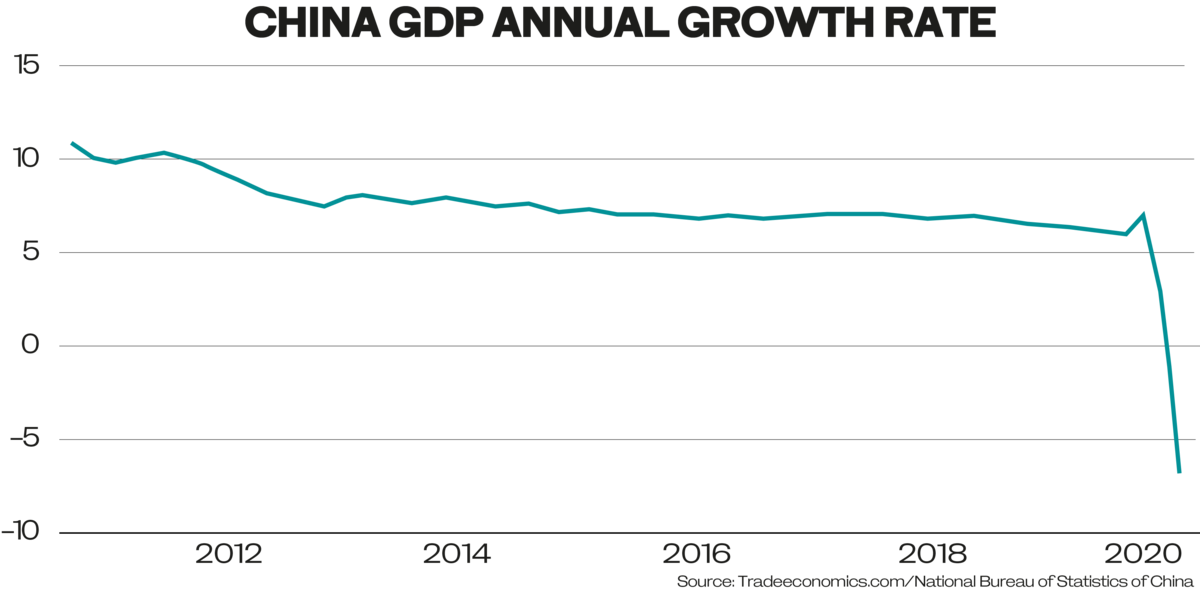
The government wants to boost investment in infrastructure, technology and social spending with a $500 billion package. BNP Paribas estimates that 130 million Chinese people have lost their jobs due to the pandemic. The government wants to create nine million urban jobs, which is two million less than last year.
Li also said that he was hopeful for “phase one” of the US-China trade agreement, which may be difficult in view of the current domestic economic situation. This phase calls for China to increase its imports from the US by $200 billion over 2017 levels.
The Bank of Japan left interest rates and monetary policy unchanged, but launched a new lending programme worth 30 trillion yen ($279.18 billion) to support small business.
The UK government deficit exceeds £62 billion for April, which is higher than the fiscal deficit for the full fiscal year 2020, which ended March 31 2020 and the biggest since modern records began in 1993.
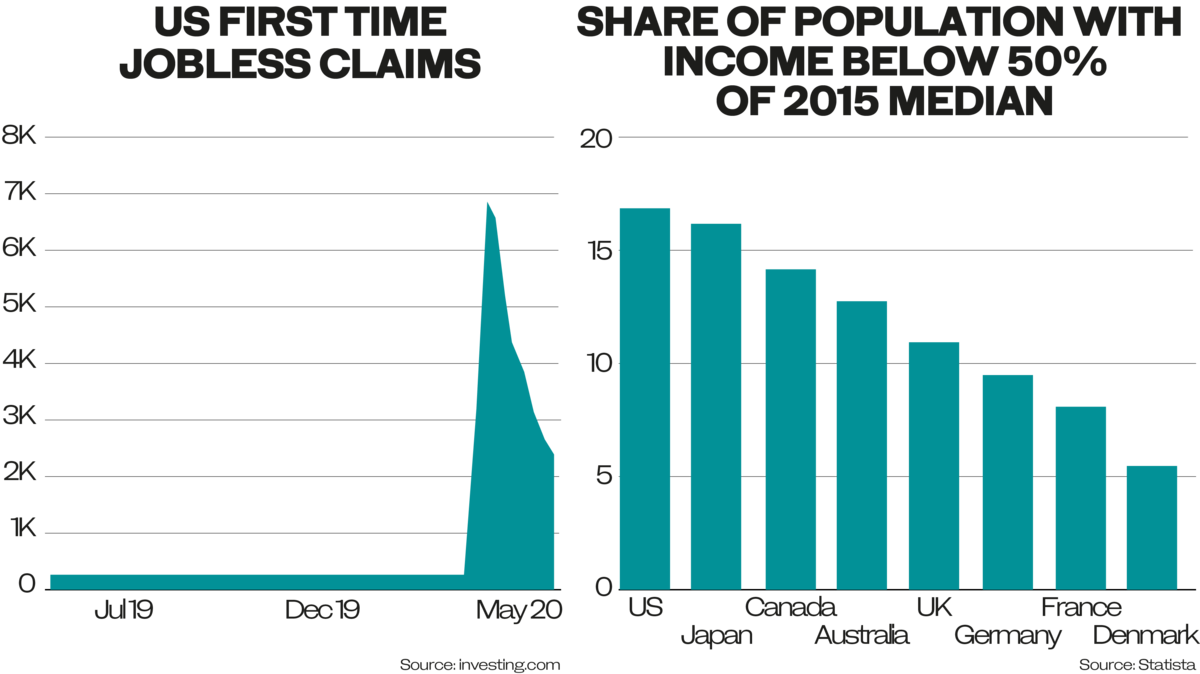
New jobless claims in the US jumped another 2.4 million during the week ending May 15, bringing the total since mid-March up to 38.6 million. While the trajectory of new jobless claims is downward sloping, 2.4 million is a big number. Earlier this week Federal Reserve chairman Jerome Powell expressed concerns about rising inequality and poverty levels in the US. “While the burden is widespread, it is not evenly spread,” he said.
Nissan may cut 20,000 jobs because of factory closures and lower demand brought on by the coronavirus crisis.
Vietnamese Prime Minister Nguyen Xuan Phuc said the country’s economy could grow at 4 to 5 percent in 2020.
Background:
Beijing’s intent to introduce a new security law banning subversion, separatism and treason into Hong Kong’s basic law ratcheted up US-China acrimony up another notch, especially as Beijing prepared to overrule Hong Kong’s Legislative Council. The Hang Seng fell around 5.6 percent on Friday, which is the biggest drop since 2008.
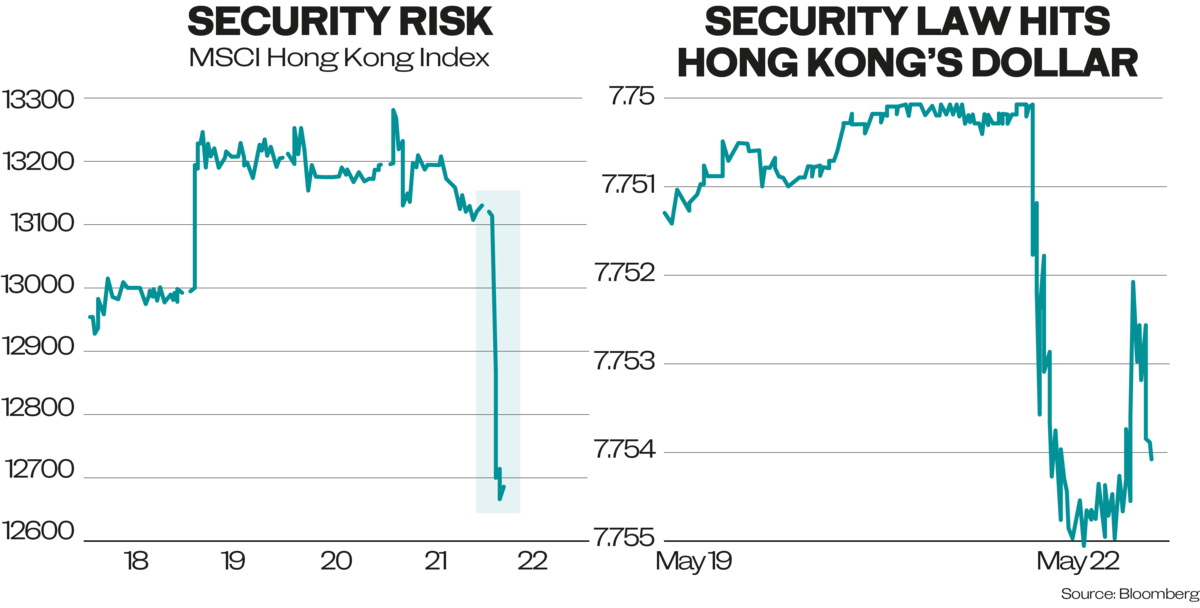
This is a clear break of the “one country two systems rule” which was agreed after Hong Kong reverted to China from British rule in 1997.
Hong Kong Chief Executive Carrie Lam announced she would enforce the new law.
This action will give momentum to a bill the US Senate passed on Wednesday barring foreign companies from listing on US exchanges if they had not complied with the country’s accounting board’s audits for three consecutive years, and/or are owned or controlled by a foreign government. The bill could lead to the delisting of several Chinese companies like Alibaba or Baidu.
The Hong Kong Human Rights and Democracy Act of last November had already put Hong Kong’s special trading status under tighter scrutiny, to be evaluated according to the former British colony’s autonomy from Beijing.
Where we go from here:
US senators propose a bill punishing entities involved with enforcing the new securities law in Hong Kong and, importantly, penalising banks doing business with those entities. This could have a big impact on both Chinese banks and the status of Hong Kong as a financial center.
All eyes will be on Hong Kong over the weekend to see whether widespread protests will resume. They dominated the territory last year and eventually achieved the withdrawal of a proposed security law much along the lines of the new proposed one.
— Cornelia Meyer is a Ph.D.-level economist with 30 years of experience in investment banking and industry. She is chairperson and CEO of business consultancy Meyer Resources.
Twitter: @MeyerResources


