

Saudi youngsters slam ‘cringing’ quality of Ramadan TV shows

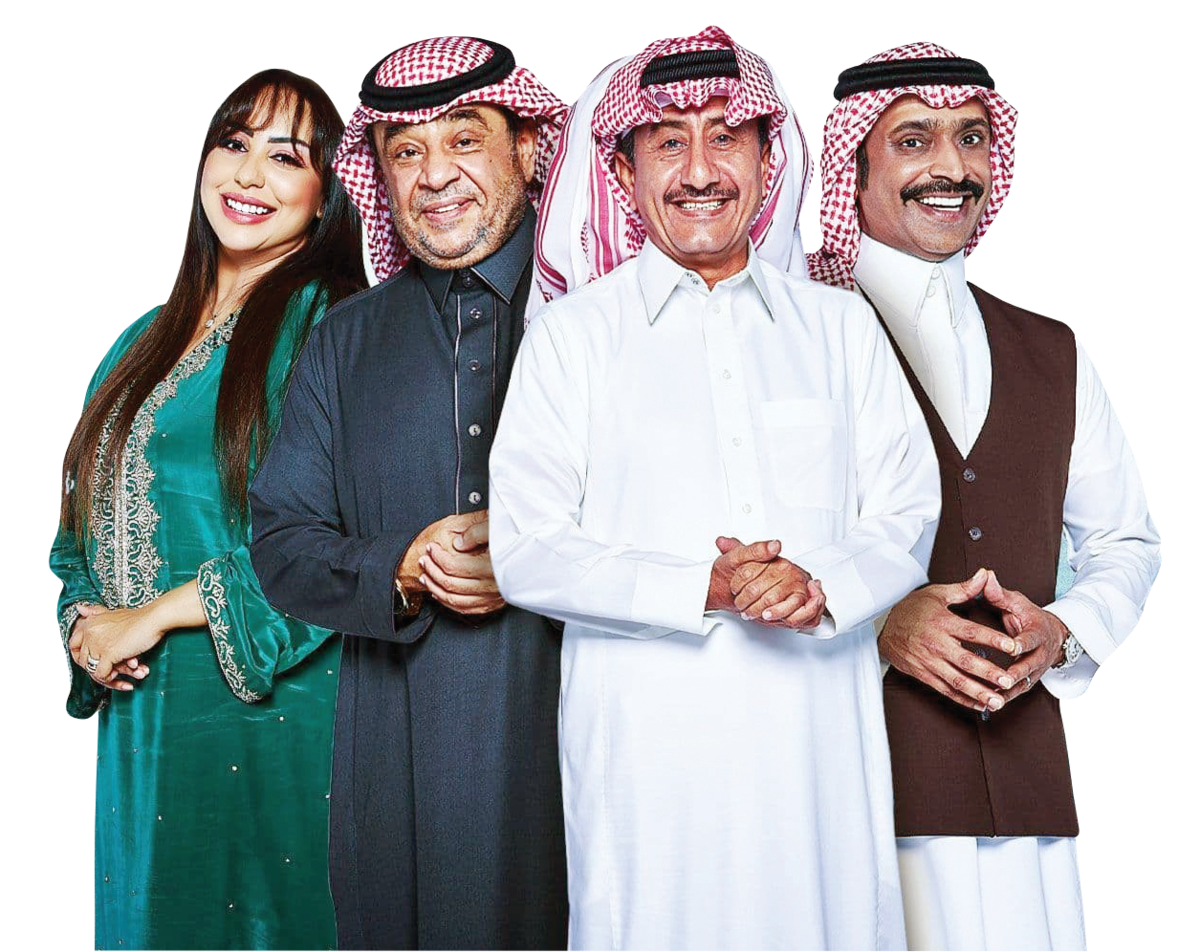
With access to Hollywood productions, Bollywood films and streaming services, the Saudi viewer is 50 years ahead of Saudi productions. (Supplied)
Short Url
Updated 21 May 2020
Follow

Saudi youngsters slam ‘cringing’ quality of Ramadan TV shows

  • Call for a better understanding and respect for audiences

JEDDAH: A popular Saudi YouTuber has slammed some of this year’s Ramadan TV shows for being “uncreative” and “cringing” to watch.

Actor Abdul Majeed Al-Kinani told fans he had been turned off by the “sorry state” of a number of TV offerings produced for the holy month of fasting.

In one of the latest episodes of his hit online show, “Luqaimat,” he singled out two Saudi productions for particular criticism.

Describing the poor standard of acting in the Saudi Broadcasting Authority’s “1 Billion” show, Al-Kinani said: “The worst moment that a human can undergo, is when you watch a scene unfold and cringe, when you’ve got nothing to do with it.”

Playing clips showing actors delivering their lines directly to camera, he added: “I feel offended that our official TV channel is being treated this way.”

Calling for a better understanding and respect for Saudi audiences, he said: “I have high hopes in the people at the authority and ministry to take action and follow up on how this work made it onto the screen in its sorry state.”

He also lambasted Ramadan series “Exit 7,” starring “Tash Ma Tash” actor Nasser Al-Qasabi, for being “uncreative and repetitive” in its plot.

Al-Kinani had pledged that 2019 would be the final season of “Luqaimat,” but due to popular demand he agreed to a return. The light entertainment show was launched in 2012 on the YouTube channel SceenTV covering topical issues in the Kingdom and throughout the Gulf region.

HIGHLIGHTS

  • ‘1 Billion’ show and ‘Exit 7’ have been described as ‘repetitive and uncreative.’
  • ‘Ureem,’ a comedy series about a young man who works for a ride-hailing company, received good response.
  • Call for more professional resources and tools such as talent agencies.

Reacting to Al-Kinani’s comments, Nora Al-Rifai, a 28-year-old TV show and movie fanatic, said: “People’s reaction and the trending hashtag (on Twitter) prove how aware the audience has become to the point where you can’t just present them (TV shows) with any content and call it comedy or drama.

“Because of streaming services and movies reopening, people have a lot to compare it to, and if it doesn’t live up to their expectations, then it has to go,” she added.

Dahlia Baeshen, a Saudi scriptwriter, said there was little to compare between international and local production standards. “We are a much younger industry. Some aspects of filming techniques are less visually appealing. The reopening of cinemas in the Kingdom will further change the taste of upcoming audiences.

“On the other hand, I do believe there is a shift regarding the subject matter of TV shows. Some topics in ‘Exit 7’ were bold and daring and would never have been discussed just a few years back. This leap is quite impressive.”

She noted that the Kingdom had numerous emerging talents with youth aspiring to be filmmakers, writers, and actors.

“Talent is crucial, of course, but I think more importantly, creatives need to find a platform to connect. We have a rich history and culture and a plethora of stories to tell. However, I think in order for TV to change, we need to have a better construction and structure within the industry, matching various talents with one another,” Baeshen added.

Professional resources and tools, such as talent agencies representing artists and writer and director guilds, were necessary, she said.

After witnessing the growth in YouTube TV series, she added: “I think we have come a long way, but there is a lot of room to do more. A lot of the content, especially on YouTube, is very male-oriented. I would love to see more content written by females to reveal the other side of the spectrum.”

Afnan Linjawi, a Saudi screenwriter and poet, said: “With access to Hollywood productions, Bollywood films, streaming services like Netflix, and Spanish, British and other productions, if we do the math, the Saudi viewer is 50 years ahead of Saudi productions.
“The Saudi viewer may know what good TV is, but sadly most don’t know what it takes to make good TV.”

She told Arab News that quality television required a stable and robust production industry with unwavering infrastructure and qualified personnel. “A good decade of failures, trials and errors, and successes is mandatory.”

Saudi producer, Jawaher Al-Mary, said TV in the Kingdom deserved a second chance. “With regard to recent works, I think the ideas in them are repetitive, and some go as far as being shameful. That is not due to a specific genre, be it drama or comedy, but the overall content.”

She felt that “Ureem,” a comedy series about a young man who works for a ride-hailing company, was the only Ramadan show worth noting.

Other social media users echoed Al-Kinani’s frustration about this year’s Ramadan TV content.

Ali Al-Saif said: “Those from his generation have witnessed great media exposure and followed countless massive international works that undoubtedly affected their tastes and the public’s as a result. The viewer can now differentiate between great and less-than-mediocre ones.”


Heritage Commission brings maritime history to life at Shiraa Wooden Ships Festival in Jeddah

Updated 10 sec ago
Follow

Heritage Commission brings maritime history to life at Shiraa Wooden Ships Festival in Jeddah

  • Celebration highlighted Kingdom’s historic relationship with sea

Jeddah: The Saudi Heritage Commission brought Jeddah’s waterfront to life with the Shiraa Wooden Ships Festival, a cultural celebration highlighting the Kingdom’s deep-rooted maritime heritage and its historic relationship with the sea. 

The event, which ran from Jan. 13-16, invited visitors to explore how seafaring shaped coastal life, trade and cultural exchange across the generations.

A Heritage Commission representative said: “Shiraa reflects our commitment to reconnecting people with the sea and reviving maritime heritage through an interactive cultural experience.

“The program restores the human journey with the sea and highlights the historical role of ports in trade, discovery and cultural communication across the ages.”

At the heart of the festival was the Al-Qilafa exhibition, which traced maritime heritage from Qur’anic references to everyday coastal life, the wooden ship itself being a living symbol of memory.

The exhibition unfolded as a narrative journey through a series of interconnected zones. It opened with a contemplative reflection on the sea as a source of divine provision, drawing on Qur’anic references to present the sea as a blessing whose abundance shaped livelihoods and traditions across generations. This introduction was followed by an exploration of the lives of sailors, where traditional costumes, everyday coastal objects, fishing and pearl-diving tools illustrated how survival at sea evolved into skilled crafts supported by accumulated knowledge and expertise.

Saleh Al-Ghamdi, who attended with his children, described the experience as a memorable one, and added: “It was both informative and enjoyable. My children learned how fishermen lived and how wooden ships were built. Offering an event of this scale free of charge is impressive, and I hope to see more initiatives like this.”

The journey continued by examining the broader impact of maritime activity, with ships and maritime crafts displayed alongside maps tracing historic sailing routes, showing how ports became gateways for trade, cultural exchange and discovery, and how coastal cities grew in rhythm with the sea.

Musical instruments associated with coastal sea songs, including a semsemiah, were presented with folkloric maritime chants, reflecting how rituals, music and customs carried the spirit of the sea beyond labor and into community life. Artifacts recovered from the Umluj shipwreck anchored this final section, reinforcing the idea of maritime heritage as a living legacy preserved in memory, practice and culture within coastal communities today.

Beyond the exhibition, visitors entered the artisans’ pavilions, an interactive journey across six stations showcasing traditional maritime crafts, including wooden shipbuilding, net making, rope making, sail making, pearl diving and jewelry creation. These crafts reflected a complete maritime journey, from constructing the ship to transforming the sea’s treasures into artistic value.

The partners’ pavilions highlighted institutions supporting maritime heritage and sustainability. Amal Mohammed, from the Saudi Red Sea Authority, said the authority’s participation aimed to raise awareness of coastal development efforts, and added: “We want visitors to understand how maritime heritage connects to building a thriving and sustainable coastal tourism sector.”

Students from King Abdulaziz University’s Faculty of Maritime Studies also engaged with visitors, introducing academic pathways in maritime transport, navigation, marine engineering and port management.

Abdulrahman Hamid said the interest from young visitors was encouraging, and added: “There is growing demand for maritime expertise locally and internationally, in line with Saudi Vision 2030. Many young boys and girls showed curiosity about maritime studies, and we explained that while the field is challenging, it offers important career opportunities.”

Families and children gathered at Shiraa Square, an interactive entertainment space featuring traditional games, hands-on shipbuilding activities, remote-controlled boat racing in collaboration with the Saudi Sailing Federation, and sailboat riding.

Artistic expression was highlighted in the Al-Danah zone through the visual arts concept “Dreamed by Us,” featuring photography by Alan Villers. Designed as a tranquil space inspired by the symbolism of pearls, the area combined video content and interactive elements by ZFX and ID Scenes with sculptures, installations and light-based artworks that explored themes of beauty, patience and discovery.

The festival also featured interactive workshops at Craft Shore, where visitors tried net making, opening oysters to extract pearls, creating sea-inspired canvases and sculpting waves in clay.

Farah Ahmed, who was visiting from Makkah, said the activities brought heritage to life in an engaging way, adding: “It wasn’t just something to observe, it was hands-on and educational, and we learned a great deal while enjoying the experience.”

High school student Hanan Soufi said the festival had influenced her academic ambitions, and added: “I’m interested in marine engineering, and visiting the King Abdulaziz University booth helped me understand that women can pursue these studies.

“The Al-Qilafa exhibition was especially informative, from traditional clothing and tools to navigation, port cities and maritime music. It was truly a standout experience.”