LAHORE: When the coronavirus outbreak brought many businesses in Lahore to a halt, Nazia, a widow who makes a living as a seamstress, was left with no orders and source of income to feed her three children.
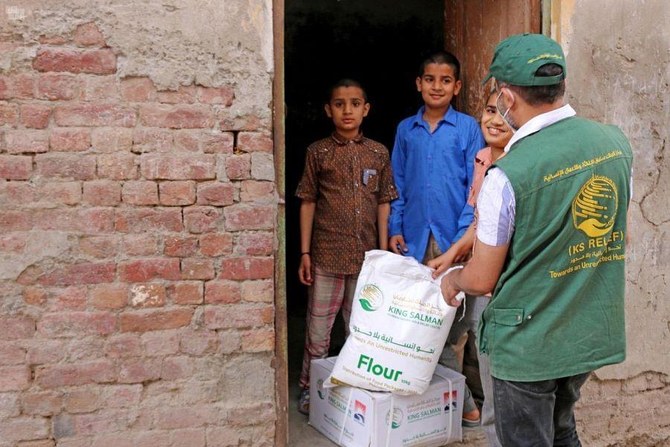
As she continued to return home empty-handed, suddenly a call came from local officials who said that a package with food staples was waiting for her.
“I received a call from my area’s union council vice chairman that a food package was waiting for me at the governor’s house. I went there and saw on the parcel that it was from Saudi Arabia,” Nazia told Arab News.
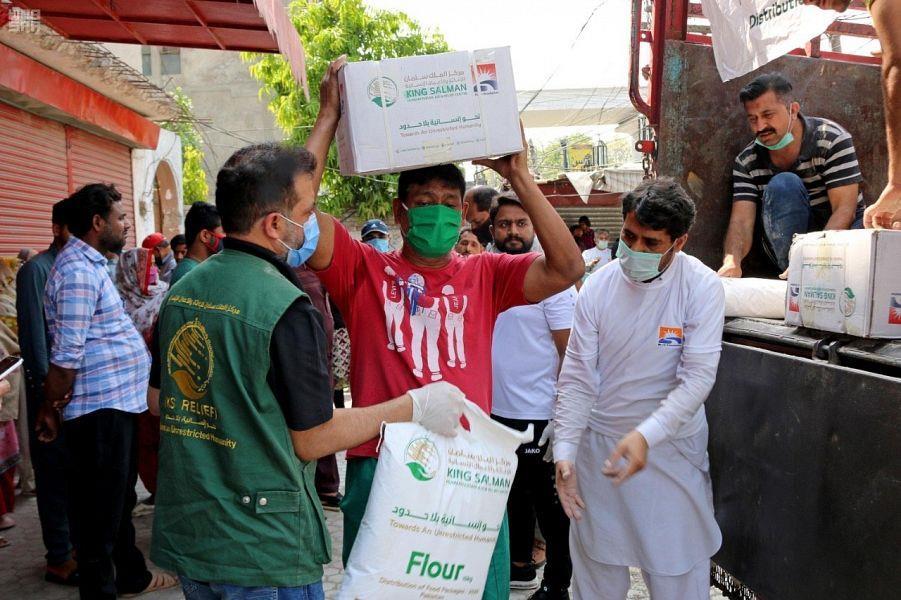
KSRelief workers unload packages with food aid for families in coronavirus-hit Punjab. (Photo courtesy: SPA)
“I thanked God for it. At this moment, when I have no work, this food ration allows me to my feed my family for the entire month,” she said, adding that it was a blessing.
The package came from King Salman Humanitarian Aid and Relief Center (KSRelief), which on April 23 launched a special Ramadan assistance project for Punjab and with the help of its governor’s office distributed $1 million worth of food parcels in the province.
The aid reached 154,000 people, Sardar Pawan Singh, spokesman for the Punjab governor, told Arab News.
“The governor distributed 21,500 food parcels to needy families, helping 154,000 people in Punjab in the wake of the pandemic. The total worth of the distributed food was Rs160 million,” he said.
Akbar Ali, a roadside carpenter in Lahore, was also one of those who received the help.
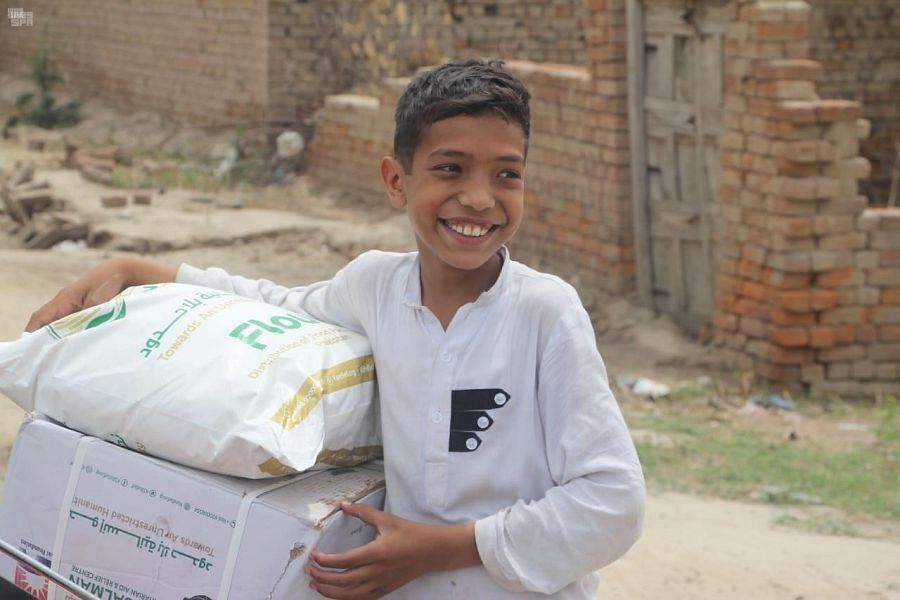
A boy carries a food package from KSRelief's food assistance program for Punjab province. (Photo courtesy: SPA)
“The disease has brought us to the verge of starvation. I’ve had no work for the past three months. This food gift was a big relief to me my family,” he said.
Punjab Governor Chaudhary Muhammad Sarwar expressed gratitude to KSRelief for supporting the people of Punjab “in this hour of need.”
“The Saudi government and royal family have always supported Pakistanis. In these difficult moments, their help alleviates the misery,” he said in a statement for Arab News on Monday.
The assistance came as Pakistan’s most populous province faced mass job losses amid business shutdowns enforced to contain the spread of coronavirus.
“We started this project from Punjab since it is the most populated province and severely affected by COVID-19,” Dr. Khalid Al-Othmani, director KSRelief Pakistan, told Arab News at the project’s inauguration ceremony in Islamabad.
The beneficiaries were selected with the help of Punjab authorities.
“Local administrations identified the families in need and provided lists. The food packages were delivered to doorsteps. There was no chance of cheating, because people know each other at the neighborhood level,” the Punjab governor’s spokesman said.
Each Ramadan package — weighing about 30 kilograms — contained rice, cooking oil, milk powder, besan, sugar, black tea, dates, and wheat.
Throughout the fasting month, the program has reached families in Lahore, Faisalabad, Jhang, Toba Tek Singh, Khanewal, Muzzafargarh, Rajanpur, Pakpattan, Rahim Yar Khan, and Bahawalnagar.
KSRelief has provided humanitarian and development assistance to millions of beneficiaries in more than 49 countries. Pakistan is the fifth-largest recipient of assistance from the Saudi-based international agency and has received more than $120 million in aid since 2005.