

Turkish drama brings ‘basket of goodness’ to PM Khan’s residential vicinity 

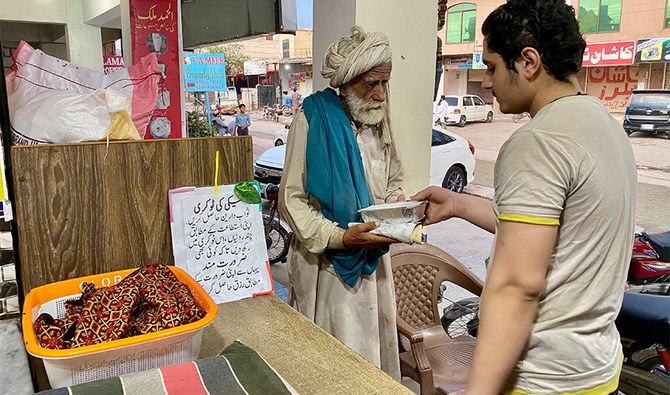
An oven owner gives out naan from his "basket of goodness" in Bani Gala, Islamabad on May 18, 2020. (AN Photo)
Short Url
Updated 18 May 2020
Follow

Turkish drama brings ‘basket of goodness’ to PM Khan’s residential vicinity 

  • People put extra loaves of bread in the basket when buying for themselves while the needy take without asking 
  • Around 250 loaves were given to the poor on a day, said one of the owners of the six ovens welcoming the initiative

ISLAMABAD: Inspired by an ancient Ottoman tradition depicted in hit Turkish historical drama series “Dirilis Ertugrul,” one Pakistani doctor brought the good habit home. 

Dr. Rana Muhammad Ikhlaq, started by placing “baskets of goodness” at different ovens in Bani Gala area of the capital Islamabad near the prime minister’s residence, to provide free bread to the poor. 

“The basket of goodness is a scheme that requires neither too much money nor too much arrangement to run,” Dr. Ikhlaq said. “First, I watched this basket of goodness in Ertugrul, then I searched more about it and watched a documentary about this ancient Turkish tradition Of Ottoman empire. It inspired me a lot,” he told Arab News on Monday. 
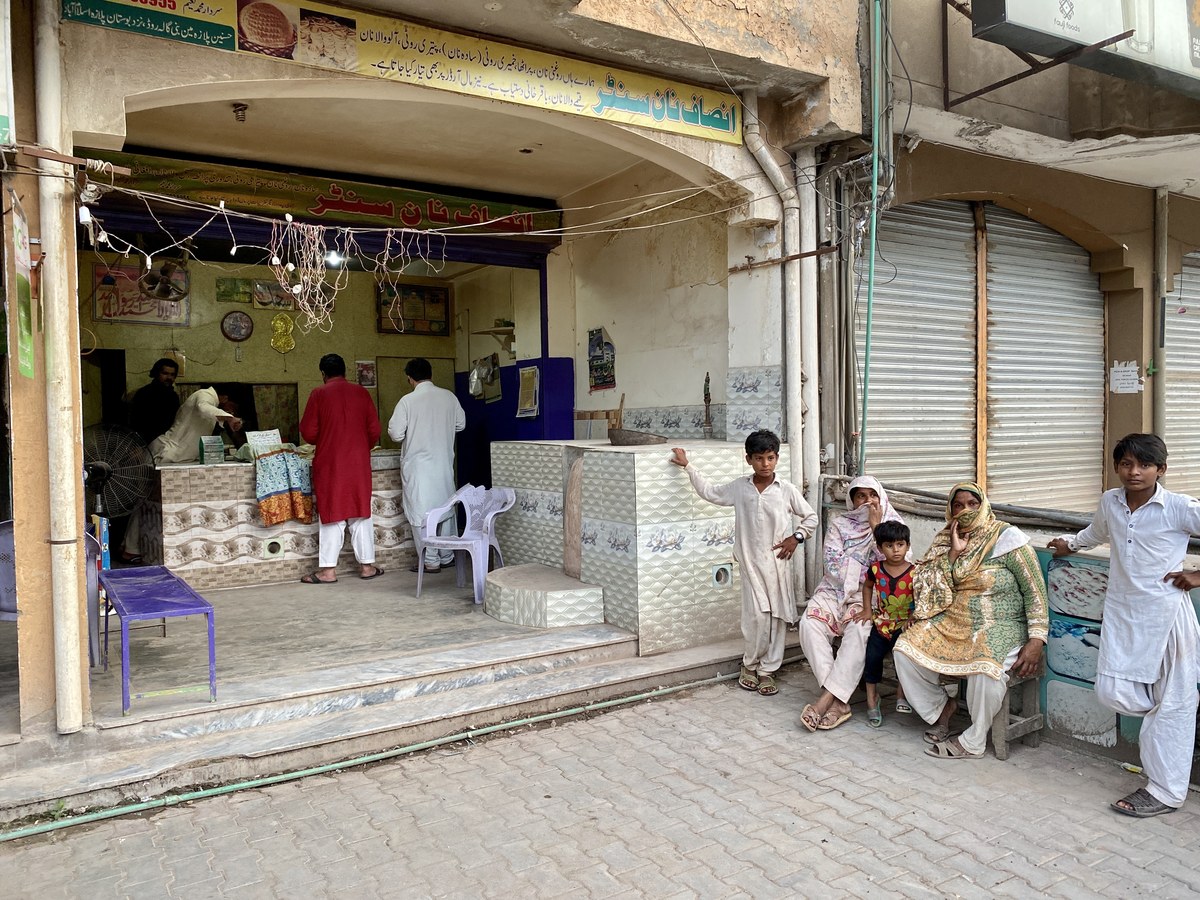


People are waiting in front of an oven in Bani Gala, Islamabad on May 18, 2020. (AN Photo)

“It is very simple concept as I just placed baskets with a written message on six ovens in Bani Gala where people, who can afford, will put bread in it and the needy will take without asking anyone,” he said.

Ikhlaq said that in the beginning he told the oven owners not to leave the basket empty and if no one would put bread in it, then they should fill the basket on his behalf and charge him. 

“I used to check with them to give money but not once has the basket been left empty by the customers,” he added.
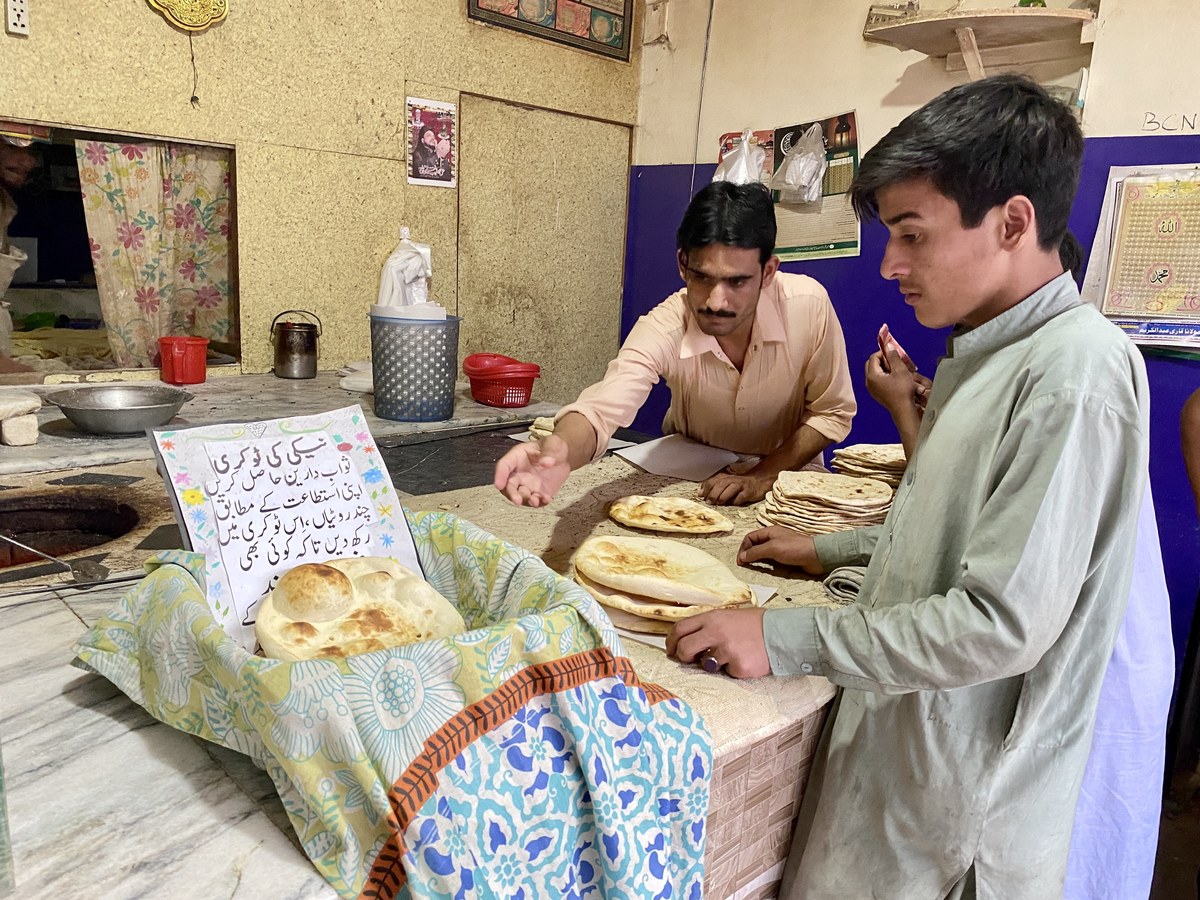


An oven employee is placing bread in a "basket of goodness" in Bani Gala, Islamabad on May 18, 2020. (AN Photo)

Sardar Azeem, the owner of one such oven in Bani Gala, told Arab News that people happily put two to four loaves in the basket and around 250 loaves were given to the needy on a day at his oven alone.

“Many a times, the bread was in excess of those in need. In that case we can always save the money by selling bread to regular customers and provide different curry dishes to the needy with that money,” he continued.

“The concept is so successful that now people have started bringing curries and placing the parcels at our oven to be distributed among the needy along with the bread,” he added.

“I used to go from house to house to get food for myself and my family. I am not a beggar but I have no children to look after me and my old wife,” said Aslam Khan, a 70-year-old man taking bread from the basket, told Arab News, adding that for the last three weeks he could find food from the oven without paying money.
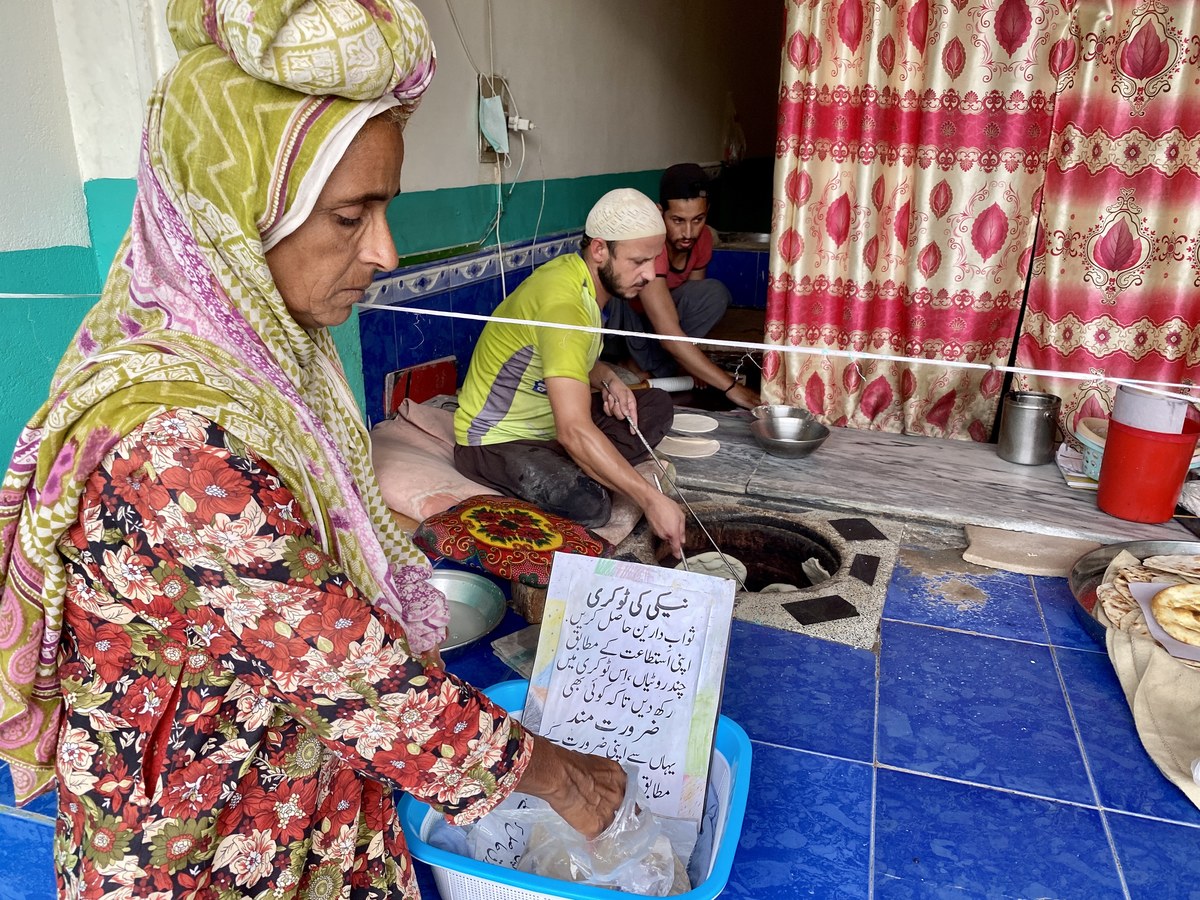


A woman receives bread from a "basket of goodness" at an oven in Bani Gala, Islamabad on May 18, 2020. (AN Photo)

“Initially, they only used to give bread but now they are also provide curry which completes our meal,” he said.

Turkish drama series “Dirilis (Resurrection): Ertugrul” has been a mega hit in Pakistan ever since Prime Minister Imran Khan gave the directive to state-run Pakistan Television (PTV) to launch the first episode dubbed in Urdu on April 25, which also marked the first day of the Muslim fasting month of Ramadan.

According to PTV, 133.38 million people have so far watched the drama series from April 25 to May 14 with its episodes trending on YouTube in Pakistan every day.


Pakistan, UK launch £10 million higher education partnership

Updated 5 sec ago
Follow

Pakistan, UK launch £10 million higher education partnership

  • Pak-UK Education Gateway second phase expands climate research, scholarships, university exchanges
  • First phase was launched in 2018 and delivered 165 partnerships, 2,000 joint studies and £5 million in grants

ISLAMABAD: Pakistan’s Higher Education Commission (HEC) and the British Council have launched the £10 million second phase of the Pak-UK Education Gateway, the HEC said on Monday, a joint initiative aimed at deepening collaboration between universities in both countries on research, mobility and higher-education reform.

The program, funded equally by the HEC and the British Council, builds on a partnership launched in 2018 and seeks to strengthen institutional ties between Pakistani and British universities, focusing on shared challenges including climate change, skills development and economic growth.

Education cooperation has become an increasingly important pillar of broader Pakistan-UK relations, as both countries look to expand academic mobility, research collaboration and international recognition of qualifications at a time when higher-education systems face pressure to respond to climate risks, labor-market shifts and funding constraints.

“This £10 million partnership is set to deepen collaboration between UK and Pakistani universities on critical issues like Climate Change and Mobility. A true system-to-system commitment,” the HEC said in an X post. 

According to the British Council and HEC, the first phase of the Pak-UK Education Gateway supported 165 institutional partnerships, generated around 2,000 joint research papers and awarded £5 million in research grants. Officials say the second phase aims to build on that foundation as part of a longer-term effort to internationalize Pakistan’s higher-education sector.

“Education is the building block of growth and prosperity. Our work on education in Pakistan supports people throughout their lives: from helping reform education policy at the school level, to our strong partnership in higher education,” British High Commissioner Jane Marriott said in a statement.

“This next phase builds on our already strong relationship, and will unlock opportunities to help both our higher education sectors thrive.”

Opportunities under the second phase include increased funding for scholarships, joint research grants and faculty exchanges, alongside a Start-Up Challenge Fund to support Pakistan-UK university collaborations pursuing commercial opportunities and access to new markets.

The program will also focus on leadership and governance reforms within Pakistan’s higher-education system, including quality assurance, improved campus accessibility for people with disabilities, and greater participation of women in senior leadership roles. It further aims to expand opportunities for Pakistani students to study UK-accredited courses without leaving their home cities, alongside a commitment to mutual recognition of qualifications.

Pakistan’s Minister for Federal Education and Professional Training Khalid Maqbool Siddiqui said the initiative had already delivered concrete results since its launch in 2018, calling education “the bridge that connects people, cultures, and futures.”

Acting HEC Chairperson Nadeem Mahbub described the Gateway as a system-to-system partnership rather than a stand-alone program, noting that it had benefited institutions and students in both countries.