

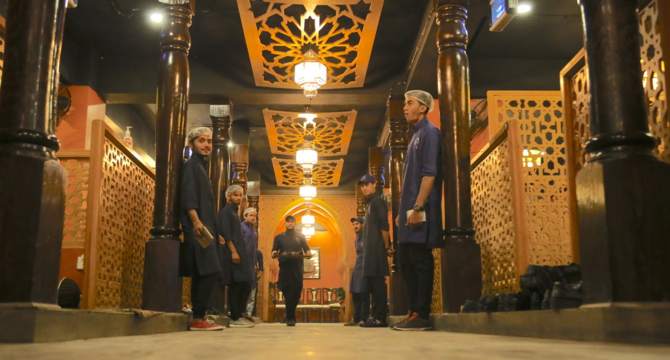

KARACHI: With the ongoing anti-coronavirus lockdown across Karachi, several restaurants were forced to flip their door signs to “closed.”
That, however, has done little to spoil the appetite of residents in Pakistan’s financial capital, with Middle Eastern cuisine finding a permanent place in their iftar and suhoor schedules, restaurant owners told Arab News on Tuesday.
With the eating out culture on a decline, they said they were staying afloat by catering to a demand for home deliveries, particularly during Ramadan this year which is being observed under a lockdown.
One such eatery is the Ridan House Of Mandi – one of the pioneer restaurants for Middle Eastern food in Karachi – located along the Khalid Bin Waleed Road, one of the city’s commercial hubs.
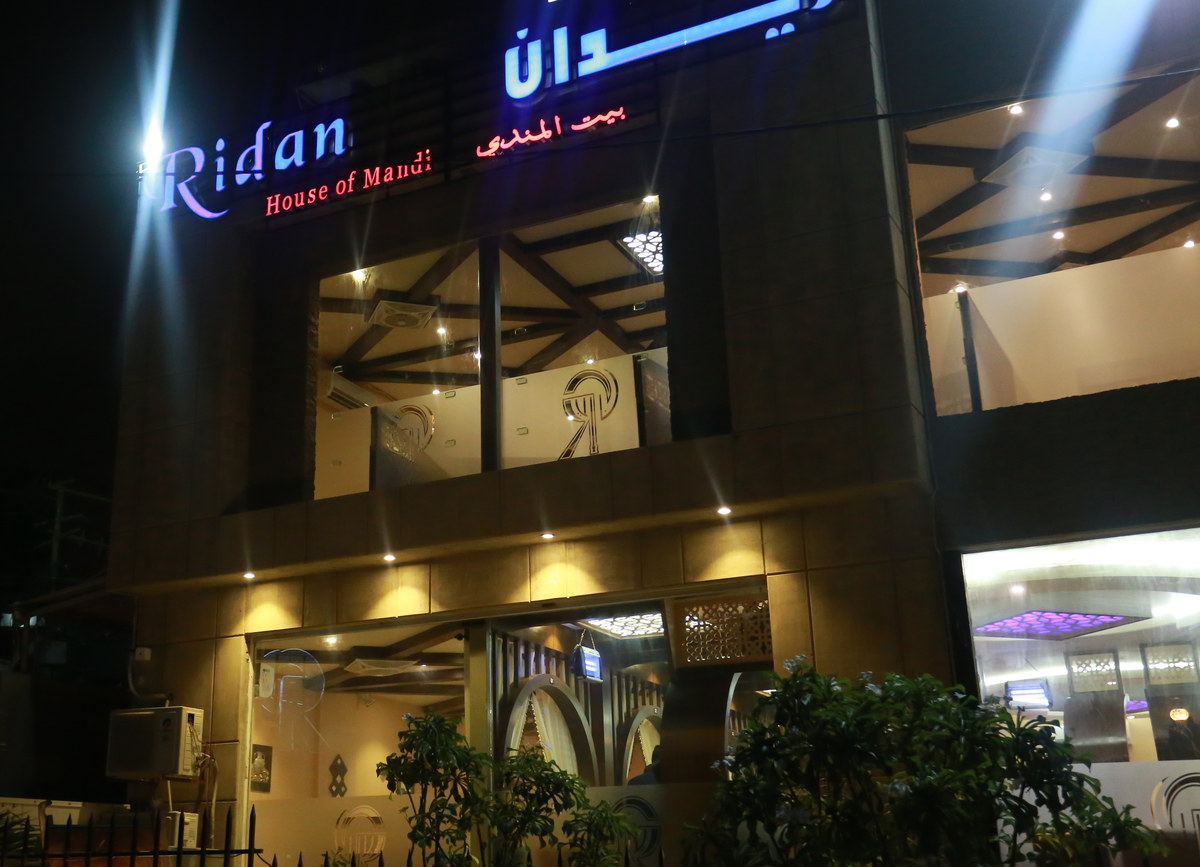
Ridan House of Mandi, one of the pioneer restaurants for Middle Eastern food in Karachi, is seen from the outside on May 13, 2020 Karachi, Pakistan. (Photo courtesy: Ridan House of Mandi)
“Ramadan has brought some business, and our online and delivery orders have tripled/threefold (300 percent),” Danish Hafeez Khan, the Marketing Manager of the restaurant told Arab News, adding that because of the stipulated delivery schedule provided by the government, which is from 5 p.m. to 10 pm, “we could not take more orders.”
He added that despite losing 70 percent of the overall business due to the lockdown, the restaurant had seen a 10 to 20 percent increase in home deliveries and subsequent profits.
To ensure quality control, Khan said Ridan was following all the SOPs provided by the government.
Another restaurant that has had its cash register ringing in is the Mandi House, nestled along the Shaheed-e-Millat Road.
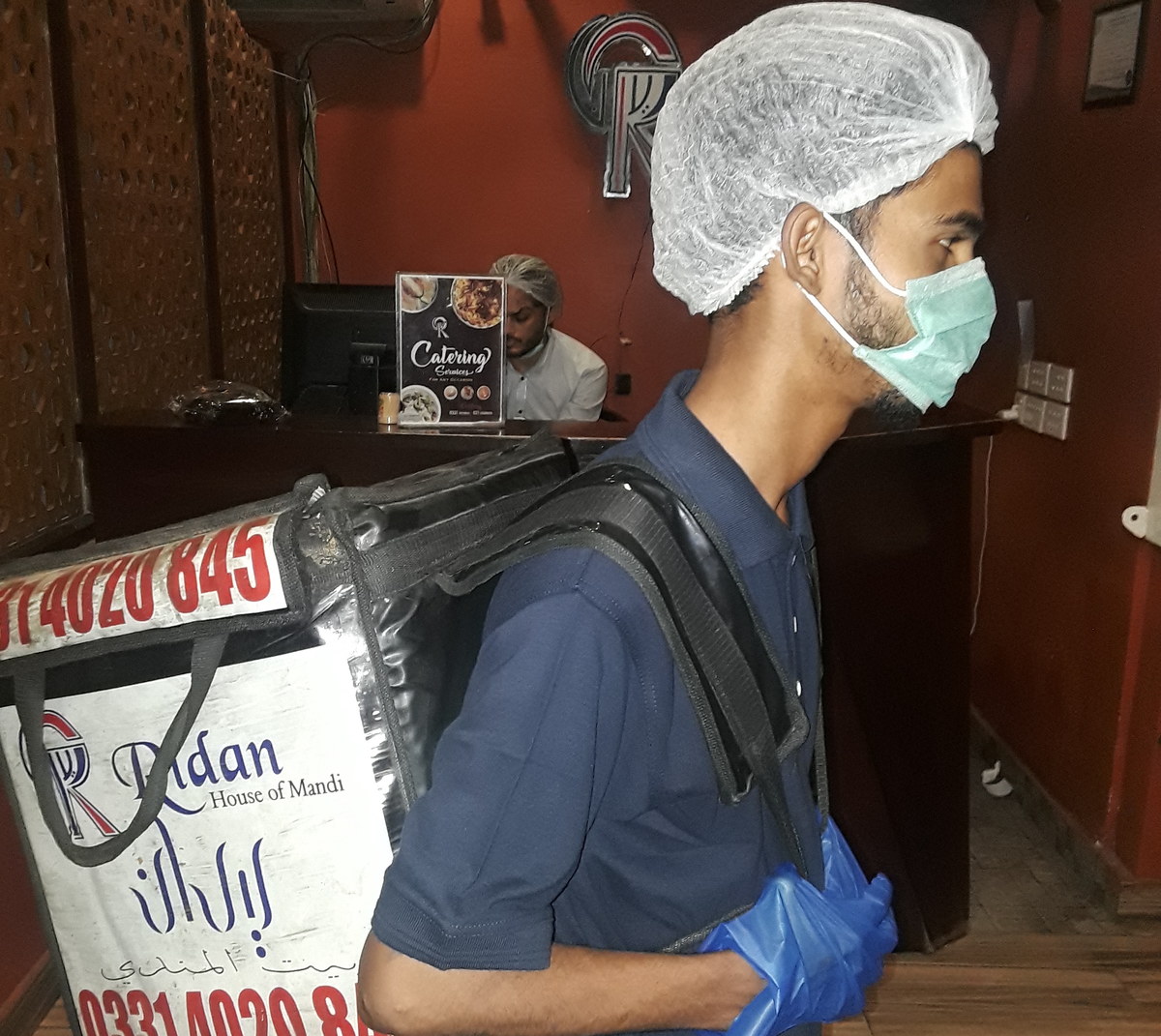
A delivery boy of Ridan House of Mandi in Karachi is wearing a protective face mask and gloves on May 13, 2020 Karachi, Pakistan. (Photo courtesy: Ridan House of Mandi)
Manager Usama Sajid told Arab News that while the home delivery orders are better than those during Ramadan last year, they could not be compared to the profits which the restaurant would have incurred, had people been dining in.
“In lockdown down before Ramadan, the weekends were busy but in Ramadan; every day is as busy as the weekend for delivery orders,” Sajid said, adding that Chicken Mandi, Mutton Madfoon and Kunafa (a dessert) were their most popular items.
Following closely on its heels is Paramount Fine Foods, another famous eatery specializing in Lebanese and Middle Eastern cuisine, with two branches in the city.
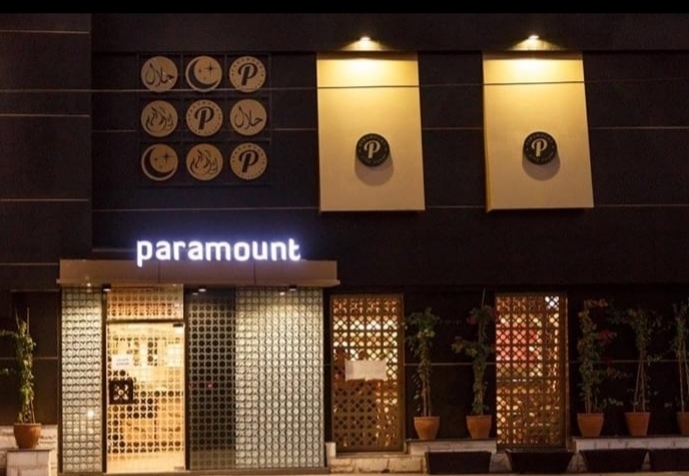
Paramount Fine Foods restaurant in Karachi is seen from the outside on May 14, 2020 Karachi, Pakistan. (Photo courtesy: Paramount Fine Foods)
Auditor and marketing manager, Syed Jawad Hussain, told Arab News that since they were only allowed home deliveries, it was difficult to calculate the percentage increase in total sales, citing other factors as well.
“At the moment, 100 percent sale is delivery based. However, we can assume a 25-30 percent increase in delivery orders volume is due to Ramadan,” Hussain said, adding that barbequed items and cold mezze were most in demand this year.
Amin Ladhani, manager of Damascus Restaurant, agrees.
The eatery located in the Clifton area of Karachi is trendy among the youth for its Middle Eastern fast-food items, such as Shawarmas and Chicken Farrouj, which were in high demand.
Ladhani told Arab News that while they were receiving most of the orders from Food Panda (a home delivery service), they were observing in-house, anti-virus measures, too.


