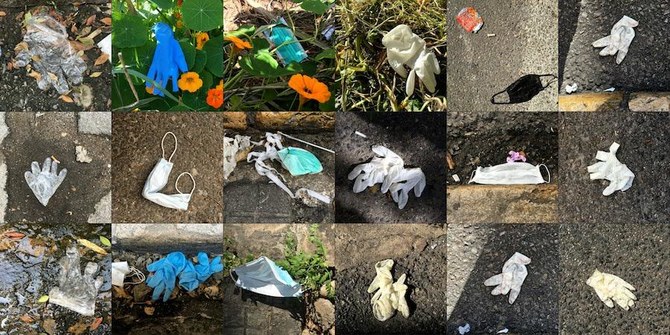
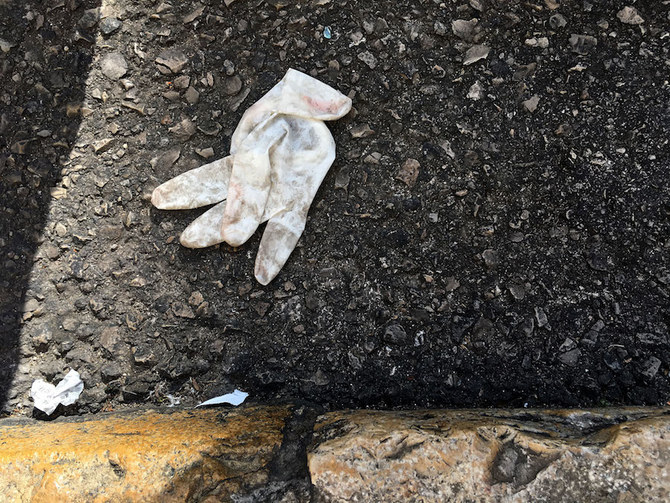
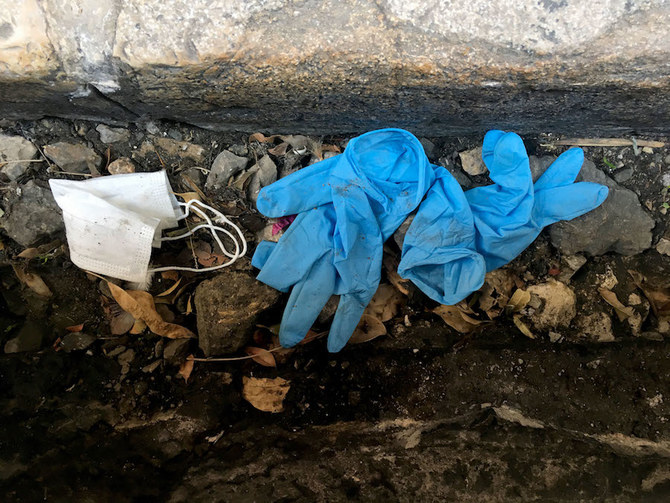
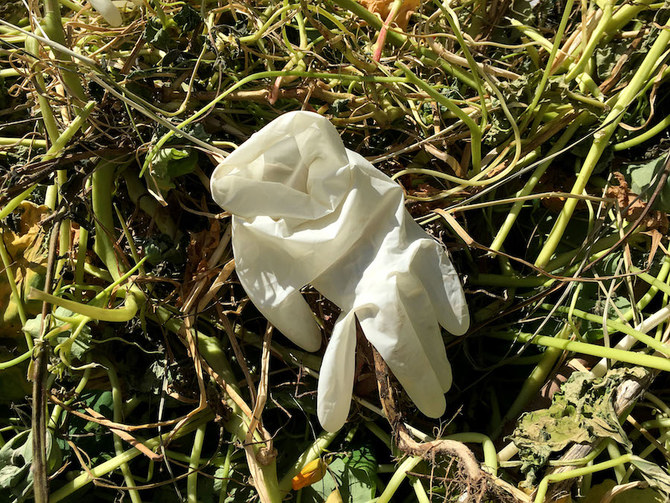
BEIRUT: While walking in Beirut during the coronavirus lockdown recently, Omar Frangieh was struck by the number of face masks and gloves littering the Lebanese capital.
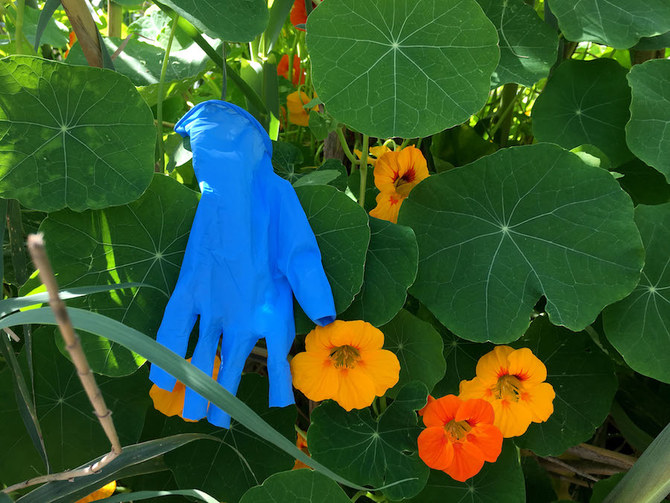
The photographer, concerned that contaminated waste could itself transmit the disease, took 200 photos of discarded personal protective equipment and posted them in a Facebook album he titled “Invaders in Beirut.”
From Baghdad to Gaza, the disposable masks and gloves that remain in high demand to protect populations from the coronavirus pandemic are discarded after use, adding to pollution.
“The major concern though is the fact that this protective equipment is turned into a health hazard by being littered all over Beirut streets,” Frangieh told AFP.
While the virus is usually transmitted by close human contact via respiratory droplets, studies show it can survive on some surfaces for days, suggesting that discarded gloves and masks could pose a risk of transmission to whoever cleans them up.
Since the coronavirus emerged in China in December, countries across the Middle East have reported 7,711 deaths and 233,522 COVID-19 cases.
The run on the protective gear has come even as opinion is divided on how useful they are.
The World Health Organization says washing hands regularly is more effective than wearing gloves for preventing the spread of the virus.
The US Center for Disease Control advises ordinary people to wear washable cloth masks in public, allowing in-demand single-use respirators and surgical masks to be used by health care workers and other at-risk groups.
In the Palestinian enclave of Gaza on the eastern Mediterranean, the beachfront — already polluted with rubbish — is now also littered with masks and gloves.
The items are designed to be single use, are not recyclable and most will not biodegrade making them an unsightly source of pollution and potential hazard to marine life if they end up in the ocean.
Some small shop owners have taken the initiative to collect them and put them in the trash bin but the beach has long been dotted with rubbish, with poor Gazans often dumping their waste there.
Lina Ouda, who was out for a stroll with her husband, stopped to pick up several discarded items.
“I noticed masks and gloves lying on the cornice and put them in the garbage bin because these things pollute the beach,” the 30-year-old told AFP.
Her husband Jamal Ouda explained: “There is no general culture of cleaning the beaches in Gaza but some people take the initiative to collect the remnants of protective medical gear such as masks and put them in the trash.”
But unfortunately, he said, “many people walk wearing masks and gloves and (at the end) throw them on the ground.”


![]()
![]()
![]()
![]()
![]()
![]()
![]()
![]()

Gloves and masks litter Middle East amid virus panic


Short Url
https://arab.news/mma34
Gloves and masks litter Middle East amid virus panic
- From Baghdad to Gaza, the disposable masks and gloves that remain in high demand to protect populations from the coronavirus pandemic are discarded after use, adding to pollution


Latest updates




Recommended


© 2026 SAUDI RESEARCH & PUBLISHING COMPANY, All Rights Reserved And subject to Terms of Use Agreement.