Ozone technology used to sterilize holy sites in Makkah during COVID-19 outbreak

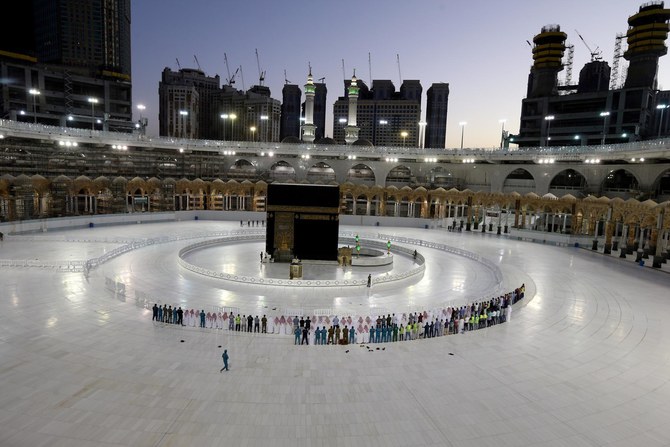
Worshippers perform Taraweeh prayers in front of the Kaaba in the Grand Mosque on the first day of Ramadan on April 24 in Makkah, Saudi Arabia. (Reuters)
Short Url
Updated 30 April 2020
Follow

Ozone technology used to sterilize holy sites in Makkah during COVID-19 outbreak

  • The presidency has installed ozone-technology sterilization devices in the Grand Mosque’s air-conditioning

MAKKAH: The General Presidency for the Affairs of Two Holy Mosques has announced that it is using ozone technology to sterilize the Grand Mosque and Kaaba in Makkah as part of its ongoing precautionary measures to prevent the spread of COVID-19.
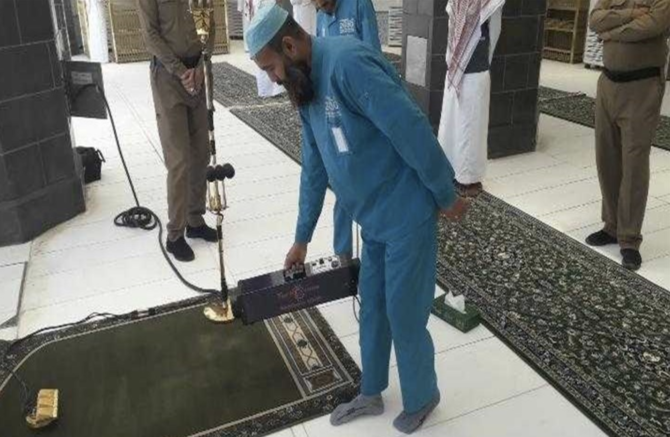


The General Presidency for the Affairs of Two Holy Mosques has announced that it is using ozone technology to sterilize the Grand Mosque and Kaaba in Makkah. (SPA)

The presidency has installed ozone-technology sterilization devices in the Grand Mosque’s air-conditioning systems and has disinfected floors and carpets using mobile devices.

Ozone gas is high in oxidants, which are able to kill microorganisms including some bacteria and viruses. In addition, it does not leave toxic residue behind, unlike many industrial cleaning solutions.

The sterilization measures have been carried out according to the directives of the General President of Two Holy Mosques Sheikh Dr. Abdul Rahman bin Abdulaziz Al-Sudais.


Ramadan in Madinah: A blend of tradition and modernity

Updated 21 February 2026
Follow

Ramadan in Madinah: A blend of tradition and modernity

  • Ramadan iftar tables in the neighborhoods have evolved into a community initiative that promotes solidarity and neighborliness

MADINAH: In the holy city of Madinah, Ramadan highlights a seamless blend of ancestral traditions and modern celebrations, as residents decorate homes and streets with lanterns.

Women play a central role in creating this spiritual atmosphere, transitioning from handmade ornaments to curated prayer spaces and Ramadan diaries for children.

Social solidarity remains the city’ cornerstone, manifested through the exchange of Ramadan baskets and the organization of massive communal iftar meals at the Prophet’s Mosque and in local neighborhoods.

Ramadan iftar tables in the neighborhoods have evolved into a community initiative that promotes solidarity and neighborliness.

The project has been undertaken by “Mujtamaei,” the Neighborhood Centers Association in Madinah Region, in partnership with the Madinah Regional Municipality, and covers 97 locations across residential districts.

The initiative organizes daily iftar gatherings that bring together residents, volunteers, and partner entities, reflecting strong community cohesion and fostering volunteerism and social connection among neighborhood residents and visitors during the holy month.

The program provides more than 80,000 iftar and sahoor meals, benefiting over 40,000 individuals, with 1,600 volunteers overseeing site organization and service delivery in accordance with quality and safety standards.

The project is part of a community development system that expands annually, focusing on increasing volunteer participation and strengthening partnerships, thereby reinforcing social values and revitalizing the spirit of neighborliness in Madinah.