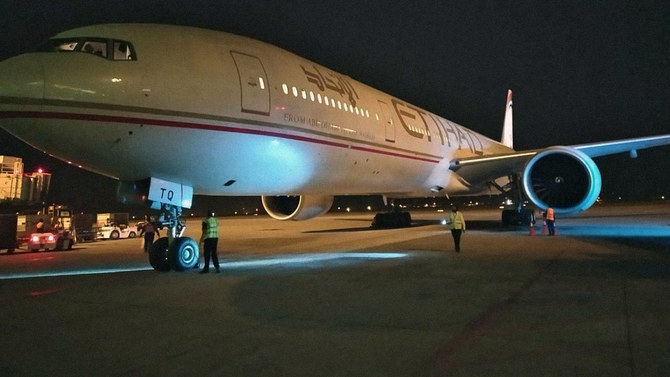
ISLAMABAD: The United Arab Emirates on Tuesday delivered a third batch of medical and food supplies to Pakistan to support its fight against the coronavirus pandemic, the UAE Embassy said in a statement.
“The United Arab Emirates today sent an aid plane containing 14 metric tons of medical and food supplies to Pakistan to bolster the country’s efforts to curb the spread of COVID-19,” the statement informed.
The aid will assist approximately 7,000 medical professionals as they work to contain the virus.
“As part of the bilateral cooperation that has underpinned the brotherly relations between our two countries for decades, the UAE is proud to extend assistance to Pakistan in furtherance of global solidarity in the fight against COVID-19,” Hamad Obaid Al Zaabi, UAE Ambassador to Pakistan, noted.
“Through this aid, we honor the frontline health care workers in Pakistan and around the world who are working tirelessly to put an end to this crisis,” he remarked.
The UAE delivered the first batch of critical medical supplies to Pakistan on April 2. On April 5, the second batch of 11 metric tons of medical supplies provided by the UAE arrived in Islamabad.
“To date, the UAE has provided more than 320 metric tons of aid to over 30 countries, supporting nearly 320,000 medical professionals in the process,” the statement read.
In the past two weeks, Pakistan has witnessed a surge in COVID-19 cases, and more than 14,000 people have so far been diagnosed with the respiratory illness with more than 300 related deaths.
According to the health ministry data, there are 4,956 patients in Sindh, 5,640 in Punjab, 1,984 in Khyber Pakhtunkhwa, 853 in Balochistan, 320 in Gilgit-Baltistan, 261 Islamabad and 65 in Azad Kashmir.
So far, 157,223 tests have been done in the country. The authorities conducted 6,417 tests during the last 24 hours.


![]()

UAE delivers third batch of medical, food supplies to Pakistan to fight virus
Short Url
https://arab.news/czafh
UAE delivers third batch of medical, food supplies to Pakistan to fight virus
- Aid will assist approximately 7,000 medical professionals as they work to contain the virus
- UAE is proud to extend assistance to Pakistan in furtherance of global solidarity in the fight against COVID-19, says Ambassador Al Zaabi
Latest updates


© 2026 SAUDI RESEARCH & PUBLISHING COMPANY, All Rights Reserved And subject to Terms of Use Agreement.