Finding Nagaland: Tribes on India-Myanmar frontier dream of unity

1 / 4
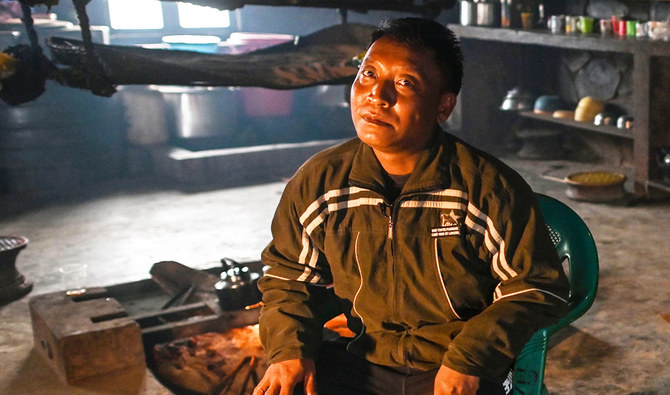
This photo taken on February 8, 2020 shows Tonyei Phawng, king of the Konyak tribe, talking to AFP during an interview inside his home in Longwa village in Myanmar's Sagaing region, near the border with India. (AFP)
2 / 4
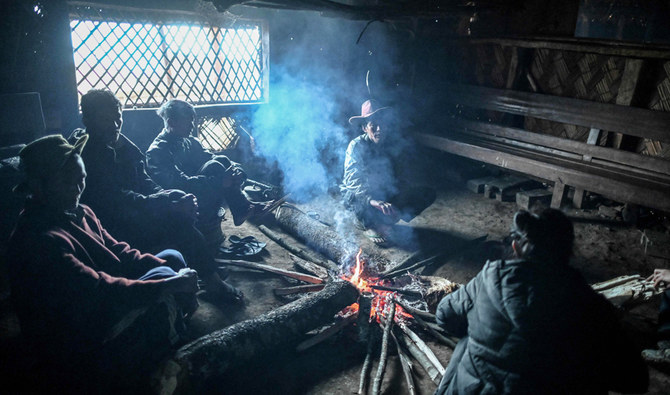
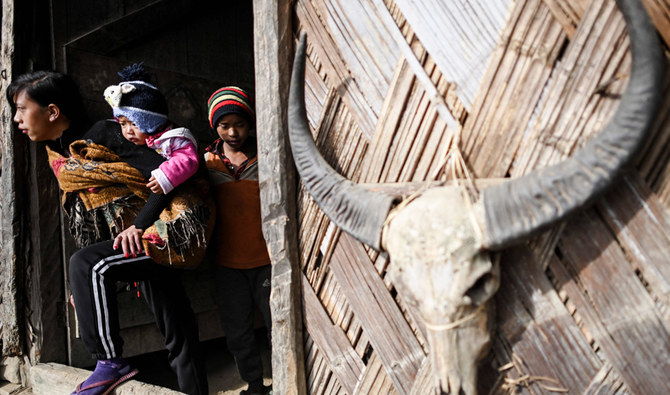
This photo taken on February 9, 2020 shows people resting inside their house in Karmawlawyi village in Myanmar's Sagaing region, near the border with India. (AFP)
3 / 4
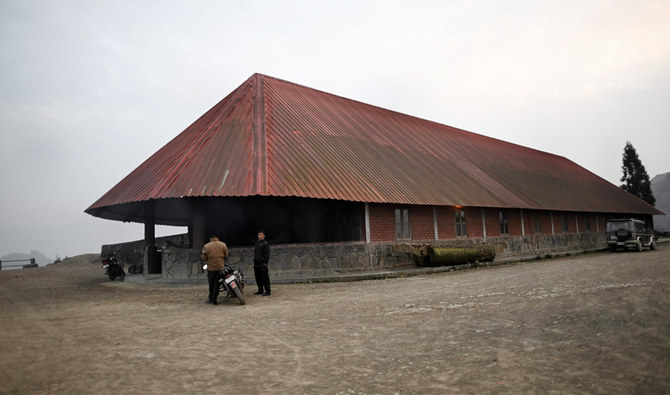
This photo taken on February 8, 2020 shows a general view of the house of Tonyei Phawng, the Konyak tribe's king, in Longwa village in Myanmar's Sagaing region, near the border with India. (AFP)
4 / 4
This photo taken on February 9, 2020 shows people leaving a Union Solidarity and Development Party house in Karmawlawyi village in Myanmar's Sagaing region, near the border with India. (AFP)
Short Url
Updated 28 April 2020
Follow

Finding Nagaland: Tribes on India-Myanmar frontier dream of unity

  • The Naga on both sides enjoy some degree of autonomy, but there is a huge disparity of development

LONGWA, MYANMAR: The king of the Konyak tribe sleeps in Myanmar, but eats in India — his house, village and people divided by a mountain border which serves as a vulnerable lifeline now severed by a coronavirus lockdown.
The Konyak are just one of dozens of Naga tribes, a people yearning to reunite the 3 million living in India with their 400,000 estranged — and much poorer — cousins in Myanmar’s isolated far north.
Many from Myanmar cross the border to attend school, sell vegetables or visit a hospital, as it is a days-long journeys by foot to the nearest town in Myanmar.
Even in normal times, they live at the mercy of Indian soldiers guarding checkpoints against the threat of guerrilla groups fighting for reunification.
Tonyei Phawng claims to be the 12th generation of his family to rule the Konyak, whose feared tattooed warriors once brought home their enemies’ heads as trophies.
His son, the crown prince, will one day take over in a lineage many believe possess supernatural powers.
Dressed in civilian tracksuit and trainers in his village of Longwa, the 43-year-old king described to AFP in February how his Myanmar brothers were often stopped at the border and detained. “Their rights are denied.”
Days later, the border was shuttered, not at the whim of Indian soldiers, but due to the threat of COVID-19.
While the Indian government was providing some emergency rations, nothing had arrived from Myanmar authorities, Longwa-based tour guide Nahmai Konyak, 34, told AFP by phone. Those living hand-to-mouth in Myanmar are finding it very difficult, he said. “We just can’t help them.”

Retreating British colonialists left behind the frontier after World War II, cleaving the Konyak tribe of 44 villages in two — alongside several other tribes.
The Naga on both sides enjoy some degree of autonomy, but there is a huge disparity of development.
Indian roads lead right up to the frontier, bringing business and even some hardy tourists.
Over the border, off-grid villages with few schools or amenities dot thickly-forested slopes, connected by muddy paths in one of Myanmar’s poorest regions.
Thousands of Naga have taken up arms over decades to try to win a united homeland by force.
The rebels splintered in the late 80s into two main groups, one fighting for the Naga cause each side of the border.
Civilians must pay taxes to help finance the groups and many families “sacrifice” a son to the resistance, says Myanmar Naga activist Jacob Ngansa.
But Delhi’s relative investment is chiselling away support over the border, the 23-year-old admits with sadness.
“They are brainwashed by the Indian government.”
With India-Myanmar relations blossoming, these are ominous times for Naga nationalists.
The Southeast Asian nation is hungry for new allies after being snubbed by the West over the Rohingya crisis, while India is keen to counter China’s regional influence over its smaller neighbor. The allies recently held joint-military exercises and Myanmar’s president in February signed numerous deals on his visit to the subcontinent — also re-affirming a pact to prevent rebels mounting cross-border attacks.

Other Naga unionists choose politics over force.
The newly-formed Naga National Party (NNP) aims to woo the Naga vote in Myanmar’s elections due later this year.
Once they are in power, chairman Shu Maung says, they will work within the system to bring change.
“You cannot live in your uncle’s house forever.” The battle for the ballot box has already started.
Regional MP for the National League of Democracy Kail, who goes by one name, is Naga but says his immediate priorities are education, health care and food.
“Once we have those, then maybe the younger generations can take up the fight again for the dream.”
But analyst Bertil Lintner believes the best the Myanmar Naga can hope for is more autonomy within the country.
A united Nagaland is “never going to happen,” he says, not least because the tribes are so divided among themselves.
At a viewpoint overlooking Longwa village, smartly-dressed Rongsen Ao was one of the last tourists to make it to the border before it closed.
Excitedly hopping from one side of a demarcation post to the other, the 65-year-old Indian Naga doctor said he had fulfilled a childhood dream by seeing the frontier in person.
But his smile faded when asked about the Naga’s quest for a homeland.
“Everyone feels bitter about being divided...but this is beyond our control.”


Italian cooking and its rituals get UN designation as world heritage

Updated 10 December 2025
Follow

Italian cooking and its rituals get UN designation as world heritage

  • UNESCO added the rituals surrounding Italian food preparation and consumption to its list of the world’s traditional practices and expressions

ROME: Italian food is known and loved around the world for its fresh ingredients and palate-pleasing tastes, but on Wednesday, the UN’s cultural agency gave foodies another reason to celebrate their pizza, pasta and tiramisu by listing Italian cooking as part of the world’s “intangible” cultural heritage.
UNESCO added the rituals surrounding Italian food preparation and consumption to its list of the world’s traditional practices and expressions. It’s a designation celebrated alongside the more well-known UNESCO list of world heritage sites, on which Italy is well represented with locations like the Rome’s Colosseum and the ancient city of Pompeii.
The citation didn’t mention specific dishes, recipes or regional specialties, but highlighted the cultural importance Italians place on the rituals of cooking and eating: the Sunday family lunch, the tradition of grandmothers teaching grandchildren how to fold tortellini dough just so, even the act of coming together to share a meal.
“Cooking is a gesture of love, a way in which we tell something about ourselves to others and how we take care of others,” said Pier Luigi Petrillo, a member of the Italian UNESCO campaign and professor of comparative law at Rome’s La Sapienza University.
“This tradition of being at the table, of stopping for a while at lunch, a bit longer at dinner, and even longer for big occasions, it’s not very common around the world,” he said.
Premier Giorgia Meloni celebrated the designation, which she said honored Italians and their national identity.
“Because for us Italians, cuisine is not just food or a collection of recipes. It is much more: it is culture, tradition, work, wealth,” she said in a statement.
It’s by no means the first time a country’s cuisine has been recognized as a cultural expression: In 2010, UNESCO listed the “gastrnomic meal of the French” as part of the world’s intangible heritage, highlighting the French custom of celebrating important moments with food.
Other national cuisines and cultural practices surrounding them have also been added in recent years: the “cider culture” of Spain’s Asturian region, the Ceebu Jen culinary tradition of Senegal, the traditional way of making cheese in Minas Gerais, Brazil.
UNESCO meets every year to consider adding new cultural practices or expressions onto its lists of so-called “intangible heritage.” There are three types: One is a representative list, another is a list of practices that are in “urgent” need of safeguarding and the third is a list of good safeguarding practices.
This year, the committee meeting in New Delhi considered 53 nominations for the representative list, which already had 788 items. Other nominees included the Swiss yodelling, the handloom weaving technique used to make Bangladesh’s Tangail sarees, and Chile’s family circuses.
In its submission, Italy emphasized the “sustainability and biocultural diversity” of its food. Its campaign noted how Italy’s simple cuisine valued seasonality, fresh produce and limiting waste, while its variety highlighted its regional culinary differences and influences from migrants and others.
“For me, Italian cuisine is the best, top of the range. Number one. Nothing comes close,” said Francesco Lenzi, a pasta maker at Rome’s Osteria da Fortunata restaurant, near the Piazza Navona. “There are people who say ‘No, spaghetti comes from China.’ Okay, fine, but here we have turned noodles into a global phenomenon. Today, wherever you go in the world, everyone knows the word spaghetti. Everyone knows pizza.”
Lenzi credited his passion to his grandmother, the “queen of this big house by the sea” in Camogli, a small village on the Ligurian coast where he grew up. “I remember that on Sundays she would make ravioli with a rolling pin.”
“This stayed with me for many years,” he said in the restaurant’s kitchen.
Mirella Pozzoli, a tourist visiting Rome’s Pantheon from the Lombardy region in northern Italy, said the mere act of dining together was special to Italians:
“Sitting at the table with family or friends is something that we Italians cherish and care about deeply. It’s a tradition of conviviality that you won’t find anywhere else in the world.”
Italy already has 13 other cultural items on the UNESCO intangible list, including Sicilian puppet theater, Cremona’s violin craftsmanship and the practice moving of livestock along seasonal migratory routes known as transhumance.
Italy appeared in two previous food-related listings: a 2013 citation for the “Mediterranean diet” that included Italy and half a dozen other countries, and the 2017 recognition of Naples’ pizza makers.
Petrillo, the Italian campaign member, said after 2017, the number of accredited schools to train Neapolitan pizza makers increased by more than 400 percent.
“After the UNESCO recognition, there were significant economic effects, both on tourism and and the sales of products and on education and training,” he said.