LAHORE, Pakistan: Controversial Pakistani batsman Umar Akmal was banned Monday from all forms of cricket for three years after pleading guilty to failing to report match-fixing approaches, the country’s cricket board announced.
Umar, who turns 30 in May, last month withdrew a challenge to the charges.
The batsman’s ban is effective from February 20, when he was provisionally suspended by the board under its anti-corruption code, which states a player must report being approached to fix games.
The decision was announced by a disciplinary committee after a brief hearing of the Pakistan Cricket Board (PCB), which charged the player with two breaches.
“The PCB referred the matter to the chairman of the disciplinary committee after determining that the batsman had not requested a hearing,” said the board.
Asif Mahmood — the PCB’s anti-corruption and security director — said authorities took no “pleasure in seeing a promising international cricketer being declared ineligible” for three years on corruption charges, but defended the ban as necessary.
“I request all professional cricketers to stay away from the menace of corruption and immediately inform relevant authorities as soon as they are approached,” Mahmood added.
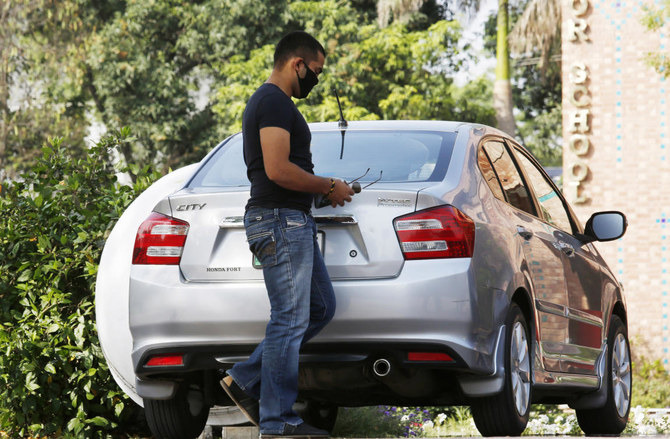
Umar was whisked away by his driver without speaking to the media after the sentence was delivered.
The batsman burst onto the scene with a century in his first Test in 2009, but his career has been marred by disciplinary problems, resulting in various bans and fines.
He was arrested in February 2014 after a scuffle with a traffic warden who stopped him for a signal violation.
Umar last represented Pakistan in two Twenty20 internationals against Sri Lanka in Lahore last year, falling to first ball ducks on both occasions.
He has so far played 16 Tests, 121 one-day games and 84 Twenty20s for Pakistan.
Umar’s ban is the latest in a series of match- or spot-fixing punishments meted out to Pakistani players.
In 2000, former captain Salim Malik was banned for life and six other players — including greats such as Wasim Akram and Waqar Younis — were fined after a judicial inquiry on fixing.
A decade later then-Test captain Salman Butt, Mohammad Asif and Mohammad Amir were banned for five years in a spot-fixing case over an incident during the team’s tour of England.
The Pakistan Super League’s second edition in 2017 was also marred by a fixing scandal, resulting in a five-year ban on Sharjeel Khan and Khalid Latif.


![]()

Pakistan’s Umar Akmal gets three-year ban for match-fixing approach
Short Url
https://arab.news/wjx5y
Pakistan’s Umar Akmal gets three-year ban for match-fixing approach
- The batsman burst onto the scene with a century in his first Test in 2009, but his career has been marred by disciplinary problems
- Umar’s ban is the latest in a series of match- or spot-fixing punishments meted out to Pakistani players


Latest updates


© 2026 SAUDI RESEARCH & PUBLISHING COMPANY, All Rights Reserved And subject to Terms of Use Agreement.