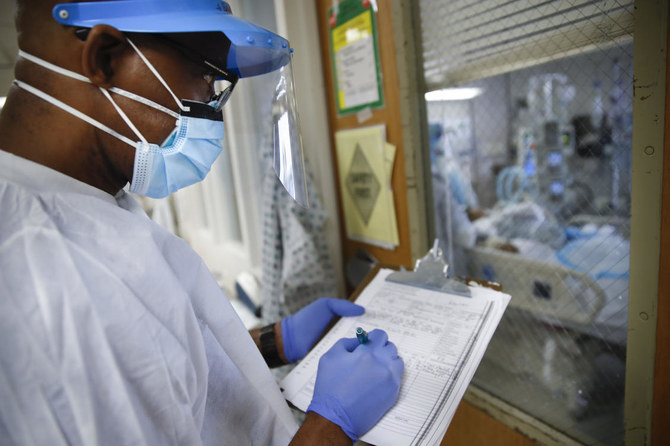
WASHINGTON: A second wave of the novel coronavirus in the US could be even more destructive because it will likely collide with the beginning of flu season, one of the country’s top health officials said Tuesday.
Robert Redfield, director of the Centers for Disease Control and Prevention (CDC), called on Americans to use the coming months to prepare — and get their flu shots.
“There’s a possibility that the assault of the virus on our nation next winter will actually be even more difficult than the one we just went through,” he was quoted as saying in an interview with the Washington Post published late Tuesday.
“We’re going to have the flu epidemic and the coronavirus epidemic at the same time,” he said.
The US has recorded more than 800,000 confirmed cases of COVID-19 since the start of the pandemic, according to a tally from Johns Hopkins University, with 44,845 deaths — the most reported of any country.
Billions of people around the world have been ordered to stay at home in recent months as governments try to prevent the highly contagious coronavirus from overwhelming health care systems.
The US, like other countries, has scrambled to secure enough ventilators and personal protection equipment for medical staff while the death toll mounts.
Redfield said the virus arrived in the US just as regular flu season — which itself can strain health care systems — was waning.
If the two diseases had peaked at the same time, he told the Post, “it could have been really, really, really, really difficult” for health systems to cope.
Getting a flu shot ahead of next flu season, he said, “may allow there to be a hospital bed available for your mother or grandmother that may get coronavirus.”


Coronavirus second wave may be even worse: US health chief
https://arab.news/pwtny
Coronavirus second wave may be even worse: US health chief

- Americans called on to use the coming months to prepare – and get their flu shots
- The US has recorded more than 800,000 confirmed cases of COVID-19 since the start of the pandemic


Afghan government says Pakistan strikes Kabul and border provinces
- A Pakistani security official, speaking on condition of anonymity, confirmed that Pakistan struck overnight
- Islamabad last month launched a wave of air strikes on its neighbor, an operation it says is targeting militancy
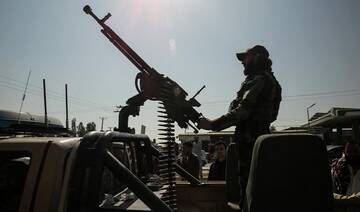
KABUL: Afghan authorities said on Friday that Pakistan had carried out new strikes on Kabul and border provinces, killing four people in the capital.
A Pakistani security official, speaking on condition of anonymity, confirmed that Pakistan struck overnight, adding their forces targeted the Pakistani Taliban militant group, known as TTP.
Islamabad last month launched a wave of air strikes on its neighbor, an operation it says is targeting militancy following growing attacks in Pakistan.
But the Taliban government has denied any involvement or the use of Afghan territory for militancy.
Khalil Zadran, the spokesman for Kabul police, said four people had been killed and 15 wounded in the bombardment that hit homes in the capital, with women and children among the victims.
Taliban government spokesman Zabihullah Mujahid posted on X that Pakistani strikes also hit the southern province of Kandahar, as well as eastern Paktia and Paktika, which border Pakistan.
In Kandahar, which is home to the administration’s supreme leader Hibatullah Akhundzada, air strikes hit a fuel depot for airline Kam Air, near the airport.
This company supplies fuel to civilian airlines and United Nations aircraft.
Pakistan insists it has not killed any civilians in the conflict. Casualty claims from both sides are difficult to verify independently.
Afghan and Pakistani forces have also clashed repeatedly at the border in recent weeks, hampering trade and forcing nearby residents to leave their homes.
‘Open war’
The United Nations’ mission in Afghanistan (UNAMA) has said that 56 civilians have been killed in Afghanistan, including 24 children, by Pakistani military operations between February 26 and March 5.
About 115,000 people were forced to leave their homes, according to the UN refugee agency.
Fighting between the two countries intensified on February 26, when Afghanistan launched an offensive along the frontier, in retaliation for earlier Pakistani air strikes targeting the TTP.
Pakistan then declared “open war” against the Taliban authorities, bombing the capital, Kabul, on February 27.
Since then, clashes have increased in border regions, including overnight Wednesday to Thursday that the Afghan authorities said killed four members of the same family in Khost province.
The Taliban government said on Thursday that four members of the same family, including two children, were killed by Pakistani artillery and mortar fire in eastern Afghanistan.
Seven people had been killed in Afghanistan since Tuesday as a result of cross-border clashes between the two sides, according to the authorities in Kabul.
Deputy government spokesman Hamdullah Fitrat said the latest deaths happened early Thursday in the village of Sadqo in Khost province, accusing Pakistan of deliberately targeting civilian homes and nomads’ tents.