ZURICH: Novartis has won the go-ahead from the US Food and Drug Administration to conduct a randomized trial of malaria drug hydroxychloroquine against COVID-19 disease, the Swiss drugmaker said on Monday, to see if it helps patients.
The decades-old generic medicine got FDA emergency use authorization this month for its unapproved use for coronavirus disease, but so far there is no scientific proof it works. There are currently no approved COVID-19 medicines.
Novartis plans to start recruiting 440 patients for its Phase III, or late-stage, trial within weeks at more than a dozen US sites. Results will be reported as soon as possible, the company added.
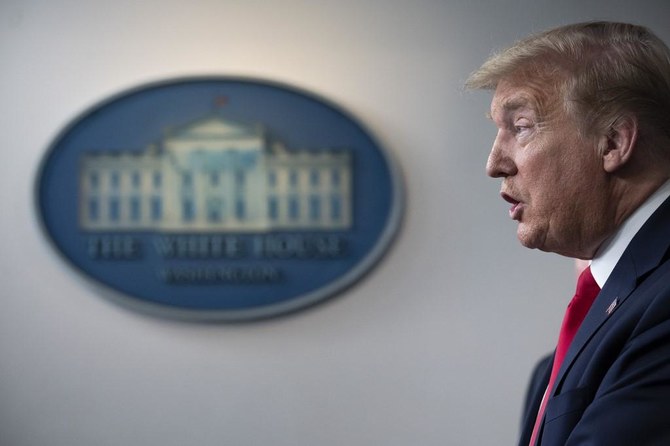
Use of the drug, also approved to treat lupus and rheumatoid arthritis, has soared after having been promoted by President Donald Trump, with some worried the administration’s advocacy for an unproven medicine for COVID-19 has short-circuited the FDA’s oversight process.
“We recognize the importance of answering the scientific question of whether hydroxychloroquine will be beneficial for patients with COVID-19 disease,” said John Tsai, Novartis’s top drug developer. “We mobilized quickly to address this question in a randomized, double-blind, placebo-controlled study.”
Companies such as Novartis, Roche and Gilead Sciences are testing older medicines developed to treat other diseases, for signs they could be repurposed to tackle the coronavirus epidemic. Gilead just expanded a trial of its Ebola drug remdesivir.
Still, some fear the championing of hydroxychloroquine by Trump and others as a potential “game changer” against COVID-19 has overshadowed dangerous side effects like vision loss and heart problems. Novartis CEO Vas Narasimhan has also said the medicine is one of his biggest hopes against the viral epidemic.
There are several additional studies of hydroxychloroquine underway, including at the University of Washington and University of Minnesota, as well as work by the National Institutes of Health in the United States.
Novartis’s Sandoz generics unit has pledged to donate 130 million doses of the medicine for use. Sanofi has also said it will donate 100 million doses of hydroxychloroquine to 50 countries.


![]()


Novartis, US drug regulator agree to malaria drug trial against coronavirus
Short Url
https://arab.news/6m63t
Novartis, US drug regulator agree to malaria drug trial against coronavirus
- Use of the drug as soared after having been promoted by President Donald Trump
- Novartis’s Sandoz generics unit has pledged to donate 130 million doses of the medicine for use


Mistrial declared in the case of Stanford students charged after pro-Palestinian protests in 2024
SAN FRANCISCO, US: A judge declared a mistrial Friday in the case of five current and former Stanford University students charged after pro-Palestinian protests in 2024, when they barricaded themselves inside the university president and provost executive offices.
The trial in Santa Clara County was a rare instance of demonstrators facing felony charges from protests over the Israel-Hamas war that roiled campuses across the country. The two sides argued over free speech, lawful dissent and crime during the three-week proceedings.
The jury voted 9 to 3 to convict on a felony charge of vandalism and 8 to 4 to convict on a felony charge of conspiracy to trespass. After deliberating for five days, jurors said they could not reach a verdict.
Judge Hanley Chew asked each one if more time deliberating would help break the impasse, and all answered, “No.”
“It appears that this jury is hopelessly deadlocked, and I’m now declaring a mistrial in counts one and two,” Chen said. He then dismissed the jurors.
Demonstrators barricaded themselves inside the offices for several hours on June 5, 2024, the last day of spring classes at the university.
Prosecutors said the defendants spray-painted the building, broke windows and furniture, disabled security cameras and splattered a red liquid described as fake blood on items throughout the offices.
Defense attorneys said the protest was protected speech and there was insufficient evidence of an intent to damage the property. They also said the students wore protective gear and barricaded the offices out of fear of being injured by police and campus security.
If convicted, the defendants would have faced up to three years in prison and been obligated to pay restitution of over $300,000.
Santa Clara County District Attorney Jeff Rosen said he would pursue a new trial.
“This case is about a group of people who destroyed someone else’s property and caused hundreds of thousands of dollars in damage,” Rosen said in a statement. “That is against the law and that is why we will retry the case.”
As the mistrial was announced, the students, some wearing kaffiyehs, sat on a bench in the courtroom and did not show a visible reaction.
“The District Attorney’s Office had Stanford University supporting them and other multibillion-dollar institutions behind them, and even then the district attorney was unable to convict us,” Germán González, who was a sophomore at Stanford when he was arrested, told The Associated Press by phone later. “No matter what happens, we will continue to fight tooth and nail for as long as possible, because at the end of the day, this is for Palestine.”
Authorities initially arrested and charged 12 people in the case, but one pleaded no contest under an agreement that allows some young people to have their cases dismissed and records sealed if they successfully complete probation.
He testified for the prosecution, leading to a grand jury indictment of the others in October of the others. Six of those accepted pretrial plea deals or diversion programs, and the remaining five pleaded not guilty and sought a jury trial.
Protests sprung up on campuses across the country over the Israel-Hamas conflict, with students setting up camps and demanding their universities stop doing business with Israel or companies that support its war efforts against Hamas.
About 3,200 people were arrested in 2024 nationwide. While some colleges ended demonstrations by striking deals with students or simply waited them out, others called in police. Most criminal charges were ultimately dismissed.
The trial in Santa Clara County was a rare instance of demonstrators facing felony charges from protests over the Israel-Hamas war that roiled campuses across the country. The two sides argued over free speech, lawful dissent and crime during the three-week proceedings.
The jury voted 9 to 3 to convict on a felony charge of vandalism and 8 to 4 to convict on a felony charge of conspiracy to trespass. After deliberating for five days, jurors said they could not reach a verdict.
Judge Hanley Chew asked each one if more time deliberating would help break the impasse, and all answered, “No.”
“It appears that this jury is hopelessly deadlocked, and I’m now declaring a mistrial in counts one and two,” Chen said. He then dismissed the jurors.
Demonstrators barricaded themselves inside the offices for several hours on June 5, 2024, the last day of spring classes at the university.
Prosecutors said the defendants spray-painted the building, broke windows and furniture, disabled security cameras and splattered a red liquid described as fake blood on items throughout the offices.
Defense attorneys said the protest was protected speech and there was insufficient evidence of an intent to damage the property. They also said the students wore protective gear and barricaded the offices out of fear of being injured by police and campus security.
If convicted, the defendants would have faced up to three years in prison and been obligated to pay restitution of over $300,000.
Santa Clara County District Attorney Jeff Rosen said he would pursue a new trial.
“This case is about a group of people who destroyed someone else’s property and caused hundreds of thousands of dollars in damage,” Rosen said in a statement. “That is against the law and that is why we will retry the case.”
As the mistrial was announced, the students, some wearing kaffiyehs, sat on a bench in the courtroom and did not show a visible reaction.
“The District Attorney’s Office had Stanford University supporting them and other multibillion-dollar institutions behind them, and even then the district attorney was unable to convict us,” Germán González, who was a sophomore at Stanford when he was arrested, told The Associated Press by phone later. “No matter what happens, we will continue to fight tooth and nail for as long as possible, because at the end of the day, this is for Palestine.”
Authorities initially arrested and charged 12 people in the case, but one pleaded no contest under an agreement that allows some young people to have their cases dismissed and records sealed if they successfully complete probation.
He testified for the prosecution, leading to a grand jury indictment of the others in October of the others. Six of those accepted pretrial plea deals or diversion programs, and the remaining five pleaded not guilty and sought a jury trial.
Protests sprung up on campuses across the country over the Israel-Hamas conflict, with students setting up camps and demanding their universities stop doing business with Israel or companies that support its war efforts against Hamas.
About 3,200 people were arrested in 2024 nationwide. While some colleges ended demonstrations by striking deals with students or simply waited them out, others called in police. Most criminal charges were ultimately dismissed.
Latest updates


Recommended



© 2026 SAUDI RESEARCH & PUBLISHING COMPANY, All Rights Reserved And subject to Terms of Use Agreement.