

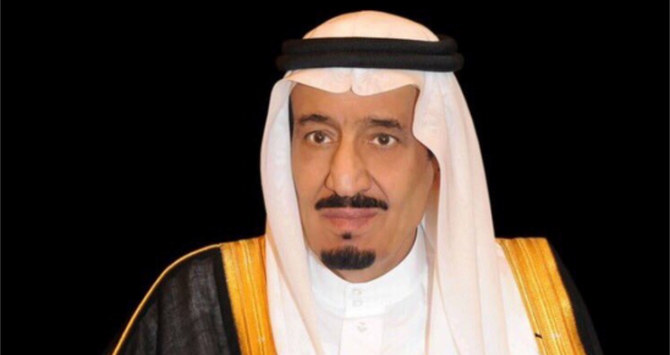

JEDDAH: Saudi Arabia has allocated SR50 billion to support the private sector as part of its package of initiatives approved by King Salman on Wednesday aimed at mitigating economic repercussions from the coronavirus disease (COVID-19).
The package targets small and medium-sized enterprises (SMEs) and economic activities that have been most affected by the pandemic.
It also included obligating companies in which the state owns more than 51 percent of its capital to give preference to the local market and direct their offers and purchases to the benefit of SMEs. This reform has been introduced to improve economic movement in the local market and direct demand towards local products and services.
Moreover, electricity consumers in the commercial, industrial and agricultural sectors will receive a 30 percent discount on April and May bills, with the possibility to extend the discount period if necessary.
Additionally, subscribers in the industrial and commercial sectors have the option to pay 50 percent of their monthly electricity bills for April, May and June, provided that the remaining dues will be divided throughout a six-month period starting January 2021 with the possibility of postponing the payment period if needed.
The government will also pay the minimum salaries of independent workers in the transportation sector who are registered with the Public Transport Authority but are not under the umbrella of any company, whose activities were affected by the precautionary measures.
Minister of Finance and Acting Minister of Economy and Planning Mohammed bin Abdullah Al-Jadaan said that these initiatives are an extension of previously measure to support the private sector. Support for the private sector before these new measures exceeded SR70 billion.
This comes in addition to the financial support allocated for the health sector, which has reached SR47 billion.
Meanwhile, national mining company Maaden announced on Wednesday a SR15 million support package for the Health Endowment Fund at the Saudi Health Ministry to help confront COVID-19.
“During these difficult circumstances, we must unify our efforts more than ever, so that each of us contributes to protecting the health and safety of all citizens and residents in the Kingdom of Saudi Arabia,” said Mosaed Al-Ohali, CEO of Maaden.
A total of 493 new cases of COVID-19 were recorded in the Kingdom on Wednesday, bringing the total number of cases to 5,862. Some 4,852 cases remain active, with 71 in critical condition.
Health Ministry spokesman Dr. Mohammed Al-Abd Al-Aly announced 42 new recovered cases, taking the total number of recoveries to 931. Six new deaths were reported, raising the death toll to 79.
The latest losses were two Saudi men from Madinah in their early 70s, a 67-year-old Saudi woman in Makkah, and three expats between the age of 35 to 57, all of whom were suffering from chronic health conditions.
Al-Aly said between 70 and 80 percent of COVID-19 cases show mild symptoms, while 20 percent need health care support, and only five to ten percent are severe cases.
Moreover, most recorded cases in the past few days were found in overpopulated neighborhoods or workers’ quarters. Between 20 and 25 percent of new cases were found in other locations.
The Interior Ministry has locked down Al-Atheer neighborhood in Dammam where a high density of workers reside and imposed a 24-hour curfew until further notice, while epidemiological investigation teams are conducting random checkups on residents.
Meanwhile, the Saudi Food and Drug Authority confirmed that the Kingdom has sufficient stock of drugs and that medicine imports have not been affected by the pandemic.
Preventive products like sanitizers and masks are being produced in their millions on a daily basis as the number of local factories has increased by 40 percent.
Currently, 49 local factories are producing 1.7 million liters of sanitizers weekly, while eight factories are producing 3.7 million masks at the same rate. This production is in addition to the 2.4 million liters of sanitizers and 20 million masks available in warehouses and pharmacies.


