



PESHAWAR: Faridullah Khan is worried about his future. For two weeks now, the 21-year-old has been taking part in demonstrations, along with hundreds of other students in South Waziristan’s district headquarters, Wana, to protest the unavailability of the Internet in his area.
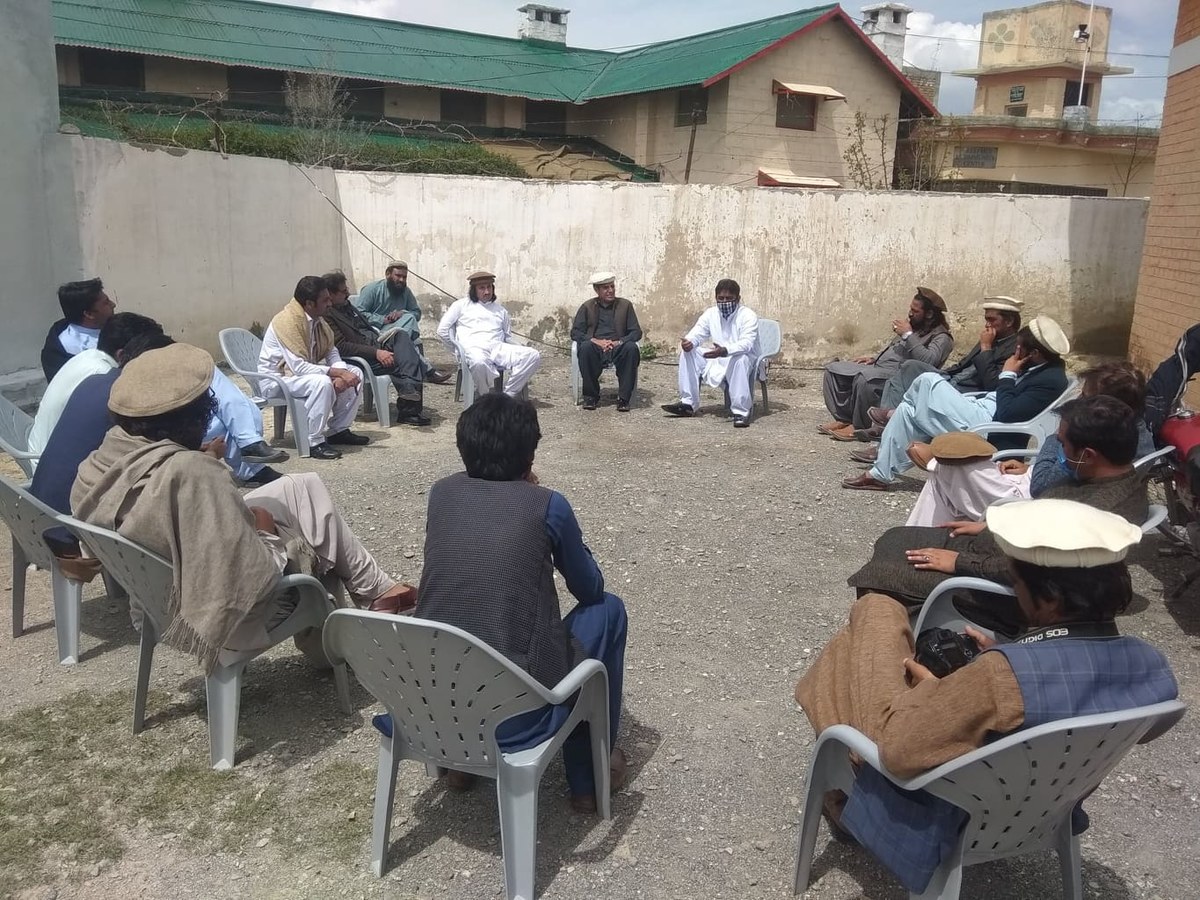
A majority of students are worried that they could lose out on an academic year if they are not able to continue with their education online. (Photo Courtesy: Wana Students Society)
“We cannot take online classes as there is no Internet available. It’s frustrating because the future of thousands of students is at stake,” Khan, who studies chemical engineering at the Balochistan University of Information Technology, Engineering and Management Sciences (BUITEMS), told Arab News on Tuesday.
Uninterrupted access to the Internet has become a lifeline for a majority of students in the tribal districts after Pakistan’s Higher Education Commission (HEC) directed all universities to switch to online classes following a lockdown to limit the spread of coronavirus in the country.
Hundreds of students took part in a demonstration in Wana on April 7, 2020. Their key demand included the provision of Internet services in Pakistan’s tribal districts to pursue their studies online after universities across the country were ordered to shut down as part of a nationwide coronavirus lockdown.
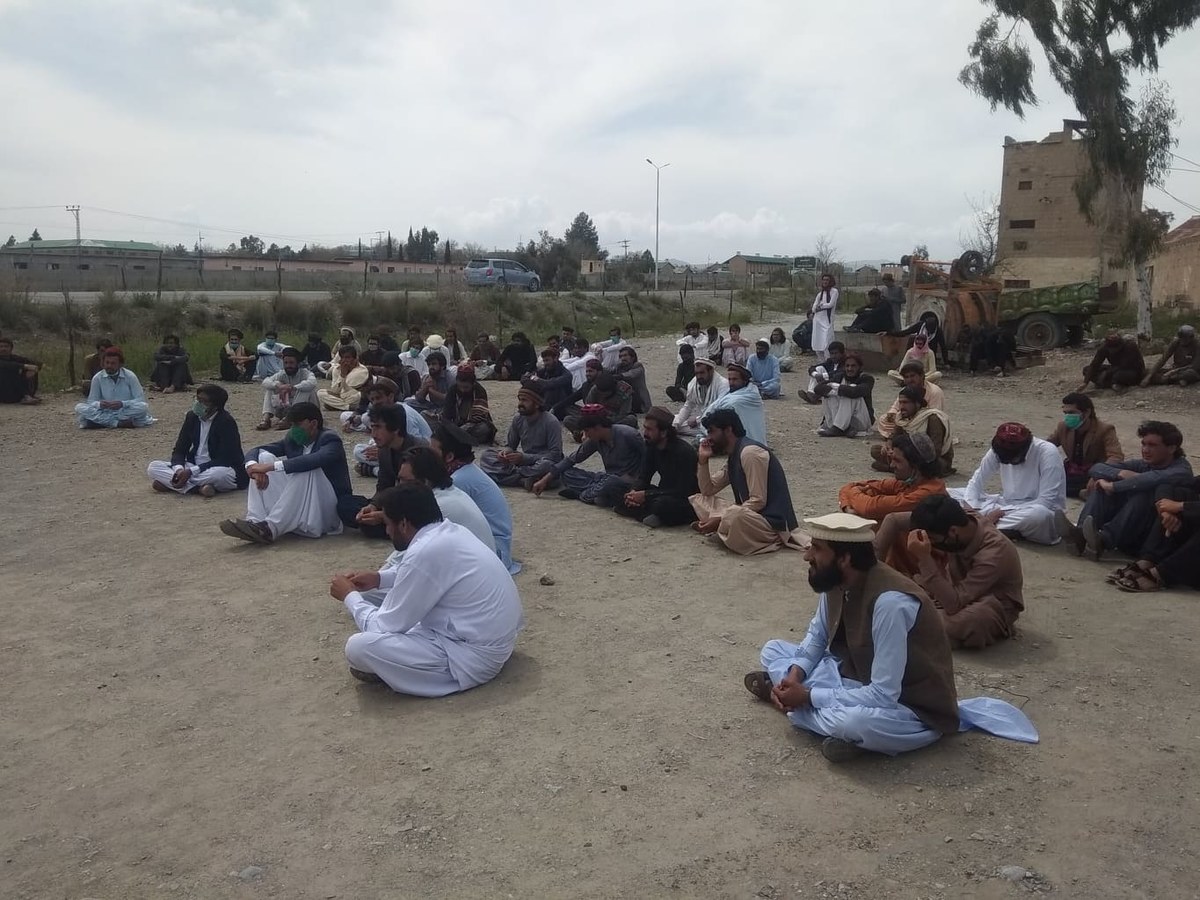
Hundreds of students take part in a demonstration in Wana, the headquarters of the South Waziristan district, on April 7, 2020. (Photo Courtesy: Wana Students Society)
“We had precise instructions from the university management to either attend online classes or face risking a semester freeze. Under the circumstances, I fear my parents’ hard-earned money and my future could be wasted if immediate steps are not taken to tackle the problem,” Khan said.
Officials at BUITEMS were unavailable for comment when contacted by Arab News.
However, provincial Information Minister Ajmal Khan Wazir said that the “government was aware of the problem and would tackle it very soon.”
“We will sort [the issue] out at the earliest,” Wazir told Arab News without providing more details.
That, however, has failed to appease the students, several of whom said the lockdown had been “nothing short of a nightmare” for them.
“I don’t understand the logic behind the Internet blackout in this era of the 21st century. Unavailability of the Internet means we could lose out on an academic year because there is no way to continue our education,” Samina Saif, 20, who studies political science at the International Islamic University Islamabad (IIUI) in the SW district, told Arab News by phone.
Saif said switching to online classes was a step in the right direction, provided that the authorities had factored in the issues faced by students in the tribal districts as well.
Another student, Noreen Mehsud, 20, who studies L.L.B. Sharia and Law at the IIUI, said she’s had to move to Islamabad “because there is no Internet facility in my hometown of Waziristan.”
In the case of 21-year-old Saddam Hussain Wazir, it means traveling long distances.
“Because of the ban on public transport, I had to travel four hours in a cargo truck to reach Dera Ismail Khan, the nearest town to South Waziristan, to get access to the Internet because my supervisor bluntly told me to either attend the online classes or risk freezing of semester,” Hussain Wazir, an MPhil student of International Relations at the IIUI, said.
Authorities, however, said the students had no ground for the ongoing protests.
“They were given Internet access at two government-designated buildings, but they turned down the offer,” Hamidullah Khattak, the top administrator of SW district, told Arab News.
Before being merged with the Khyber Pakhtunkhwa province, the Federally Administered Tribal Areas (FATA) experienced decades of militancy, followed by a string of military operations to rid the area of extremists.
The result was that the authorities decided to limit the Internet access only to district administration buildings and military camps.
“After normalcy returned to tribal districts, following its merger with the KP province, the infrastructure here was developed gradually,” Khattak added.
However, Hussain Wazir argued that the proposal – for students to pursue online studies at the government-designated buildings – was “impractical to say the least.”
“A ballpark estimate shows only Wana, a town of 152, 881 people, has 1,500 university students including 40-plus female students. How is it possible for male and female students from remote villages to attend online classes at those designated points daily?” he said.
It’s a matter of a month before the issue gets resolved, Ziaullah Bangash, KP adviser on Science and Information Technology, told Arab News, adding that the provincial government had signed an agreement with the Pakistan Telecommunication Company Ltd. (PTCL) to lay optic fibers throughout the region for better connectivity.
“We are in talks with mobile phone companies to initiate the services which are awaiting approval. I don’t think students will encounter any changes to their academic year,” he said.
HEC Spokesperson Ayesha Ikram agreed.
She said that the HEC authorities had been apprised of the student protests, adding that there was no cause for concern.
“There will be no problem for students missing their semesters. We have made sure to salvage the academic year of those students who face a shortage of facilities such as the lack of access to the Internet services,” she said.


