46% Pakistanis with coronavirus have travel history to Iran — WHO 

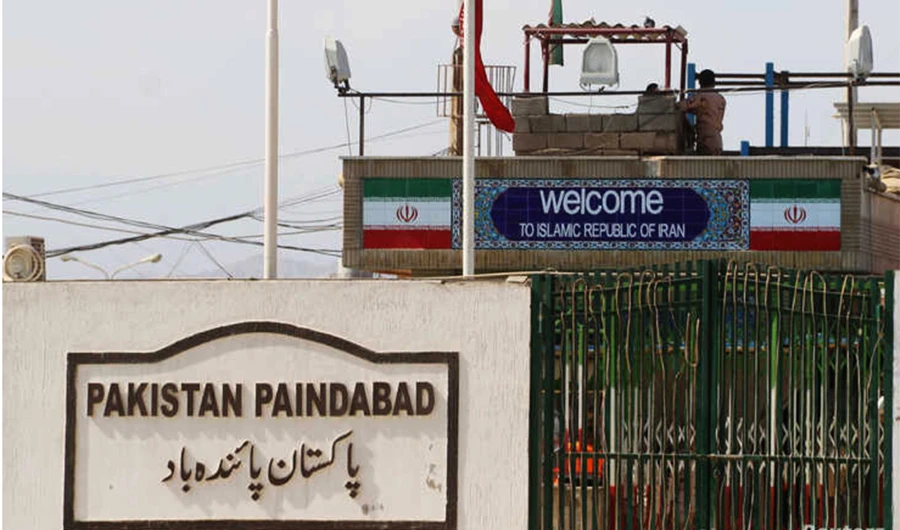
General view of Pakistan-Iran border posts, Taftan, Pakistan, Feb. 25, 2020. ( Reuters photo)
Short Url
Updated 05 April 2020
Follow

46% Pakistanis with coronavirus have travel history to Iran — WHO 

  • 27% Pakistanis with covid-19 have travel history to other nations, 27% confirmed cases are local transmission, WHO says in report
  • Around 6,000 pilgrims had entered Pakistan without being properly screened for coronavirus on the Iranian side — Director General Health

ISLAMABAD: About 46 percent of Pakistanis who have tested positive for the coronavirus have a travel history to Iran, the World Health Organization (WHO) said in a report published on April 1.
Pakistan closed its border with Iran last month following the outbreak in the neighboring country, which has reported more than 47,500 cases of coronavirus and more than 3,000 deaths, making it the worst hit country in the Middle East. Pakistan, where testing for the virus is not widespread, has 2,696 confirmed cases and 40 deaths. 
“Out of the total 2,039 confirmed cases in Pakistan till April 1, 46% have a travel history to Iran, 27% had travel history to other countries and local transmission has been reported in 27% of the confirmed cases,” the WHO report said.
All data used in the report comes from the government of Pakistan, Dr. Palitha Mahipala, WHO’s Pakistan representative, told Arab News on Saturday. 
Pakistan and Iran, one of the countries worst hit by the outbreak, share a 900 km border, which is frequently used for trade and by Pakistani Shiites, who travel to Iran for religious pilgrimages, often crossing at a border crossing at Taftan.
Pakistan’s Director General Health, Malik Muhammad Safi, told Arab News, that around 6,000 pilgrims had entered Pakistan without being properly screened for coronavirus on the Iranian side. 
“Iran announced their coronavirus outbreak very late due to which more than 6,000 zaireen [pilgrims] entered Pakistan unchecked, which became a source of local transmission in Pakistan,” Safi said. 
He said Iran’s late announcement of the outbreak within its borders resulted in the spread of the respiratory illness to many regional countries.
Indeed, Iran has emerged as the second focal point after China for the spread of coronavirus. Cases in Iraq, Afghanistan, Bahrain, Kuwait, Oman, Lebanon, the United Arab Emirates, and even Canada have all been traced to Iran.
The Iranian government denies concealing facts about the outbreak. President Hassan Rouhani said during a televised speech on March 18 that his government had been “honest and straightforward with the nation.”
WHO officials said in early and mid-March that Iran’s response to coronavirus was coordinated and evolving in the right direction, but that more needed to be done.
Talking about Pakistan’s anti-coronavirus efforts, Saifi said the government would use 14,000 nationwide polio eradication centers as part of its coronavirus response.
“We are going to use all these 14,000 centers, and also 200 polio surveillance officers have also been deputed for the surveillance of potential coronavirus patients,” the director general health said. “We have started COVID-19 testing at 20 places around Pakistan and working on taking this number to 50 labs to increase testing across the country.”
Pakistan saw 73% increase in combat-related deaths in 2025— think tank

Updated 28 December 2025
Follow

Pakistan saw 73% increase in combat-related deaths in 2025— think tank

  • Pakistan reported 3,387 deaths thus year, among them 2,115 militants and 664 security forces personnel, says think tank
  • Civilian deaths increased by 24% to 580 in 2025, compared to 468 in 2024, as Pakistan saw 1,063 militant attacks in 2025

ISLAMABAD: Combat-related deaths in Pakistan this year increased by 73%, with both security forces and militants suffering casualties in large numbers, a report published by an Islamabad-based think tank said on Sunday.

As per statistics released by the Pakistan Institute for Conflict and Security Studies (PICSS), combat-related deaths in 2025 rose 73% to 3,387, compared with 1,950 in 2024. These deaths included 2,115 militants, 664 security forces personnel, 580 civilians and 28 members of pro-government peace committees (combatants), the think tank said in a press release. 

“Militants accounted for about 62% of total combat-related deaths, and their 2,115 fatalities represented the highest annual militant death toll since 2015, when 2,322 militants were killed,” PICSS said. 

Compared to last year, militant deaths recorded a steep increase by 122% as the PICSS reported that 951 militants had been killed in 2024.

The think tank, however, said this year was also particularly bloody for Pakistani security forces. PICSS recorded 664 security personnel deaths in 2025, a 26% rise from 528 in 2024, and the highest annual figure since 2011, when 677 security forces personnel lost their lives. 

Civilian deaths also increased by 24% to 580 in 2025, compared with 468 in 2024, marking the highest annual civilian toll since 2015, when 642 civilians were killed. 

As per the PICSS report, at least 1,063 militant attacks took place in 2025, a 17% increase compared with 908 in 2024 and the highest annual total since 2014, when 1,609 militant attacks were recorded. 

The report also noted a 53 percent increase in suicide attacks this year, with 26 such incidents reported in 2025 compared with 17 in 2024. 

“PICSS noted an expanding trend in the use of small drones, including quadcopters, with 33 such incidents recorded during 2025, alongside increased use of unmanned aerial vehicles by security forces,” the report said. 

The report noted an 83% rise in arrests of suspected militants, with 497 arrested in 2025 compared to 272 in 2024. 

This 2025 figure is the highest annual total of suspected militants arrested since 2017, when 1,781 militants were either arrested or laid down their weapons.

“PICSS noted that most violence remained concentrated in Pashtun-majority districts of Khyber Pakhtunkhwa, including the tribal districts (erstwhile FATA), and in Balochistan,” it said. 

Pakistan has been grappling with a surge in militant attacks in its western provinces of Khyber Pakhtunkhwa and Balochistan, both bordering Afghanistan, this year. 

Islamabad blames Afghanistan for providing sanctuaries to militants it alleges use Afghan soil to carry out attacks against Pakistan. Kabul denies the charges.