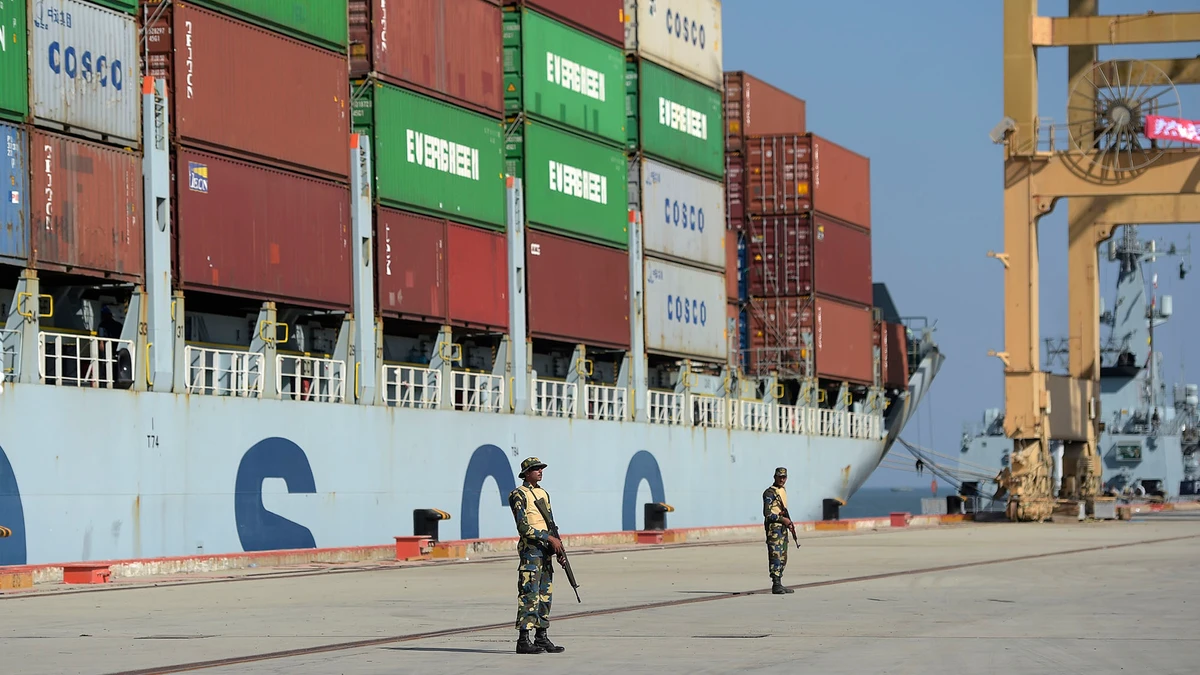
- Says thousands of Chinese workers have returned to Pakistan to resume work
- Chinese workers dealing with corridor projects in Pakistan are quarantined at their project sites for fourteen days
ISLAMABAD: The coronavirus pandemic has resulted in a delay of at least eight weeks in the implementation of the multibillion-dollar China-Pakistan Economic Corridor (CPEC) projects, a senior government functionary said on Friday, as he hoped that the problem would be fixed through effective mobilization of resources.
Thousands of Chinese workers have returned to Pakistan through special flights to resume work on different infrastructure projects after spending the Chinese new year holidays in their hometowns.
“We are estimating a maximum eight weeks of delay in different development projects due to the coronavirus pandemic,” Dr. Liaqat Ali Shah, CPEC’s Project Director, told Arab News on Friday.
The Chinese workers, who have been dealing with different CPEC projects, were stuck in different cities of their country when Beijing suspended the international flight operation in January due to the spread of the virus.
China has already developed a “double quarantine policy” for all its engineers and other workers in Pakistan.
“The Chinese travelling to Pakistan spend fourteen days in quarantine in China, and then they are also placed in quarantine for another fourteen days in Pakistan,” Shah said, adding that “effective measures” were in place to stem the spread of the virus in Pakistan's cities.
The project director said that the Chinese companies would place their workforce in quarantine at their respective project sites. “We don’t allow them to mix with the local population,” he said.
About the number of Chinese returning to Pakistan since February, he said that they were “in the thousands,” though he did not have the exact statistics.
Pakistan and China signed the $46 billion CPEC agreement in 2015 which later expanded to at least $62 billion. The infrastructure development projects include roads, railways, seaport, pipelines, industrial units and airports.
China plans to link its landlocked western region of Xinjiang to the Arabian Sea through the corridor project.
Shah said that Pakistan was mobilizing all the available resources to cover the time gap of eight weeks in different projects. “The work on all projects, including the transmission lines, roads and hospitals, is now in full swing,” he said.
The government has also constituted joint working groups and task forces to expand the scope of development projects by negotiating new schemes with the Chinese government.
In the next phase, Pakistan is planning to include development of agriculture, science and technology and petroleum sectors to boost its fragile economy and create job opportunities for both skilled and unskilled labor.
“At the moment, different studies are underway to include new projects related to agriculture and oil refineries in CPEC,” Shah said while dispelling the impression of any undue slowdown in the development schemes.