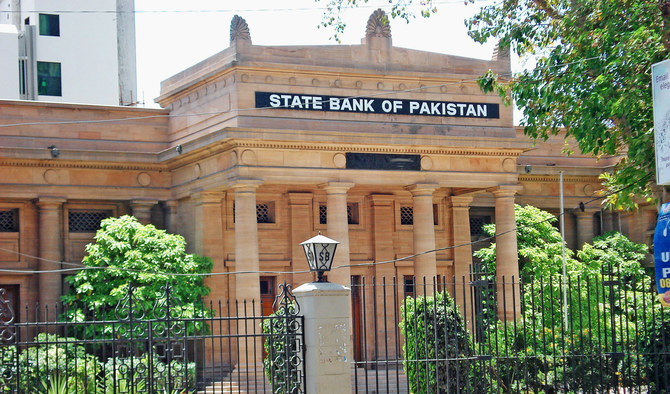
KARACHI: Pakistan’s capital market witnessed massive outflow of hot money during the outgoing month of March as foreign investors divested $1.74 billion in the government’s short term papers following the coronavirus pandemic, indicate the statistics gathered by the State Bank of Pakistan (SBP).
The combined outflow of foreign funds invested in treasury bills and equities amounted to $1.86 billion in March 2020 with no inflows recorded during the last two days.
“The flight of capital of around $83 billion from various emerging markets has been witnessed in recent days after the coronavirus pandemic, and Pakistan is not unique in that sense,” Asad Rizvi, senior currency analysts and chief executive of the Currency Market Associates, told Arab News.
“The investors want to save assets and they have not reinvested in Pakistan in these uncertain times. That is why the country is experiencing the outflow of funds,” Rizvi said, adding that the rupee was also under pressure due to the country’s low reserves.
Pakistan’s debt market became a hot destination for foreign investors after its central bank jacked up the key policy rate to 13.25 percent in July 2019 and the interest rate on treasury bills surged to 13.66 percent.
Since then, the country attracted $4.13 billion in its debt and equity markets, with major flows coming in T-Bills that, according to the SBP Special Convertible Rupee Account (SCRA) record, amounted to $3.4 billion until April 01, 2020.
During the period, however, the cumulative outflow of funds was recorded at $2.98 billion, including $2.1 billion invested in treasury bills, which constituted about 70 percent of the total investment inflows.
The outflows were largely driven by the overseas investors from the United States, United Kingdom and United Arab Emirates.
Some analysts also attribute the hot money outflow to the 2.25 percent interest rate cut by the country’s central bank in March 2020.
“The investors were addicted to the higher interest rate and when the central bank slashed it they started withdrawing the hot money. In the current situation, they [investor] think the central bank may further cut down the rate. This also explains why the country is experiencing accelerated outflows,” Zafar Moti , CEO of Zafar Moti Capital Securities, commented.
The outflows have spurred the demand for dollar in the interbank market where Pakistan’s national currency has dropped to Rs 167, a historic low against greenback, that mainly owes to the country’s weak reserves.
“During the week ended March 27, 2020, the SBP reserves decreased by $804 million to $11.18 billion. This decline is attributed primarily to the government’s external debt payments that amount to $441 million, and other official payments,” said the SBP statement on Thursday.
Pakistan’s foreign liquid reserves have stood at $17.39 billion, both held by the central bank and commercial bank, according to the SBP.


![]()

COVID-19, interest rate cuts trigger hot money outflow of $2.1 bn from Pakistan
Short Url
https://arab.news/vjqnq
COVID-19, interest rate cuts trigger hot money outflow of $2.1 bn from Pakistan
- Central banks days foreign investors withdrew $1.74 bn in March alone
- The outflows were largely driven by overseas investors from the US, UK and UAE
Latest updates




© 2026 SAUDI RESEARCH & PUBLISHING COMPANY, All Rights Reserved And subject to Terms of Use Agreement.