

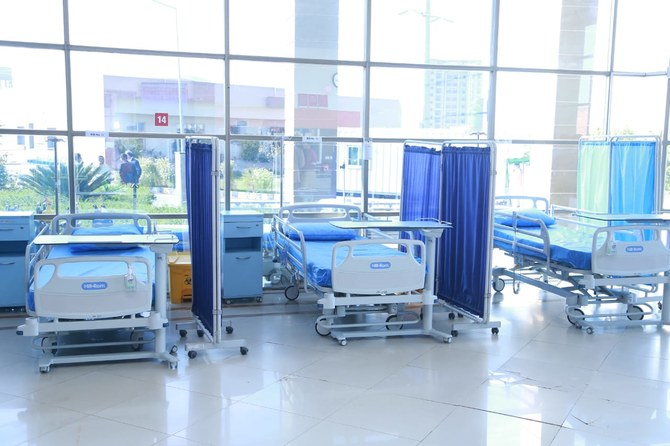

LAHORE: Every day when Dr. Farooq Hameed’s shift begins at an isolation ward for coronavirus patients in Lahore, it takes him nearly half an hour to suit up. He must move slowly and in a set routine, donning three layers of gloves, a full-body gown, eye goggles, a face mask, shoe coverings and a face shield.
The hazmat suits, short for hazardous material clothing, are essential for health care providers working in contaminated environments. But the outfits are bulky, hot and stuffy, making it difficult to breath and move in. Dr. Hameed has to take short, calculated breaths to ensure he does not get exhausted while on duty.
During his six-hour shift at the Pakistan Kidney and Liver Institute (PKLI) in Lahore, the 38-year-old physician cannot eat or drink water.
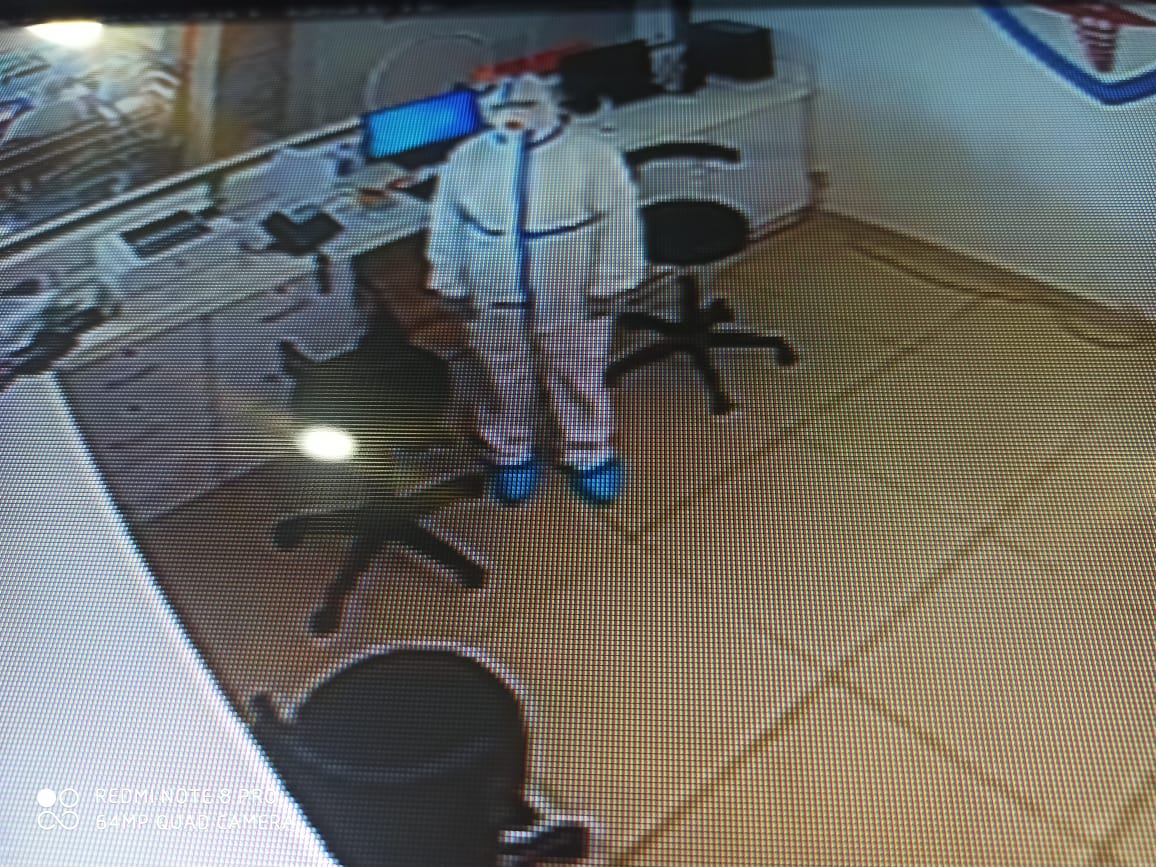
Monitoring room in the isolation ward as seen from the PKLI control room on March 27, 2020. (AN Photo)
“I can’t even go to the bathroom,” he said smiling. “It is not easy at all. We can only take the suit off after our six-hour shift is over.”
At the end of the day, removing the astronaut-like garment is just as meticulous and painstaking.
The doctor must wash his hands between each step to ensure that he does not get infected. “It’s a little scary,” he tells Arab News after his shift at the institute.
“This is a deadly virus we are talking about. You never know how it can affect you or, you know, kill you.”
Pakistan has recorded 1,408 coronavirus cases to date with 11 deaths reported.
Two medical workers reportedly fell sick recently in the Dera Ghazi Khan city of the Punjab province. One doctor also lost his life after contracting the virus in the northern areas.
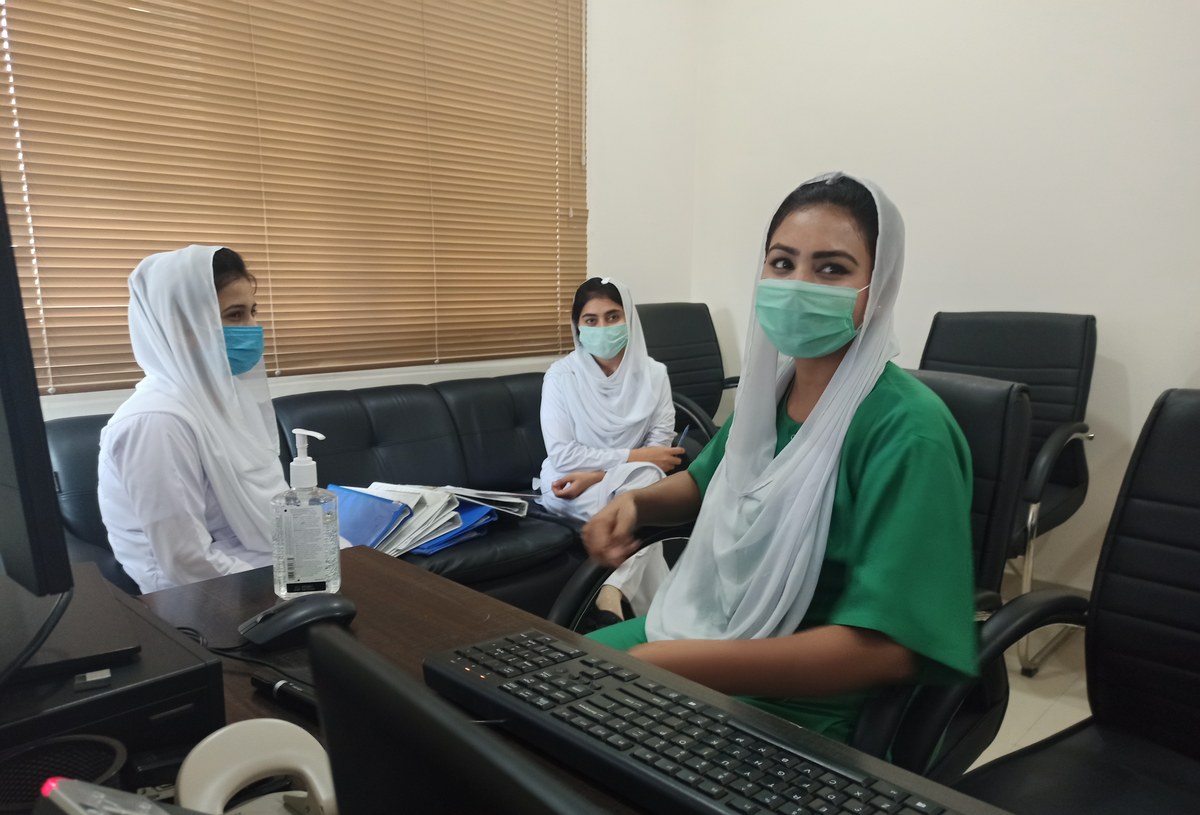
Nurse Shehnaz with her colleagues after finishing her shift at the PKLI isolation ward on March 27, 2020. (AN Photo)
In Pakistan’s second most populous city of Lahore alone, there are 115 confirmed virus cases.
To accommodate the infected, Punjab government has set up isolation centers at three public hospitals in Lahore. The bulk in need of treatment are sent to the government-operated Services and Mayo Hospitals, while the PKLI has been unofficially reserved for people from the upper and upper-middle class who otherwise avoid state-run hospitals, explain officials at the Institute.
On March 27, PKLI had 17 registered patients in the facility between the age of 20 and 40, including four Chinese nationals — employees of a private company working in Lahore — who tested positive after they flew back from China, revealed Tazeen Qureshi, the marketing head at PKLI.
Pakistan has insisted until now that all of its confirmed cases came from pilgrims returning from Iran.
At a press briefing on Friday, Prime Minister Imran Khan said that “there is not a single case of the virus from China.” However, the control room at the Institute showed the four foreigners roaming the corridors of the ward or resting on hospital beds.
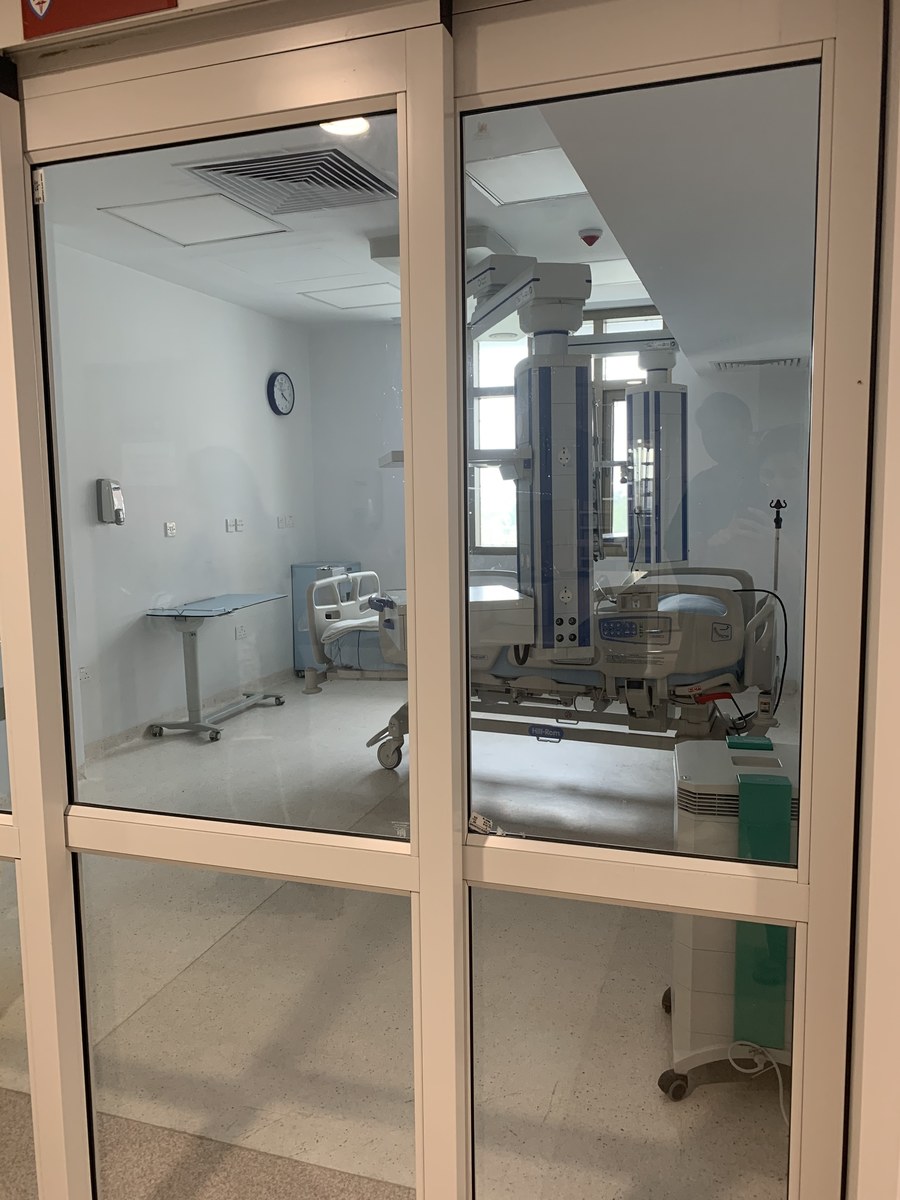
An unoccupied isolation ward for coronavirus patients at the PKLI on March 27, 2020. (AN Photo)
At the newly-constructed Pakistan Kidney and Liver Institute, patients have separate rooms with attached bathrooms. Meals are prepared by a team of chefs while 35 doctors and nurses work in shifts to treat them.
Still, said Dr. Hameed, the patients feel imprisoned. “The ward is like a jail,” he went on. “There is no sunlight and no fresh air. It can be a very frustrating experience.” That said, he added, the patients have access to smartphones and can talk to their families via video calls.
Even then, loneliness creeps in. Shehnaz, a nurse at the facility, told Arab News, that patients would beg her to keep them company, complaining that it was “suffocating being in their rooms all day,” especially since there was no exact timeline for when the infected can be discharged. “It can take two weeks, a month, or even 40 days,” Dr. Hameed continued.
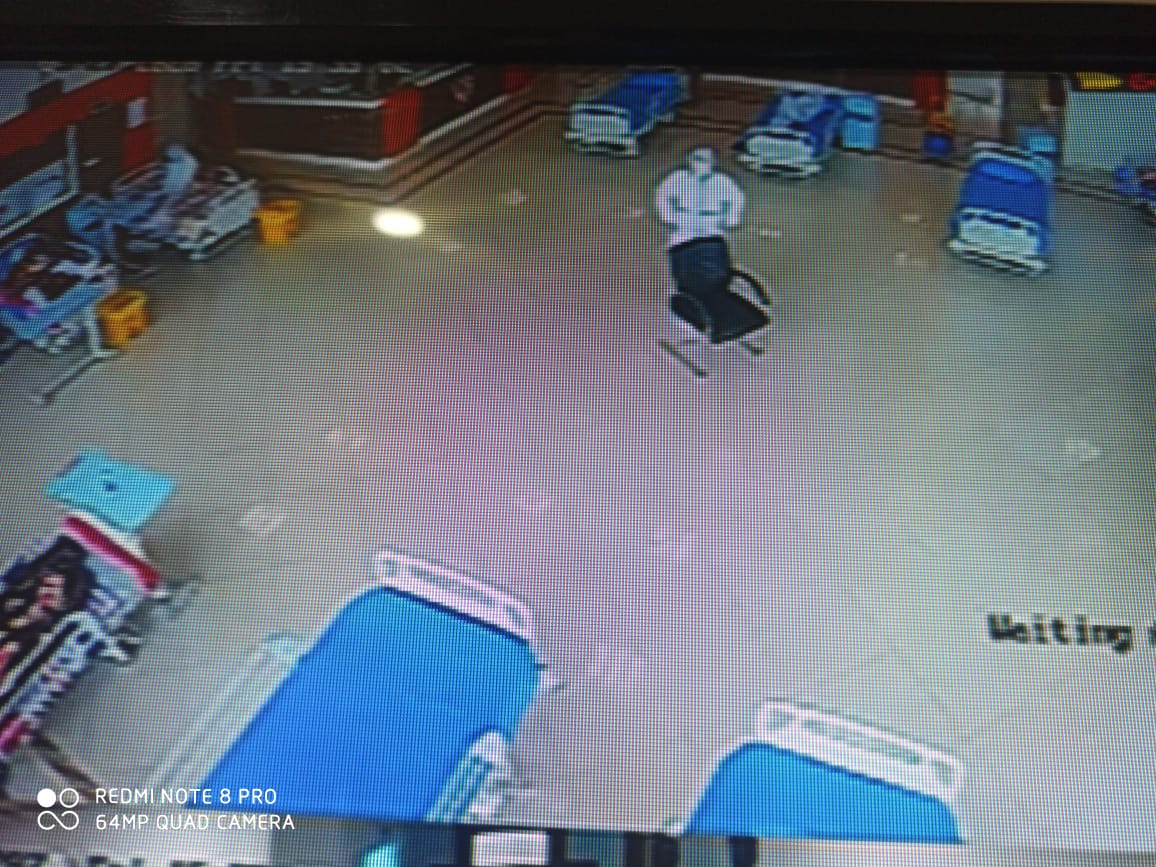
Monitoring room in the isolation ward as seen from the PKLI control room on March 27, 2020. (AN Photo)
For the medical staff, including the nurses, six hours a day in a decontamination suit is exhausting. “It weakens them physically which is why they work for one week and get one week off,” said Qureshi. “These [doctors] are true soldiers.”
Until now, the PKLI has a total of 105 inpatient beds, customized rooms and a medical staff of 1,200. The 400 personal protection suits, which are disposable, will last them only a month.
Qureshi added that the institute was fully prepared to handle 105 patients, but if the number of infected were to rise it would run out of space.
“If the situation were to become like Italy or Iran, we will need more space, more staff and more equipment. And then there is the emotional cost, that will affect us all,” Qureshi said.


