

Virus lockdown: Pakistan halts petroleum import amid declining energy need 

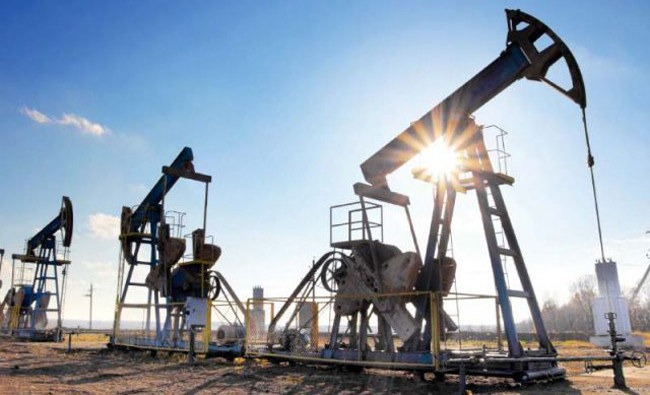
Pakistan has canceled import of gasoline, diesel and crude oil from next month to support domestic refining industry amid coronavirus outbreak. (File/Reuters)
Short Url
Updated 28 March 2020
Follow

Virus lockdown: Pakistan halts petroleum import amid declining energy need 

  • Pakistan imports 70 percent of its crude oil from Saudi Arabia while the remaining comes from UAE, official says 
  • Demand of energy products sharply declined amid strict countrywide lockdown to contain virus spread

KARACHI: In an unprecedented move, Pakistan has canceled import of gasoline, diesel and crude oil from next month to support domestic refining industry as energy demand sharply declines amid countrywide lockdown, announced the Ministry of Energy (MoE) on Thursday. 

The decision to halt import of petroleum products follows country’s economic meltdown resulting from coronavirus pandemic. 
In a letter to the Oil Companies Advisory Council (OCAC), the ministry said that the consumption of motor gasoline had dropped significantly due to lockdown by provincial governments to control the spread of COVID-19.

“As the OMC (Oil Marketing Companies) have sufficient inventory of the product therefore all OMCs are requested to cancel their planned imports (April 2020 onwards) and increase their off-take from refineries so that operations of refineries are maintained at an adequate level,” the letter by the energy ministry states.

The ministry further said that domestic refining industry had sufficient stockpile of petroleum products to meet Pakistan’s fuel demand, and continued an uninterrupted supply to meet the nation’s energy needs in the wake of recent crisis resulting from COVID-19 outbreak.

Pakistan imports 70 percent of its crude oil from Saudi Arabia while the remaining comes from UAE, said Dr. Nazar Abbas Zaidi, former secretary of the OCAC. “The finished products are also imported from Middle Eastern countries mainly Kuwait and UAE,” he told Arab News. 

To ensure smooth supply of petroleum products amidst current lockdown, the energy ministry has issued special directives to facilitate free movement of employees, vendors and contractors of national refineries so as to ensure uninterrupted supply to petrol pumps across the country. 

Analysts say the country meets 85 percent of its energy requirements through imports. “We don’t have enough capacity to store cheaper oil to build future reserves,” said Samiullah Tariq, an economic expert, adding that never before has Pakistan taken such a step in history. 

However, petroleum sector experts suggest that the depleted reservoirs located in Sindh and Baluchistan provinces could be utilized to store crude oil.

“Building oil reserves is also important for the energy security of the country”, Masood Abdali, a Texas based energy expert and former business development manager of Weatherford, Saudi Arabia and Bahrain, said. “This would also create employment opportunities in local oil and gas exploration sector”, he added.

Last fiscal year Pakistan imported energy products worth $14.4 billion while the south Asian nation has spent $8.23 billion on imports petroleum products during JULY- FEBRUARY, 2019–2020 period of current fiscal year, according to the Federal Bureau Statistics.

The global oil market remains under pressure due to subdued demand. Brent crude on Thursday declined by more than 4 percent to $28.74 per barrel while WTI was down 7.27 percent to $28.77 per barrel.


Pakistan Senate committee approves draft law paving way for legal crypto trade 

Updated 8 sec ago
Follow

Pakistan Senate committee approves draft law paving way for legal crypto trade 

  • Pakistan Virtual Assets Regulatory Authority to grant licenses to issue crypto coins, regulate crypto exchange under new law, says senator
  • Major cryptocurrencies such as Bitcoin, Ethereum and XRP expected to be traded legally in Pakistan within weeks, says lawmaker

ISLAMABAD: A Pakistani Senate committee approved a draft bill to regulate virtual assets on Wednesday, paving the way for cryptocurrency trading to become legal in the country.

Pakistan has been undertaking efforts over the past couple of months in drafting rules to regulate the fast-expanding market for digital coins and tokens, requiring virtual-asset service providers to obtain government approval. Islamabad’s moves to adopt digital currency is a significant shift in policy, considering it had previously banned cryptocurrency transactions in 2018 citing financial risks and lack of regulation.

Last month, Pakistan signed a memorandum of understanding with a company affiliated with the World Liberty Financial, a crypto-based finance platform launched in September 2024 and linked to US President Donald Trump’s family. The agreement explores the use of a dollar-linked stablecoin for cross-border payments. 

Pakistan Senate’s Standing Committee on Cabinet approved the draft “Virtual Asset Act 2026” during a meeting on Wednesday. The bill relates to the Pakistan Virtual Assets Regulatory Authority’s mandate (PVARA) and its power to issue licenses. 

“So under the new law, what will happen is that there will be an authority which already exists, the Pakistan Virtual Asset Regulatory Authority (PVARA), that will have the power to give licenses in which crypto coins can be issued, in which mining can be done, and they will be able to regulate the whole (crypto) market,“” Senator Dr. Afnan Ullah Khan, a member of the committee, told Arab News.

He said under the new law, PVARA will be able to check which company has the license to issue crypto coins and which ones can raise funds for this purpose.

When asked whether crypto trading will be legal in Pakistan after the bill passes in parliament, Dr. Afnan said the draft law will first be presented in the Senate and National Assembly for approval. After that, he said the president will sign it into law. 

“Then it will become legal,” Dr. Afnan said. “It will not take a few weeks, it will take maybe like a week.”

He added that major crypto coins such as Bitcoin, Ethereum and XRP will be traded in Pakistan through crypto exchanges.

Dr. Afnan said the bill was analyzed by committee members, adding that the final draft was approved with the consent of all parties.

He said the law also caters to concerns on the use of cryptocurrency for money laundering and illegal purposes, adding that it also proposes fines for violations by licensees.

PVARA last year issued No Objection Certificates (NOCs) to two global crypto exchanges HTX and Binance. 

PVARA said the NOCs allow Binance and HTX to conduct preparatory and engagement activities within Pakistan under “defined regulatory oversight,” clarifying that it does not constitute a “full operating license.”