

Virus lockdown: Pakistan halts petroleum import amid declining energy need 

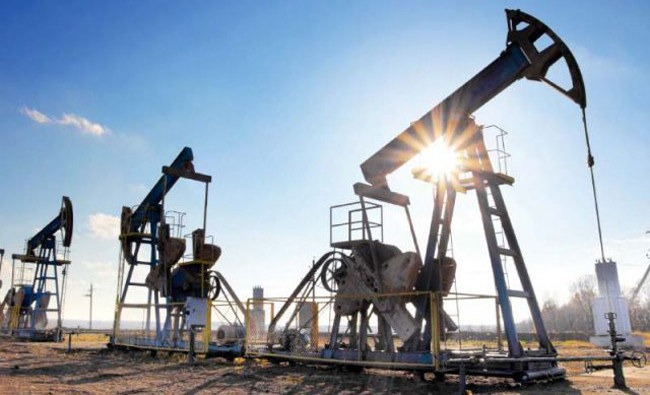
Pakistan has canceled import of gasoline, diesel and crude oil from next month to support domestic refining industry amid coronavirus outbreak. (File/Reuters)
Short Url
Updated 28 March 2020
Follow

Virus lockdown: Pakistan halts petroleum import amid declining energy need 

  • Pakistan imports 70 percent of its crude oil from Saudi Arabia while the remaining comes from UAE, official says 
  • Demand of energy products sharply declined amid strict countrywide lockdown to contain virus spread

KARACHI: In an unprecedented move, Pakistan has canceled import of gasoline, diesel and crude oil from next month to support domestic refining industry as energy demand sharply declines amid countrywide lockdown, announced the Ministry of Energy (MoE) on Thursday. 

The decision to halt import of petroleum products follows country’s economic meltdown resulting from coronavirus pandemic. 
In a letter to the Oil Companies Advisory Council (OCAC), the ministry said that the consumption of motor gasoline had dropped significantly due to lockdown by provincial governments to control the spread of COVID-19.

“As the OMC (Oil Marketing Companies) have sufficient inventory of the product therefore all OMCs are requested to cancel their planned imports (April 2020 onwards) and increase their off-take from refineries so that operations of refineries are maintained at an adequate level,” the letter by the energy ministry states.

The ministry further said that domestic refining industry had sufficient stockpile of petroleum products to meet Pakistan’s fuel demand, and continued an uninterrupted supply to meet the nation’s energy needs in the wake of recent crisis resulting from COVID-19 outbreak.

Pakistan imports 70 percent of its crude oil from Saudi Arabia while the remaining comes from UAE, said Dr. Nazar Abbas Zaidi, former secretary of the OCAC. “The finished products are also imported from Middle Eastern countries mainly Kuwait and UAE,” he told Arab News. 

To ensure smooth supply of petroleum products amidst current lockdown, the energy ministry has issued special directives to facilitate free movement of employees, vendors and contractors of national refineries so as to ensure uninterrupted supply to petrol pumps across the country. 

Analysts say the country meets 85 percent of its energy requirements through imports. “We don’t have enough capacity to store cheaper oil to build future reserves,” said Samiullah Tariq, an economic expert, adding that never before has Pakistan taken such a step in history. 

However, petroleum sector experts suggest that the depleted reservoirs located in Sindh and Baluchistan provinces could be utilized to store crude oil.

“Building oil reserves is also important for the energy security of the country”, Masood Abdali, a Texas based energy expert and former business development manager of Weatherford, Saudi Arabia and Bahrain, said. “This would also create employment opportunities in local oil and gas exploration sector”, he added.

Last fiscal year Pakistan imported energy products worth $14.4 billion while the south Asian nation has spent $8.23 billion on imports petroleum products during JULY- FEBRUARY, 2019–2020 period of current fiscal year, according to the Federal Bureau Statistics.

The global oil market remains under pressure due to subdued demand. Brent crude on Thursday declined by more than 4 percent to $28.74 per barrel while WTI was down 7.27 percent to $28.77 per barrel.


Pakistan bank enables Shariah-compliant digital payment facility for passengers at Islamabad airport

Updated 23 February 2026
Follow

Pakistan bank enables Shariah-compliant digital payment facility for passengers at Islamabad airport

  • Pakistan is a cash-dominated market where a significant portion of transactions in the informal sector are made without any taxes, officials say
  • The move comes amid Pakistan’s efforts to introduce a cashless model at airports under which only digital service providers can provide services

KARACHI: Aik, Pakistan’s first Islamic digital bank, has enabled fully digital payments at Islamabad International Airport to offer travelers and passengers secure, Shariah compliant digital transaction facility.

The development comes amid Pakistan’s efforts to introduce a cashless model at airports across the country, under which only digital service providers can provide services to customers.

Aik, a subsidiary of Bank Islami, said it has onboarded merchants across the Islamabad airport and integrated QR code deployments at key touchpoints to allow passengers and visitors to make secure, seamless, and Shariah-compliant digital transactions at all counters, retail outlets, and service points.

It said the implementation complies with the regulations and framework set by the State Bank of Pakistan (SBP) and is a working model for a large-scale adoption of cashless systems in public infrastructure.

“This deployment reflects our commitment to building practical digital infrastructure that improves everyday transactions,” Aik Chief Officer Ashfaque Ahmed said in a statement.

“By enabling a fully cashless environment at a major national gateway, we are supporting efficiency, transparency, and financial inclusion at scale. This is not only a project; it is a foundation for Pakistan’s cashless future.”

Pakistan is a cash-dominated market where a significant portion of transactions, particularly in the informal sector, are conducted in cash. Officials say many of these transactions are aimed at avoiding taxes.

In recent years, the SBP has taken steps to ensure a transition toward a more cashless economy so that transactions are more traceable, reducing chances of tax evasion and corruption.

By digitizing Islamabad airport, aik said it continues to invest in secure and accessible financial solutions that “expand digital participation and support national economic modernization.”