

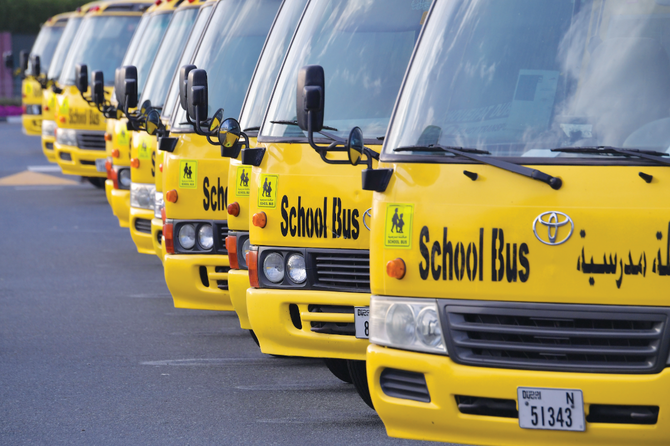


DUBAI: It has been 11 weeks since the World Health Organization’s (WHO) China office heard the first reports of a virus that officials suspected was behind an outbreak of pneumonia infections in Wuhan, an eastern city with a population of over 11 million.
Since then, the coronavirus disease (COVID-19) has gone from being an epidemic mainly limited to China to a global pandemic. The highly infectious nature of the virus has meant that increased numbers of students are now obliged to study from home.
According to UNESCO monitoring, over 120 countries have implemented nationwide school and university closures. The impact is being felt by over 70 percent of total enrolled learners globally.
In the US, one of the few countries yet to enforce a country-wide closure, at least 43 states have closed schools.
FASTFacts
- There is currently no vaccine to prevent coronavirus (COVID-19) infection.
- The best way to prevent illness is to avoid being exposed to the virus.
- COVID-19 causes respiratory illness with symptoms such as cough, fever and, in more severe cases, difficulty breathing.
In the Middle East, governments have been quick to react, ordering mandatory suspension of attendance.
Even before the full closure of schools, data collected by global research company YouGov showed that 45 percent of parents in Saudi Arabia were taking voluntary measures to stop sending their children to school.
The reasons for taking precautions are compelling. COVID-19 spreads primarily through contact with an infected person who disseminates the virus by coughing or sneezing. It also spreads when a person touches a surface or object that has the virus on it and then touches their eyes, nose or mouth.
While COVID-19 is especially dangerous for older people and those with underlying illnesses, studies have shown that people of all ages can become infected by the new virus.
The WHO has urged young people to avoid socializing in order to not risk communicating the virus to older, more vulnerable people. The organization now recommends “physical distance” to help prevent transmission of the virus.
“I have a message for young people: You are not invincible, this virus could put you in hospital for weeks or even kill you,” Tedros Adhanom Ghebreyesus, WHO’s director-general, said in a recent online message.
“Even if you don't get sick, the choices you make about where you go could be the difference between life and death for someone else.”
While businesses around the world are postponing and cancelling face-to-face meetings in order to slow the spread of infections, workplace learning is emerging as one of the earliest and hardest-hit business activities.
Based on McKinsey & Company observations, as of early March, roughly half of face-to-face learning programs through June 30, 2020 have been postponed or canceled in North America. In parts of Asia and Europe, the figure is closer to 100 percent.
In Saudi Arabia, YouGov’s COVID-19 tracker reports that 25 percent of employees are working from home, while in the UAE the corresponding figure is 29 percent. Both of these figures are expected to rise in the coming weeks.
Students, however, cannot afford to postpone their programs, and institutions are quickly learning to adapt.
Until the pandemic began, academic institutions had a history of pushing back against online learning.
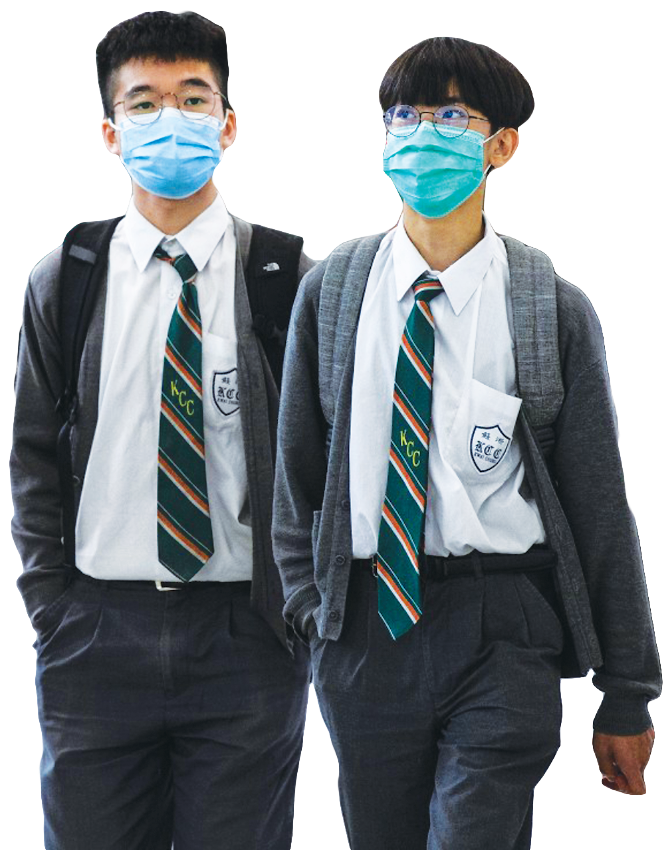
Hong Kong students will learn from home as COVID-19 causes school closures. (AFP)
When Times Higher Education surveyed the leaders of prominent global universities in 2018 — 200 participants from 45 countries across six continents — the response was clear. Academics were skeptical about the potential for online learning.
Research comparing physical learning in a classroom over an online experience draws mixed conclusions.
Educational researchers Robert Bernard, Eugene Borokhovski and Richard Schmid, from the Centre for the Study of Learning and Performance at Concordia University, Canada, told the Times Higher Education in 2018 that they knew of “no empirical evidence that says that classroom instruction benefits students (compared to alternatives) from a learning achievement perspective.”
More important than the medium was whether teachers could “capture and challenge the imagination, based on the learners’ pre-existing knowledge,” according to the researchers.
Given the lack of options for face-to-face learning under the circumstances, the world’s education system has been thrust into an e-learning experiment of unprecedented scale and scope.
While the process may be uncomfortable for parents, teachers and students alike, the opportunities for innovation are apparent.
“I think we’re seeing the way people live, the way people work, and the way people learn change,” said Amanda Line, partner at PwC Academy, a firm that specializes in finance and business education.
“At PwC Academy Middle East, we have changed our approach to training, to focus 100 percent on online live classrooms,” Line said.
“We all know that it’s very hard sitting on the other side of a screen.
“Our focus is on engagement and so we are investing in gamification, video, animation and live online interaction to ensure participation. You have to be engaged in order to learn.”
COVID-19 is indisputably one of the most urgent cross-border and cross-demographic problems in recent history. As such it has reminded people that the best organizations are those that collaborate generously with others.
UNESCO, for example, has developed a page with educational applications and platforms to help parents, teachers, schools and school systems facilitate student learning, as well as provide social care and interaction during periods of school closure.
Other platforms such as Coursera have also offered to be available globally to any university affected by COVID-19 for free.
On March 20 the audiobook platform from Amazon announced: “For as long as schools are closed, we’re open.”
In Saudi Arabia, where educational institutions have been closed since March 8 to contain the spread of the virus, the majority of schools and universities have implemented e-learning programs to enable students to continue their education.
To support university students and members, raise the quality of virtual classrooms and learning platforms, and improve access to national digital services, the Saudi Research and Innovation Network (Maeen) has teamed up with the Integrated Telecom Company.
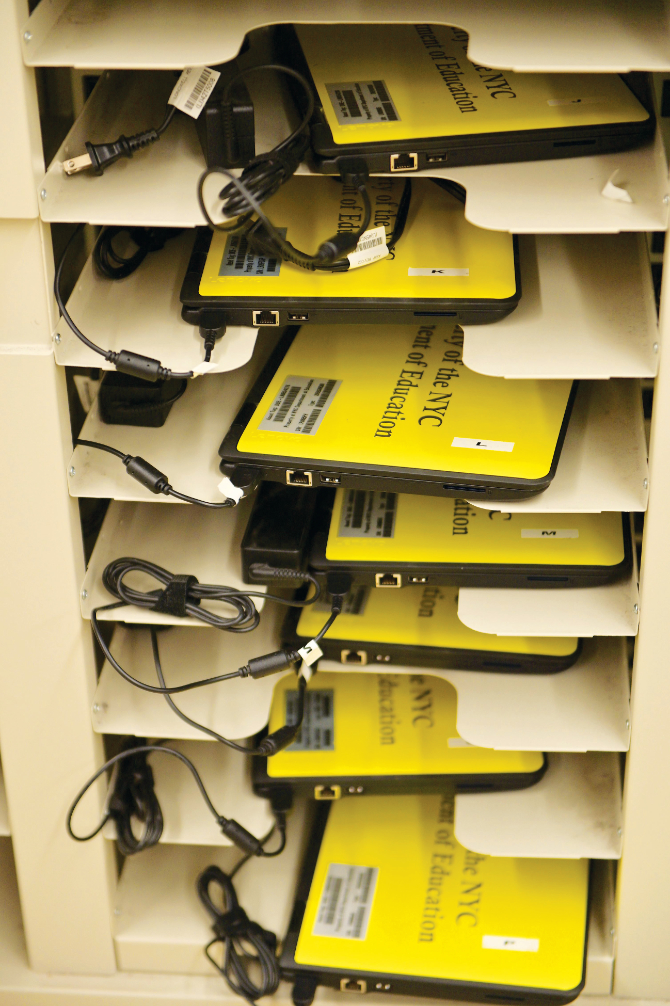
Laptops for students remotely learning in New York City. (AFP)
Their mission is to “increase the data quota between some of the Kingdom’s universities and the King Abdulaziz City for Science and Technology free of charge,” according to the Saudi Press Agency.
In Dubai, where schools, colleges and nurseries have also been closed, the Knowledge and Human Development Authority (KHDA) has launched a new online platform for learning.
Parents, students and teachers in Dubai can take advantage of the platform, which features education products and services.
The portal http://inthistogetherdubai.khda.gov.ae has been launched to connect technology and well-being-based organizations with teachers, parents and students who are teaching and learning from home.
It will feature apps, websites and support that will be offered free of charge during the distance-learning period.
While the platform is available to use, KHDA is looking for support from the education and learning community to provide content and free access to resources.
“Many people in our community have been coming to us to offer or ask for help during this time,” Dr Abdulla Al-Karam, director-general of KHDA, said.
“This portal is one way of connecting those who have useful products and services with those who need them," Al-Karam said.
“In the last few days and weeks, it has become clear that for our community, the term distance learning applies to physical distance only.
“Socially and emotionally, we are more connected to each other than ever before. We’re all in this together. Distance brings us closer.”
In a matter of weeks, measures to halt the spread of a previously unknown virus that originated from a seafood market in China’s Wuhan city have changed how millions around the world are educated.


