HANOI: A summit of Southeast Asian and other international leaders scheduled in Vietnam early next month has been postponed until end-June due to worries about coronavirus, Vietnam’s Ministry of Foreign Affairs said on Thursday.
Vietnamese Prime Minister Nguyen Xuan Phuc has informed leaders of other Southeast Asian countries about the postponement, the ministry said.
The 36th summit of the 10-member Association of Southeast Asian Nations (ASEAN) had been scheduled to take place on April 6-9 in Vietnam, the group’s chair this year.
The postponement decision came after Vietnam announced on March 17 that it would introduce mandatory quarantine for all visitors from the United States, Europe and ASEAN countries and suspend the issue of new visas for all foreign nationals.
The coronavirus pandemic, which has killed nearly 9,000 people worldwide and infected 76 people in Vietnam as of late Thursday, already forced a meeting between ASEAN and the United States slated for March 14.
The ASEAN consists of Brunei, Cambodia, Indonesia, Laos, Malaysia, Myanmar, the Philippines, Singapore, Thailand and Vietnam.

ASEAN summit in Vietnam postponed until end-June over coronavirus
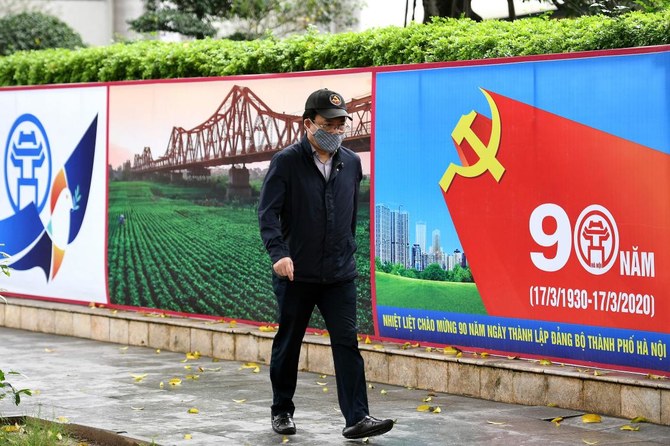
- ASEAN consists of Brunei, Cambodia, Indonesia, Laos, Malaysia, Myanmar, the Philippines, Singapore, Thailand and Vietnam
AI use reaches 91% in Middle East hospitality: PwC survey
RIYADH: The use of artificial intelligence in the Middle East’s hospitality sector is accelerating, with 91 percent of industry leaders already using or piloting AI-related tools, a new survey showed.
In its latest report, professional services firm PwC said only 3 percent of tourism and hospitality organizations across the region have achieved full-scale, enterprise-wide implementation of AI technologies.
PwC noted that countries across the Middle East are rapidly deploying AI and smart digital technologies to enhance visitor experiences and strengthen the tourism and hospitality sector’s contribution to national economic transformation agendas.
The findings reflect a broader regional trend, as countries such as Saudi Arabia seek to position themselves as tourism and technology hubs as part of efforts to reduce reliance on crude oil revenues.
Earlier this month, a separate PwC report found that artificial intelligence use among the workforce in the Middle East continues to rise, with 75 percent of employees in the region using AI in their jobs over the past 12 months.
Commenting on the latest findings, Moussa Beidas, AI Go-to-Market Lead & Future Impact Center co-sponsor at PwC Middle East, said: “To realize AI’s promise, the industry must move beyond pilots and proofs of concept. True impact comes when intelligence is woven into every decision – empowering teams, optimising systems and elevating experiences.”
He added: “The leaders who turn AI from a tool into an organizational mindset will shape the next era of tourism and hospitality.”
The survey found that 74 percent of organizations in the Middle East’s hospitality sector now have dedicated AI budgets, signaling a shift from experimentation toward more structured and strategic adoption.
About 85 percent of respondents reported measurable improvements in cost savings and operational efficiency through the use of AI technologies.
However, challenges remain. Some 73 percent of participants cited a shortage of employees with AI expertise or experience in managing digital transformation, while 85 percent said they face difficulties integrating AI tools with outdated technology systems.
According to PwC, AI adoption in tourism and hospitality is being driven primarily by a focus on enhancing the customer experience, with 97 percent of respondents citing it as their main motivation.
Beyond guest engagement, more than 70 percent of hoteliers identified operational resilience and employee productivity as key drivers, highlighting AI’s growing role in improving internal efficiency and workforce effectiveness. More than 60 percent of participants also said they view AI as a way to differentiate from competitors.
“AI is redefining how destinations, hotels and travelers connect. The winners won’t be those who collect the maximum data, but those who use it intelligently – to make every interaction seamless, ethical and valuable,” said Marco Rentsch, hospitality leader, PwC Middle East.
He added: “For industry leaders, this means moving from disconnected systems to connected intelligence, where AI doesn’t replace human judgment and interaction, but amplifies it to create trust, efficiency and new forms of value across the entire travel ecosystem.”