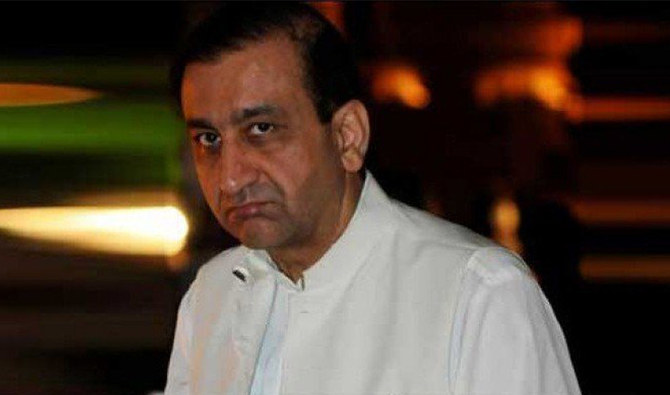
ISLAMABAD: Pakistan’s anti-graft body Thursday ordered the arrest of the owner and editor-in-chief of Pakistan’s largest independent group of newspapers and TV stations in a decades-old case related to allegations of tax evasion in a real estate purchase.
Mir Shakilur Rehman’s Jang Group of Newspapers, which includes Geo TV, has been critical of the government. He was arrested in the eastern city of Lahore, the National Accountability Bureau said, without giving additional details.
Rehman’s arrest drew condemnation from the country’s journalistic community, with Geo News calling the arrest a “political victimization.”
“This is an attack on the freedom of expression,” said Rana Jawad, Geo News’ news director.
Pakistan, one of the most dangerous places in the world for journalists to work, has witnessed an intensified crackdown on journalists, human rights workers, activists and members of civil society in recent years.
Rehman, whose media house has been critical of the government, had been facing questions from the anti-graft body for the past several months.
Jawad accused the National Accountability Bureau of abusing its authority, saying no valid reason was given to Rehman for being taken into custody.
The Geo TV station said Rehman was arrested in a 34-year-old case pertaining to the purchase of land for construction of a house in Lahore, the capital of eastern Punjab province.
Rehman’s arrest comes amid increasing pressure on journalists in Pakistan by state institutions and security agencies. Being a dissident — or even raising a critical voice — in Pakistan has grown more dangerous, regardless of whether the target is a political party, the judiciary or the powerful military and security agencies.
Human rights groups say the government of Prime Minister Imran Khan, elected in 2018, has failed to protect freedom of speech in Pakistan. Before becoming prime minister, Khan often publicly said that he would have Rehman arrested if he came into power.
Khan considers Rehman’s media house to be one of his main critics.
The latest arrest came weeks after Pakistani journalist Aziz Memon disappeared on the way to his work at a small newspaper in southern Sindh province. He was found dead just hours later. A few months earlier, Memon tweeted that he had been threatened by local police and a prominent political party over his reporting.


![]()

Pakistan anti-graft body arrests newspaper, TV mogul
Short Url
https://arab.news/znvmv
Pakistan anti-graft body arrests newspaper, TV mogul
- Mir Shakilur Rehman’s arrest has drew condemnation from the country’s journalistic community
- The development was described as an act of ‘political victimization’ by Geo News
Latest updates


Recommended



© 2026 SAUDI RESEARCH & PUBLISHING COMPANY, All Rights Reserved And subject to Terms of Use Agreement.