
MAKKAH: Disinfection, price hikes and a shortage of face masks have swept across Saudi Arabia as it gets to grips with the coronavirus outbreak.
The total number of cases reported in the Kingdom was 15 as of Monday.
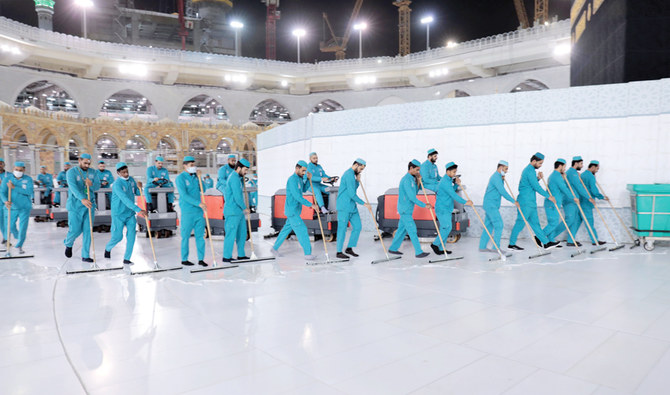
Saudi Arabia has implemented additional sanitization steps at the Two Holy Mosques, restricted entry for foreign pilgrims and put in place other preventive measures nationwide.
Government agencies, such as the General Presidency for the Affairs of the Two Holy Mosque and the Saudi Post, have suspended the use of automated fingerprint identification systems over coronavirus fears.
Pharmacist and the head of regulatory affairs at King Faisal Specialist Hospital International Holding Company, Eman Al-Mutairi, said that people’s fear was rising as the number of coronavirus cases increased.
The drive to buy disinfectants and masks had contributed to an acute shortage of these products in pharmacies and retail outlets, leading to eventual price hikes.
“People should not panic, and should take information from a trusted source, especially the Centers for Disease Control and Prevention, the Saudi Ministry of Health, and the National Center for Disease Prevention and Control,” she told Arab News.
Institutions have emphasized the need to wash hands with soap and water for at least 20 seconds as a primary means to prevent the disease. “If soap and water are unavailable hand sanitizers which contain 60 percent alcohol or more can be used,” Al-Mutairi added.
Touching the eyes, nose and mouth should be avoided and the use of masks for healthy people as a preventive step was not recommended, she explained, because masks should be exclusively used by health workers and people infected with the virus in order to halt the spread of disease.
HIGHLIGHTS
• Several government agencies have suspended the use of automated fingerprint identification systems.
• The drive to buy disinfectants and masks had contributed to an acute shortage of these products.
“Some countries, including Saudi Arabia, have adopted legislation to regulate the sale of disinfectants, in an attempt to reduce high prices. However, it is still possible to experience an acute shortage of sanitizing products and masks internationally, given the growing demand and stockpiling by consumers.”
There was a need to raise consumer awareness, she said, as well as for the public to report pharmacies and retailers who were exploiting the epidemic for financial profit.
Laboratory specialist Dr. Rania Shoudry told Arab News that one of the problems with coronavirus was its rapid spread. People should avoid crowded places and unnecessary gatherings, she added. Scattered spray resulting from flu could live on surfaces, get transmitted through contact, cause an infection and destroy the respiratory system.
Extra attention must be paid to symptoms that usually appeared in the form of fever only as they constituted a direct threat to everyone, especially the elderly and those with chronic diseases such as diabetes and blood pressure.
Governments in the Middle East have taken precautionary measures to combat the spread of the disease, including travel restrictions, work and class suspensions, and quarantines.