

The woman unlocking mysteries of Saudi Arabia's caves

1 / 7
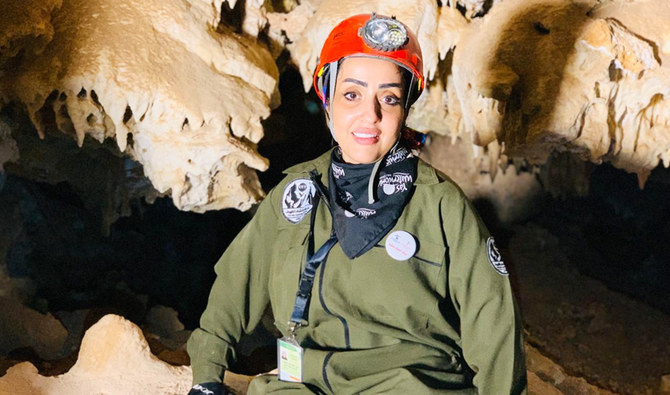
For Bodor Al-Saleh, caving offers an experience unlike any other desert activity because each cave has its own characteristics and history — and each attracts a different type of visitor. (Supplied)
2 / 7
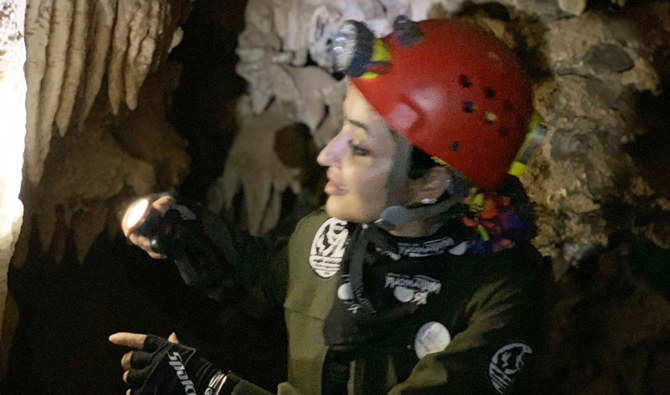
For Bodor Al-Saleh, caving offers an experience unlike any other desert activity because each cave has its own characteristics and history — and each attracts a different type of visitor. (Supplied)
3 / 7
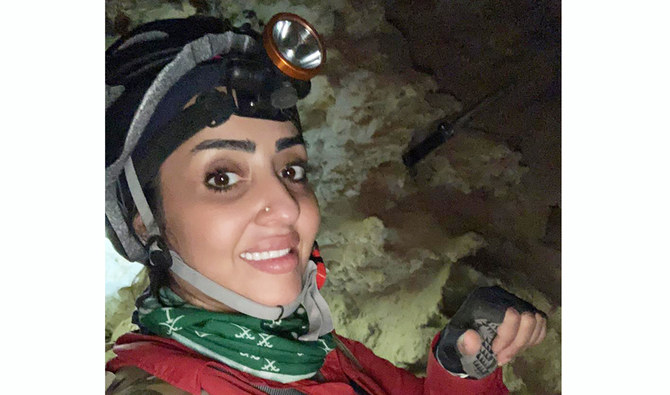
For Bodor Al-Saleh, caving offers an experience unlike any other desert activity because each cave has its own characteristics and history — and each attracts a different type of visitor. (Supplied)
4 / 7
For Bodor Al-Saleh, caving offers an experience unlike any other desert activity because each cave has its own characteristics and history — and each attracts a different type of visitor. (Supplied)
5 / 7
For Bodor Al-Saleh, caving offers an experience unlike any other desert activity because each cave has its own characteristics and history — and each attracts a different type of visitor. (Supplied)
6 / 7
For Bodor Al-Saleh, caving offers an experience unlike any other desert activity because each cave has its own characteristics and history — and each attracts a different type of visitor. (Supplied)
7 / 7
For Bodor Al-Saleh, caving offers an experience unlike any other desert activity because each cave has its own characteristics and history — and each attracts a different type of visitor. (Supplied)
Short Url
Updated 08 March 2020
Follow

The woman unlocking mysteries of Saudi Arabia's caves

  • Bodor Al-Saleh, Kingdom's first licensed tourist guide specializing in caves, finds her work a healing experience
  • She organizes some trips exclusively for women to raise their adventurous and confident spirits

JEDDAH: More Saudi women are discovering the excitement of desert adventures, which are as diverse as the Kingdom’s geography.

But while many answer the call of the wild by hiking, rock climbing and camping, Bodor Al-Saleh likes to dig a little deeper, literally, by scrambling, crawling and climbing into caves around the country.
The caves tourist guide decided to ignore many common misperceptions about women, follow her adventurous soul and discover the mysteries of Saudi Arabia’s caves.
Caving, a pastime that is growing in popularity around the world, may seem dangerous, but for Al-Saleh it is a calming and healing experience. “Once you go inside, all the fear and anxiety is gone,” she told Arab News.
Now, as the Kingdom’s first licensed tourist guide specializing in caves, Al-Saleh is encouraging more people, especially women, to tap into the same wellspring of confidence she has been able to find in the pastime.
The adventurous Saudi said she was proud to be the first woman chosen in this field.
Caves are where she feels a sense of belonging. “I feel that caves resemble me in their mysterious nature, beauty and powerfulness,” she said.
As well as guiding tourists, Al-Saleh organizes caving trips exclusively for women to ignite their adventurous, determined and confident spirit.

Opinion

This section contains relevant reference points, placed in (Opinion field)


Al-Saleh said that she does not find her caves guiding work difficult. “Women are smart and skilful enough to be able to do the job; it isn’t hard as it seems,” she said. “But like any other profession, it needs proper knowledge and technique to do it the right way.”
A cave guide’s work is not limited to leading a group of tourists, telling them stories about the history and geology of the site. It also requires a more complex set of skills to ensure visitors’ comfort and safety — and also protect the caves. “It is the guide’s responsibility to preserve the formations and stop damage or vandalism during the visit,” she said. “Caves are sophisticated and delicate.”
With the Saudi Geological Survey planning to launch new ecotourism destinations across the Kingdom, Al-Saleh said most of the thousands of caves in the country remain unmapped.
She recently launched an initiative to list caves as safe tourist attractions, and is hoping to receive support for the project. “Many of the caves that have been explored have poor access, which limits what I can offer to tourists.”
The national geological organization has begun preparing access points for tourists at some caves, while protecting the environment and ecosystems of the sites.
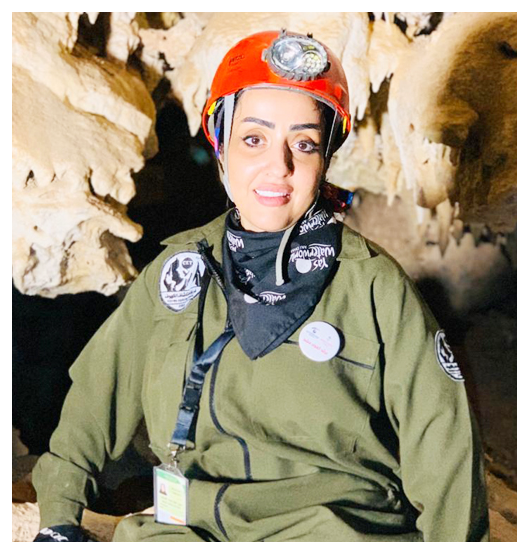
For Al-Saleh, caving offers an experience unlike any other desert activity because each cave has  its own characteristics and history — and each attracts a different type of visitor.
There are caves with historical value because of their association with certain events, such as the Tobad Mount cave in Al-Aflaj with its links to the ancient Arab love story of Layla and Qays.
Some caves are part of humanity’s long history, such as Um Jarsan cave north of Madinah, while others are important because of their geological features, such as Heet cave, near Al-Kharj.
“Caves are a global tourist attraction with an attractive economic factor, but caving lacks promotion on the local and global tourism scene. It deserves a lot more attention,” Al-Saleh said.
“Tourism in Saudi Arabia has many great investment opportunities for young people to exploit, and guiding services are always fun and a good additional source of income.”


Saudi aid agency launches food distribution projects in Djibouti and Guinea

Updated 21 February 2026
Follow

Saudi aid agency launches food distribution projects in Djibouti and Guinea

  • Projects to benefit 40,000 individuals across Djibouti and 50,000 in Guinea
  • KSrelief's aid programs have reached a total of 113 countries across four continents

RIYADH: The King Salman Humanitarian Aid and Relief Center (KSrelief) has launched its 2026 food distribution projects in the African republics of Djibouti and Guinea.

The initiatives are part of Saudi Arabia’s broader humanitarian relief efforts to enhance global food security for vulnerable populations, according to statements carried by the Saudi Press Agency (SPA).

In Djibouti, Saudi Ambassador Mutrek Al-Ajaleen and other local officials rolled out the fifth phase of the year’s project. It consists of 6,715 baskets of essential food items designed to support 40,000 individuals across multiple regions of the country.

In Guinea, Saudi Ambassador Dr. Fahad Al-Rashidi led the launch ceremony for a similar initiative. Under this project, 8,400 food baskets will be distributed, benefiting 50,000 people nationwide.

Since its establishment in 2015, KSrelief has served as Saudi Arabia's primary humanitarian arm, making food security one of its largest and most critical operational sectors. According to the center's official statistics, KSrelief has implemented over 1,150 dedicated food security projects at a total cost of more than $2.2 billion.

These specific food distribution initiatives have successfully delivered vital sustenance to vulnerable populations in 86 countries worldwide. Broadening the scope beyond just food security, KSrelief's overall humanitarian and development aid programs have reached a total of 113 countries across four continents.