

UAE closes schools and colleges to combat the spread of coronavirus

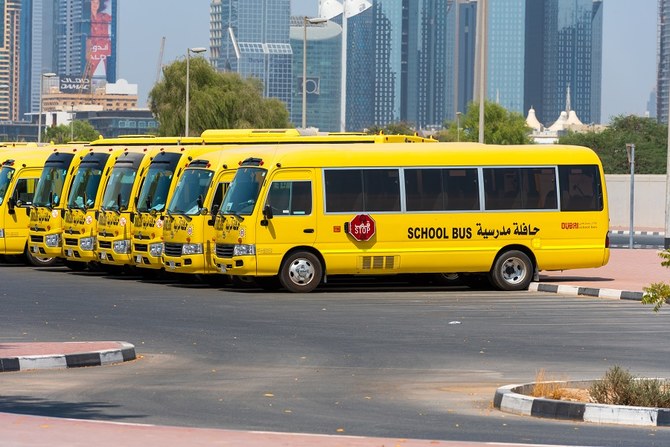
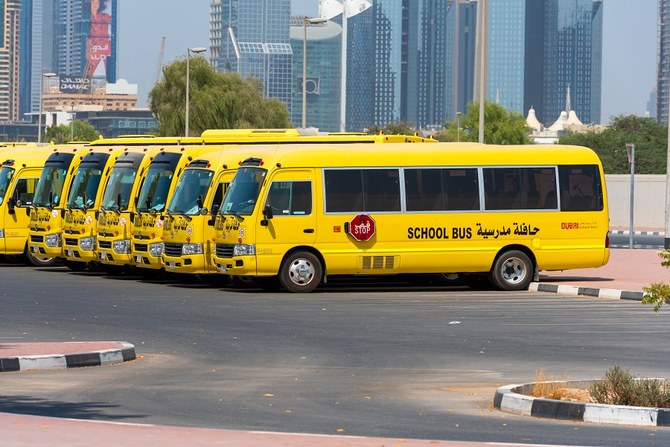
Schools and colleges will closed from Sunday, March 8, 2020. (File/Shutterstock)
Short Url
Updated 04 March 2020
Follow

UAE closes schools and colleges to combat the spread of coronavirus

  • Schools will remain closed from March 8 while all facilities are sanitized
  • Students will be expected to learn from home, while adhering to class schedules and rules

DUBAI: The UAE’s education ministry has announced the closure of all schools and universities in the country – public and private – for four weeks in a bid to prevent the spread of COVID-19 – the strain coronavirus that has claimed more than 3,000 lives globally state news agency WAM reported.

Spring break was initially scheduled to run from March 29, 2020, to April 12, 2020 – but the ministry has instructed all schools and higher education establishments to close for four weeks from Sunday, March 8, 2020.

There have been 27 people identified as having the coronavirus in the UAE so far – six of whom were announced late Monday, March 3, 2020.

The latest cases include two Russians, two Italians, one German and one Colombian, all of whom have been connected to the two previously announced cases associated with the the UAE Tour cycling race.

During the closures the ministry will sterilize school and university facilities, in accordance with the international standards for health, safety and hygiene.

Students will be educated through a pilot program for distance education during the last weeks of the vacation “to ensure education continuity and to avoid any impact on school days,” the statement explained.

The ministry has called on parents to “create an appropriate learning environment at home by providing computers and internet services.”

Parents are also advised to encourage students to adhere to the class schedule approved by teachers, and to adhere to the rules, such as the ban on the use of non-learning related web browsing and photography.

WHO alarmed by health workers, civilians ‘forcibly detained’ in Sudan

Updated 17 December 2025
Follow

WHO alarmed by health workers, civilians ‘forcibly detained’ in Sudan

  • The WHO counts and verifies attacks on health care, though it does not attribute blame as it is not an investigation agency

GENEVA: The World Health Organization voiced alarm Tuesday at reports that more than 70 health workers and around 5,000 civilians were being detained in Nyala in southwestern Sudan.
Since April 2023, Sudan’s regular army and the paramilitary Rapid Support Forces (RSF) have been locked in a brutal conflict that has killed tens of thousands of people, displaced 12 million more and devastated infrastructure.
“We are concerned by reports from Nyala, the capital of Sudan’s South Darfur state, that more than 70 health care workers are being forcibly detained along with about 5,000 civilians,” WHO chief Tedros Adhanom Ghebreyesus said on X.
“According to the Sudan Doctors Network, the detainees are being held in cramped and unhealthy conditions, and there are reports of disease outbreaks,” the UN health agency chief said.
The RSF and the Sudan People’s Liberation Movement-North faction allied earlier this year, forming a coalition based in Nyala.
“WHO is gathering more information on the detentions and conditions of those being held. The situation is complicated by the ongoing insecurity,” said Tedros.
“The reported detentions of health workers and thousands more people is deeply concerning. Health workers and civilians should be protected at all times and we call for their safe and unconditional release.”
The WHO counts and verifies attacks on health care, though it does not attribute blame as it is not an investigation agency.
In total, the WHO has recorded 65 attacks on health care in Sudan this year, resulting in 1,620 deaths and 276 injuries. Of those attacks, 54 impacted personnel, 46 impacted facilities and 33 impacted patients.
Earlier Tuesday, UN rights chief Volker Turk said he was “alarmed by the further intensification in hostilities” in the Kordofan region in southern Sudan.
“I urge all parties to the conflict and states with influence to ensure an immediate ceasefire and to prevent atrocities,” he said.
“Medical facilities and personnel have specific protection against attack under international humanitarian law,” Turk added.