

Saudi Aramco iktva forum kicks off in Dhahran

1 / 7
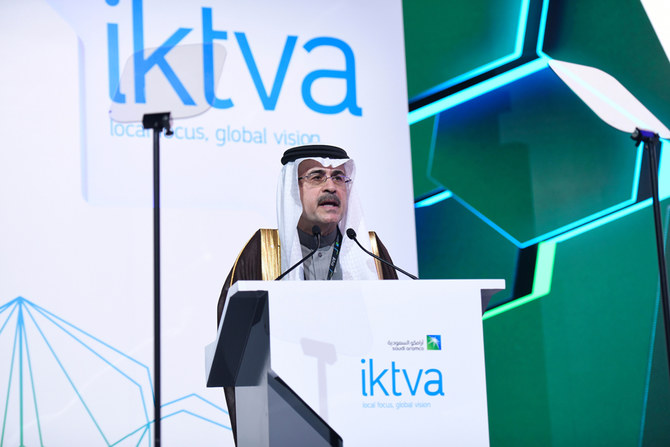
Amin Nasser, President and CEO of Aramco, highlighted the success of the event and how the forum has contributed to the kingdom’s reputation internationally and locally. (Supplied)
2 / 7
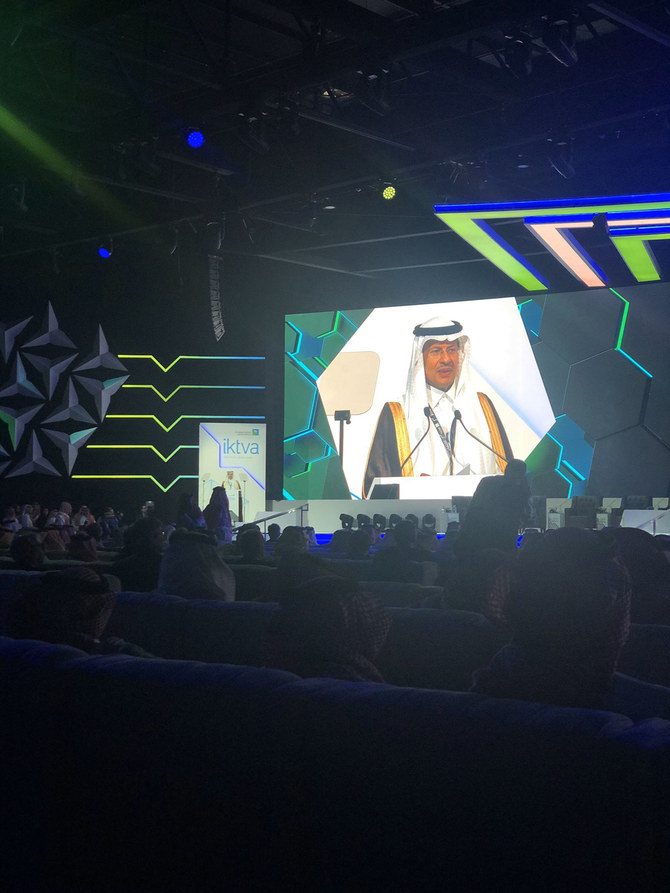
Saudi Arabia’s Minister of Energy Prince Abdulaziz bin Salman at the 5th annual iktva (In-Kingdom Total Value Add) at the Dhahran Expo center. (Supplied)
3 / 7
Saudi Arabia’s Minister of Energy Prince Abdulaziz bin Salman at the 5th annual iktva (In-Kingdom Total Value Add) at the Dhahran Expo center. (Supplied)
4 / 7
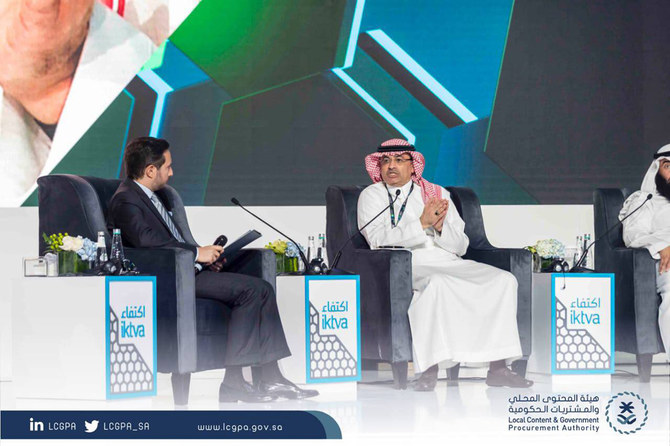
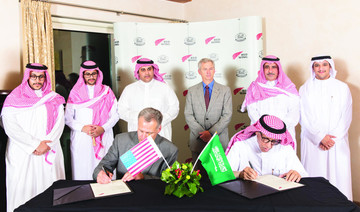
Iktva was launched by Saudi Aramco in 2015 to drive increased levels of localization in its supply chain. (Supplied)
5 / 7
Iktva was launched by Saudi Aramco in 2015 to drive increased levels of localization in its supply chain. (Supplied)
6 / 7
Iktva was launched by Saudi Aramco in 2015 to drive increased levels of localization in its supply chain. (Supplied)
7 / 7
Iktva was launched by Saudi Aramco in 2015 to drive increased levels of localization in its supply chain. (Supplied)
Short Url
Updated 29 August 2022
Follow

Saudi Aramco iktva forum kicks off in Dhahran

  • Iktva has become one of the Kingdom’s most important and strategic programs focused on developing the energy sector and creating a world-class supply chain
  • The program aims to reach 70 percent local content, increase exports of Saudi-made energy goods and services, and create thousands of jobs

DHAHRAN: Saudi Aramco’s 5th annual iktva (In-Kingdom Total Value Add) forum kicked off on Monday at the Dhahran Expo center, with over 70 exhibitors, 14 government entities, and 8 international energy partners all present at the mega-event.

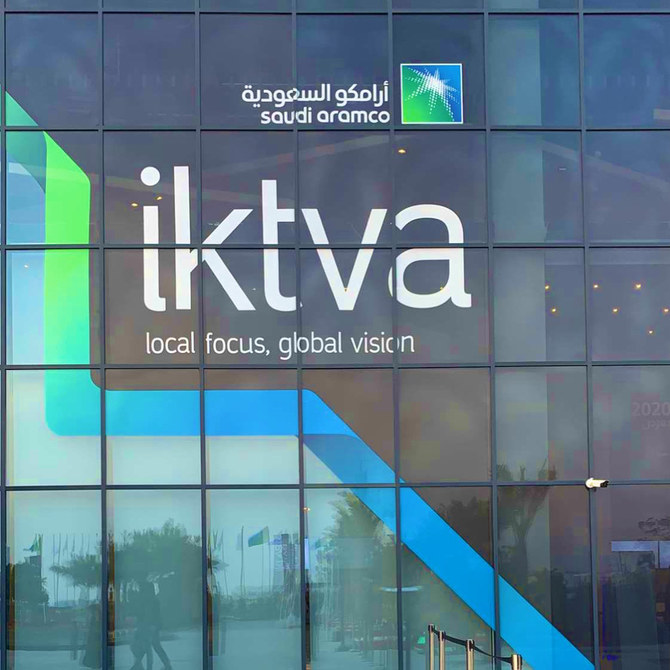
Iktva was launched by Saudi Aramco in 2015 to drive increased levels of localization in its supply chain. 

Amin Nasser, President and CEO of Aramco, highlighted the success of the event and how the forum has contributed to the kingdom’s reputation internationally and locally.

“The iktva Forum and Exhibition 2020 represents an ideal opportunity to continue to build on the enormous progress which has already been made in creating an integrated supply chain for the oil field service industry, serving not just the Kingdom but the entire region. As you know, we take great pride in our low-cost production, and our reputation for reliability. A first-class supply chain is a critical factor that makes both possible,” he said.

He also indicated that the success of the event could be seen in the numbers.

“For the first time, the majority of our procurement is from in-kingdom: 56 percent to be exact. Our suppliers have tripled their local purchases of goods and services, their employment of Saudis is up 50 percent, and female employment has increased by almost a third. Our suppliers are exporting 50 percent more from the kingdom, because of iktva,”

Aramco signed 66 initial agreements and strategic and commercial collaborations valued at more than $21 billion with international partner companies and entities from 11 countries in several industrial and business sectors across the Saudi Arabian energy sector.

In addition, a joint venture agreement with Baker Hughes was also signed. The joint venture will be a multi-sectorial non-metallic investment platform designed to innovate, develop and manufacture composite materials for both oil and gas as well as non-oil and gas applications.

The venture will leverage polymer materials and state-of-the-art manufacturing processes to deliver transformational non-metallic products, starting with reinforced thermoplastic pipes. The JV facility will be located at the King Salman Energy Park (SPARK), and will serve the MENA region. 

Launched in 2015, iktva has become one of the Kingdom’s most important and strategic programs focused on developing the energy sector and creating of a world-class supply chain. The program aims to reach 70 percent local content, increase exports of Saudi-made energy goods and services, and create thousands of technical and professional jobs and careers.

Multilateralism strained, but global cooperation adapting: WEF report

Updated 10 January 2026
Follow

Multilateralism strained, but global cooperation adapting: WEF report

DUBAI: Overall levels of international cooperation have held steady in recent years, with smaller and more innovative partnerships emerging, often at regional and cross-regional levels, according to a World Economic Forum report.

The third edition of the Global Cooperation Barometer was launched on Thursday, ahead of the WEF’s annual meeting in Davos from Jan. 19 to 23.

“The takeaway of the Global Cooperation Barometer is that while multilateralism is under real strain, cooperation is not ending, it is adapting,” Ariel Kastner, head of geopolitical agenda and communications at WEF, told Arab News.

Developed alongside McKinsey & Company, the report uses 41 metrics to track global cooperation in five areas: Trade and capital; innovation and technology; climate and natural capital; health and wellness; and peace and security.

The pace of cooperation differs across sectors, with peace and security seeing the largest decline. Cooperation weakened across every tracked metric as conflicts intensified, military spending rose and multilateral mechanisms struggled to contain crises.

By contrast, climate and nature, alongside innovation and technology, recorded the strongest increases.

Rising finance flows and global supply chains supported record deployment of clean technologies, even as progress remained insufficient to meet global targets.

Despite tighter controls, cross-border data flows, IT services and digital connectivity continued to expand, underscoring the resilience of technology cooperation amid increasing restrictions.

The report found that collaboration in critical technologies is increasingly being channeled through smaller, aligned groupings rather than broad multilateral frameworks.  

This reflects a broader shift, Kastner said, highlighting the trend toward “pragmatic forms of collaboration — at the regional level or among smaller groups of countries — that advance both shared priorities and national interests.”

“In the Gulf, for example, partnerships and investments with Asia, Europe and Africa in areas such as energy, technology and infrastructure, illustrate how focused collaboration can deliver results despite broader, global headwinds,” he said.

Meanwhile, health and wellness and trade and capital remained flat.

Health outcomes have so far held up following the pandemic, but sharp declines in development assistance are placing growing strain on lower- and middle-income countries.

In trade, cooperation remained above pre-pandemic levels, with goods volumes continuing to grow, albeit at a slower pace than the global economy, while services and selected capital flows showed stronger momentum.

The report also highlights the growing role of smaller, trade-dependent economies in sustaining global cooperation through initiatives such as the Future of Investment and Trade Partnership, launched in September 2025 by the UAE, New Zealand, Singapore and Switzerland.

Looking ahead, maintaining open channels of communication will be critical, Kastner said.

“Crucially, the building block of cooperation in today’s more uncertain era is dialogue — parties can only identify areas of common ground by speaking with one another.”