UN, EU tell Qatar to rethink free-speech curbs

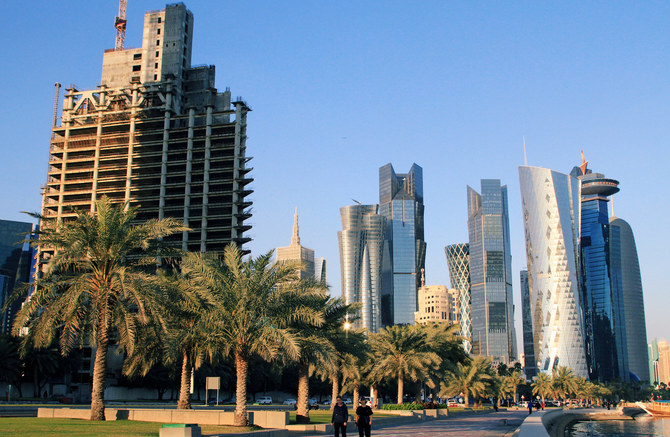
Qatar’s “lese majeste” laws on disrespect toward the country’s rulers violate citizens’ right to free speech. (REUTERS)
Short Url
Updated 18 February 2020
Follow

UN, EU tell Qatar to rethink free-speech curbs

  • EU raises issue of free speech with Doha, calling new laws "vaguely worded"
  • Latest criticism comes in wake of human rights concerns over 2022 World Cup hosting

The UN and the EU’s special representative on human rights have criticized Qatar for passing legislation curbing free speech.

Eamon Gilmore called the laws, which criminalize the spreading of “false” information, “vaguely worded.”

He said he had raised the issue with Qatar’s Foreign Ministry and the country’s National Human Rights Committee.

A 2014 law on cybercrime prevention originally allowed those convicted of offenses to be imprisoned for up to three years.

That upper timeframe was increased to five years for cases in which “ill intent” could be demonstrated.

The difficulty arises in the definition of “false news,” which is not specified in the law itself, leaving it open to liberal interpretation.

Gilmore said he is “concerned about some pieces of legislation which relate to freedom of expression and freedom of the press.”

He added: “Freedom of expression is a very important part of the way in which the EU sees human rights. We attach a very high priority to it. We urge that those laws be amended, changed or withdrawn.”

Qatar’s cybercrime laws were raised by the UN during the country’s most recent Universal Periodic Review.

It said Qatar’s “lese majeste” laws on disrespect toward the country’s rulers violate citizens’ right to free speech.

This comes in the wake of criticism from international organizations in the build up to Qatar’s hosting of the 2022 FIFA World Cup.

Human Rights Watch on Sunday said Qatar’s censorship of unpaid workers fell short of international standards, in the aftermath of a report that said many foreign laborers working on construction sites had gone unpaid for a five-month period, and had been threatened with arrest, deportation and non-payment of outstanding wages if they went on strike.


The art of war: fears for masterpieces on loan to Louvre Abu Dhabi

Updated 13 March 2026
Follow

The art of war: fears for masterpieces on loan to Louvre Abu Dhabi

  • UAE paid more than €1 billion to borrow priceless works, but experts in France want them back

PARIS: The Middle East war has raised fears for the safety of priceless masterpieces on loan from France to the Louvre Abu Dhabi, the museum’s only foreign branch.
The Abu Dhabi museum, which opened in 2017, has so far escaped damage from nearly 1,800 Iranian drone and missile strikes launched since the conflict erupted on Feb. 28.
However, concerns are mounting in France. “The works must be removed,” said Didier Selles, who helped broker the original agreement between France and the UAE.
French journal La Tribune de l’Art echoed that alarm. “The Louvre’s works in Abu Dhabi must be secured!” it said.
France’s culture ministry said French authorities were “in close and regular contact with the authorities of the UAE to ensure the protection of the works loaned by France.”
Under the agreement with the UAE, France agreed to provide expertise, lend works of art and organize exhibitions, in return for €1 billion, including €400 million for licensing the use of the Louvre name. The deal was extended in 2021 to 2047 for an additional €165 million.
Works on loan include paintings by Rembrandt and Chardin, Classical statues of Isis, Roman sarcophagi and Islamic masterpieces: such as the Pyxis of Al-Mughira.

A Louvre Abu Dhabi source said the museum was designed to protect collections from both security threats and natural disasters.