Art therapy brings hope to children at Karachi cancer clinic

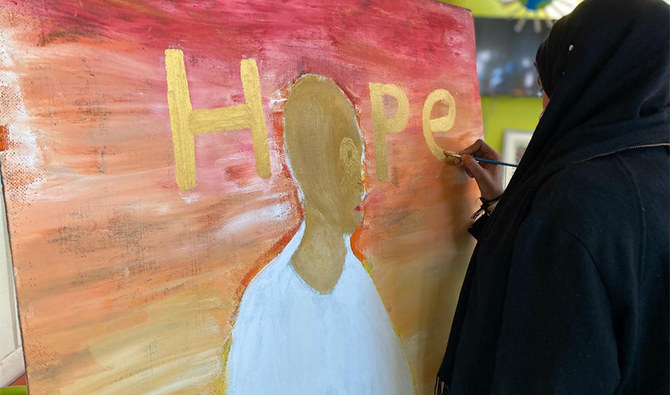
Zainab Nadeem paints a person undergoing chemotherapy into her work depicting hope at the pediatric oncology ward of Indus Hospital in Karachi, Feb. 3, 2020. (AN photo)
Short Url
Updated 16 February 2020
Follow

Art therapy brings hope to children at Karachi cancer clinic

  • Art therapy becomes an offset to chemotherapy and other painful treatment
  • 250 children are undergoing treatment at Indus Hospital’s pediatric oncology ward

KARACHI: Little patients in Indus Hospital’s pediatric oncology ward share pain, hope, and a dream of becoming professional artists.

“Seeing my sketches hanging on the walls gave me a lot of boost, turning my attention from pain to art,” said 14-year-old Zainab Nadeem who for a year and a half has been fighting blood cancer.

The girl inspired psychologists at the Karachi clinic to introduce art therapy as an offset to chemotherapy and other painful treatment some children must undergo to survive.

When they first met Nadeem, she was quiet, detached. They asked about her favorite activities and the girl said she liked to draw. Very soon, her works got a professional touch and are now properly exhibited in the clinic’s hallway.

The hospital reached out to artists to run a real painting course for kids, with brushes, paints and canvas.

A soon as they learnt to use the new medium, “they started to tell their stories,” said Nafisa Dawood, who heads the hospital’s psychological department.
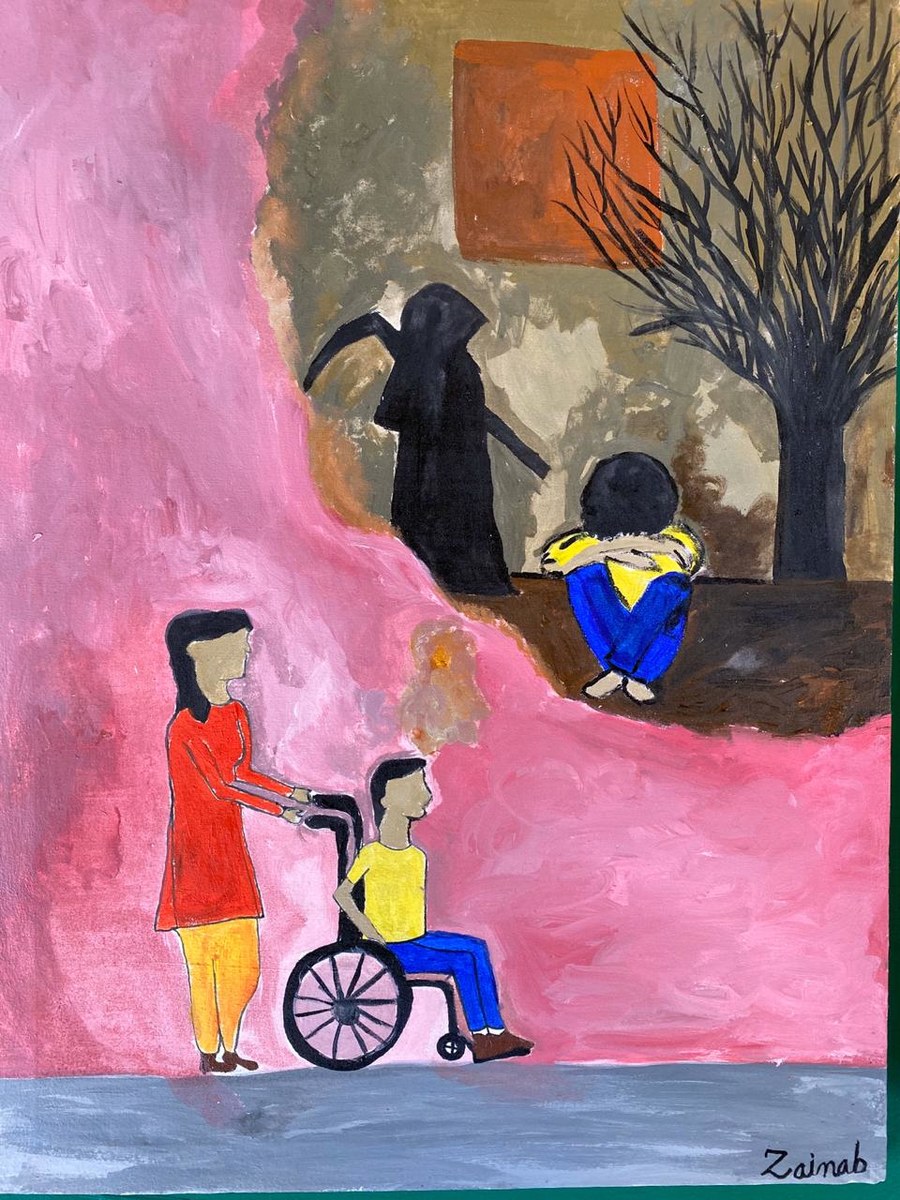


In one of her early paintings, Zainab Nadeem expressed her fear of death. (AN photo)

In the beginning, the children narrated their fears, she told Arab News, “but as time and their treatment went on, they started to paint nature, dreams and hope.”

Aroosa Khan, a teenager from Quetta, pictures her treatment, showing scars as her source of power.
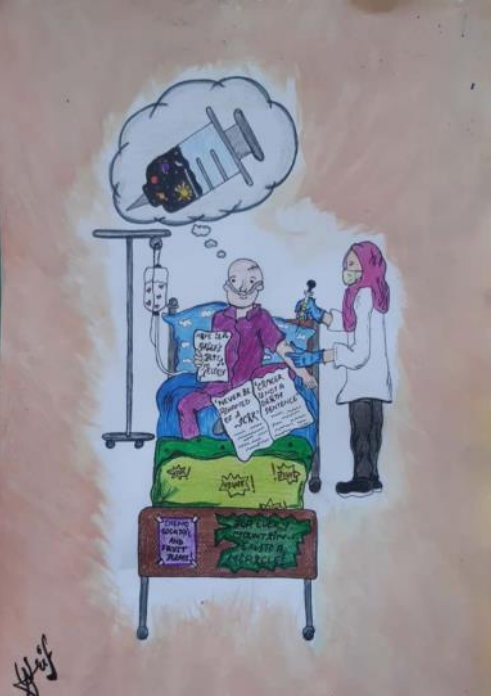


Her scars and strength to face painful treatment are Aroosa Khan’s superpowers. (AN photo)

“Her paintings were simply brilliant, and she learnt it from watching YouTube videos!” Dawood said.

Art helps the children cope with their treatment. “The works by our patients are masterpieces, also in the sense that they help us in providing them with therapy,” said Dr. Muhammad Fareeduddin, head of the hospital’s pediatric medicine.

“I am a fighter,” “I am hopeful,” read inscriptions on a painting signed “Saba & Survivors.” Saba, who is suffering from lymphoma, asked other kids to put their colorful handprints on her painting of a tree. It is a tree of life blooming with hope.
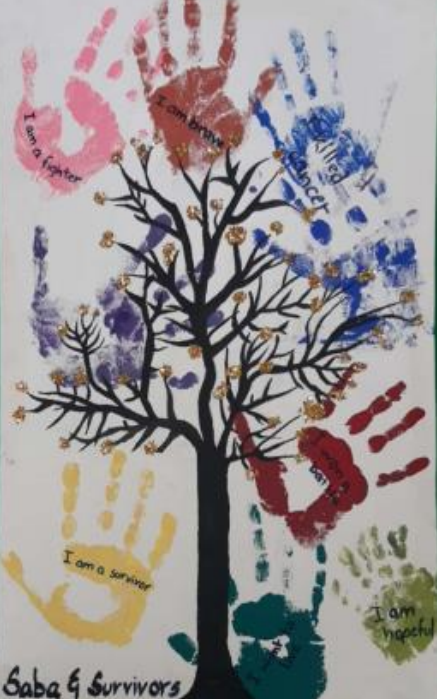


Saba & Survivors from the pediatric oncology ward of Indus Hospital in Karachi have stamped their hands on a tree of life. (AN photo)

Another girl, 13-year-old Laiba. She liked to paint sunrises, wanted to be like the sun, to rise and shine. But one day, she did not. A memory of her stays with her sun rays.
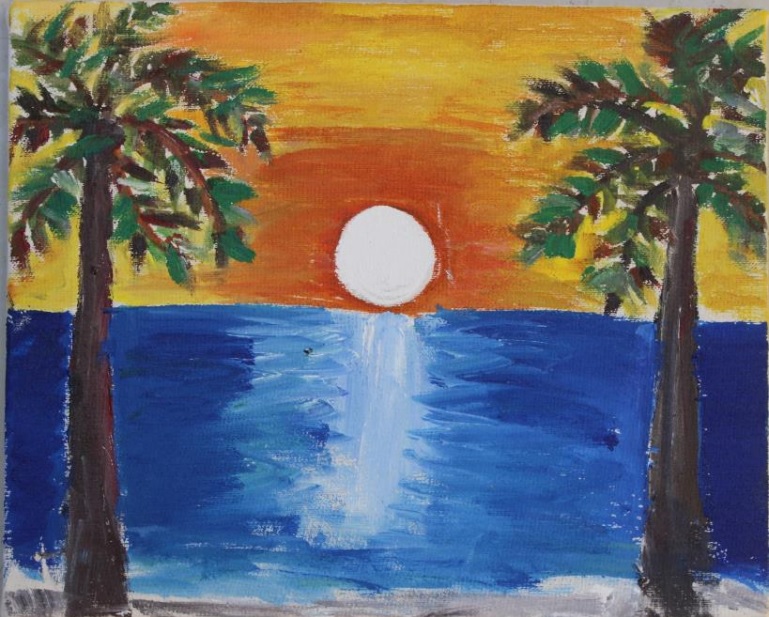


Sunrise by 13-year-old cancer patient Laiba. (AN photo)

While not every child can be saved, for all of them life is far more bearable when it revolves around hope. And art keeps it springing.

Painting helped Nadeem have her illness go into remission and find new dreams.

“I wanted to become a banker. Now, I want to be an accomplished artist. I have found an artist inside me. And my father agrees,” she said.

She is a portrait painter now. She proudly shows her painting of actress Mahira Khan, as she tells Arab News to convey her message to the superstar: “Unfortunately, I was not in the hospital the day you came here. I made this for you, and I hope you will collect it.”
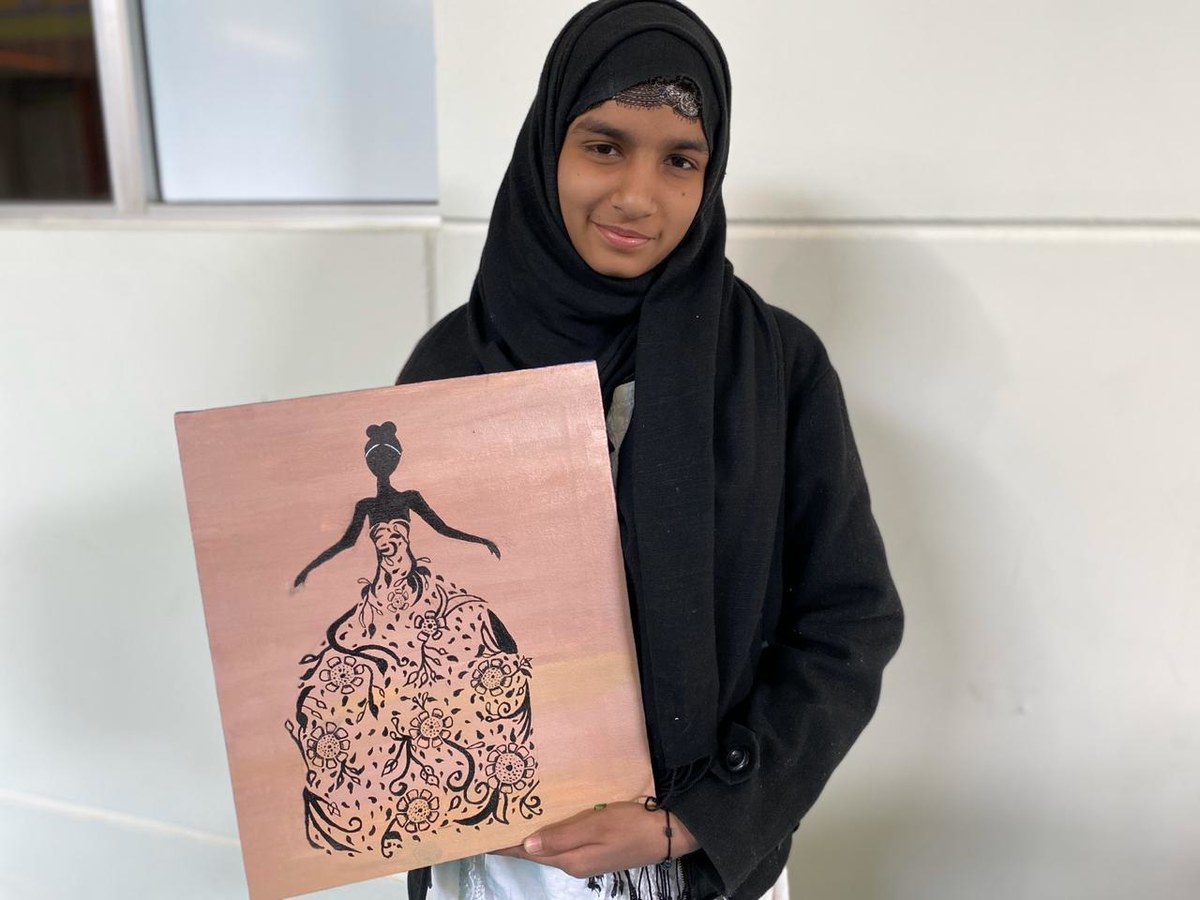


Zainab Nadeem poses with her painting for Mahira Khan in Karachi on Feb. 3. (AN photo)

About 250 children are currently undergoing treatment at Indus Hospital’s pediatric oncology ward. Each month, 100 new kids are admitted. Their therapy is free of charge.


Pakistan says it seized 32 square kilometers inside Afghanistan as border clashes escalate

Updated 28 February 2026
Follow

Pakistan says it seized 32 square kilometers inside Afghanistan as border clashes escalate

  • Security official describes ‘limited tactical action’ in Gudwana after Afghan assaults
  • Islamabad accuses Kabul of sheltering militants as UN, China and Russia urge restraint

ISLAMABAD: Pakistan has seized a 32-square-kilometer area inside Afghanistan following overnight fighting, a security official said on Saturday, as cross-border clashes between the two countries escalated sharply.

A Pakistani security official, speaking on condition of anonymity, said troops carried out a “limited tactical action” in the Gudwana area opposite the Zhob sector along the frontier, capturing Afghan territory after responding to attacks on Pakistani positions.

“On the night of Feb. 26/27, posts opposite the Zhob sector launched anticipated physical attacks on multiple Pakistani positions,” the official said, referring to fighters linked to Afghanistan’s Taliban authorities, whom Islamabad identifies as Tehreek-e-Taliban Afghanistan (TTA).

“In response to aggressive unprovoked fire and physical attacks, Pakistan security forces launched a limited tactical action on the night of Feb. 27/28 in the general area of Gudwana with a view to capture TTA Tahir Post,” he continued, adding that 32 square kilometers of Afghan territory were seized.

The official said special combat teams crossed the border after preparatory bombardment, supported by intelligence, surveillance and reconnaissance assets providing “real-time battlefield awareness.”

He said 24 Afghan Taliban fighters were killed and 37 wounded, with no Pakistani casualties reported.

The claims could not be independently verified, and there was no immediate confirmation from Taliban authorities in Kabul of any territorial loss in the Gudwana area.

The latest clashes erupted after Pakistani airstrikes targeted what Islamabad described as militant hideouts inside Afghanistan over the weekend, triggering retaliatory fire along the frontier and sharply escalating long-running tensions. Islamabad accuses Kabul of sheltering Pakistani Taliban militants responsible for attacks inside Pakistan, an allegation that Afghanistan denies.

Pakistan’s Information Minister Attaullah Tarar said on Saturday evening that 352 Afghan Taliban fighters had been killed and more than 535 wounded since the latest phase of hostilities began.

Tarar said Pakistani strikes had destroyed 130 check posts, 171 tanks and armored vehicles and targeted 41 locations across Afghanistan by air. Those figures could not be independently verified.

The United Nations, as well as China and Russia, have called for restraint.

The United States said Pakistan has the right to defend itself against cross-border militancy.