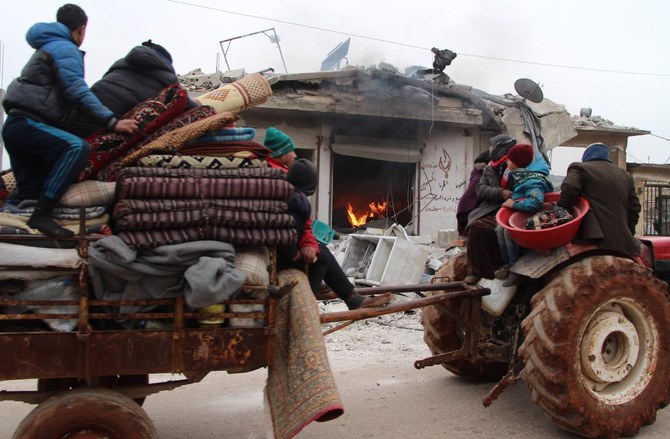
ANKARA: Turkey will use force against rebel groups violating a cease-fire in Syria’s northwest Idlib region, Turkish Defense Minister Hulusi Akar was quoted as saying on Thursday in an apparent response to Russian criticism.
Turkish President Tayyip Erdogan said on Wednesday that his military would strike Syrian government forces by air or ground anywhere in Syria if another Turkish soldier was hurt, after 13 troops were killed by Syrian forces in just over a week.
Russia, which supports Syrian President Bashar Assad, has accused Turkey of flouting the agreements it made with Moscow on Syria and of aggravating the situation in Idlib. The Kremlin said Ankara had failed to neutralize militants there, as per a 2018 agreement to establish a de-escalation zone.
In an apparent response to the Russian criticism, Akar said Turkey was sending additional reinforcements to its positions in Idlib to ensure a cease-fire in the region is maintained and to “control” the area, according state-run Anadolu news agency.
“Force will be used against those violating the cease-fire, including radicals, and every measure will be taken,” Akar said, referring to a Jan. 12 cease-fire Ankara says has been violated by Assad’s forces. Ankara has deployed more than 1,000 troops to its military posts in Idlib since last week.
On Wednesday, Erdogan said Ankara had given a message to the rebels it supports in the conflict to refrain from acting in an “undisciplined” way and give Syrian forces an excuse to strike.
The rebels are a mix of nationalist factions and Islamist militants who have had deadly rivalries but are now closing ranks.
Turkey, a NATO ally with the alliance’s second largest army, has repeatedly urged Russia to stop the Syrian attacks in Idlib, warning that it will use military power to push back the Syrian forces unless they withdraw by the end of the month.
Ankara and Moscow back opposing sides, but have collaborated on a political solution to the war.


![]()

Turkey to hit groups who violate Idlib ceasefire
Short Url
https://arab.news/b22jx
Turkey to hit groups who violate Idlib ceasefire
- Erdogan said his military would strike Syrian govt forces by air or ground anywhere in Syria if another Turkish soldier was hurt
- has accused Turkey of aggravating the situation in Idlib

Latest updates


Recommended


© 2026 SAUDI RESEARCH & PUBLISHING COMPANY, All Rights Reserved And subject to Terms of Use Agreement.