Senior member of Pakistani group fighting in Syria, Iraq arrested — Karachi police

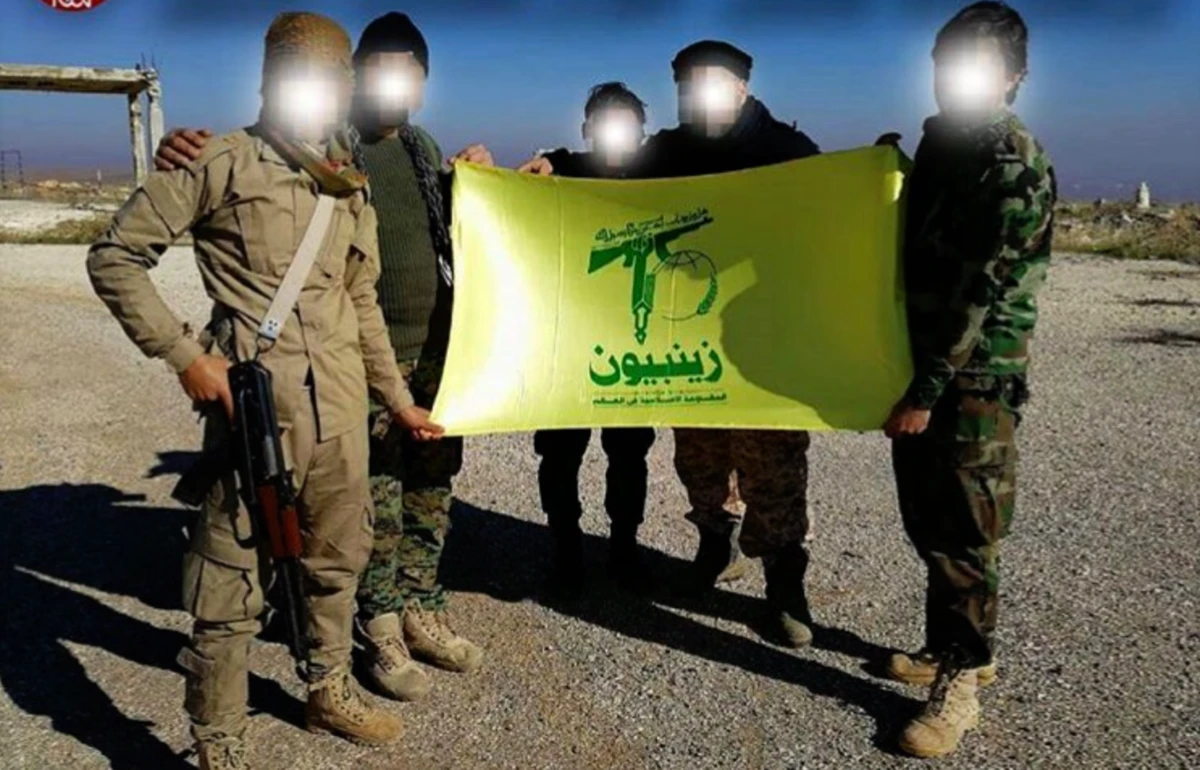
This undated photo shows Pakistani fighters from Zainabiyoun Brigade holding the militant group's flag in Syria. (Photo courtesy: Social media)
Short Url
Updated 13 February 2020
Follow

Senior member of Pakistani group fighting in Syria, Iraq arrested — Karachi police

  • Zainebiyoun Brigade militants are allegedly trained by Iran’s Quds Force
  • Alleged militant Zaidi has confessed to several sectarian killings between 2007 and 2018, police said

KARACHI: Police in Karachi have arrested a man suspected of being a high-profile member of the Zainebiyoun Brigade, a counterterrorism official said on Wednesday, referring to a militant group composed of Pakistani nationals fighting in Syria and Iraq.
Zainebiyoun Brigade reportedly has over 800 Pakistanis fighting in Syria. The group’s fighters are allegedly trained by Iran’s Quds Force, the military unit responsible for projecting Iran’s influence via proxies across the Middle East.
“We have arrested two militants, including one who joined Zainebiyoun and fought along the Assad forces before returning to Pakistan,” Israr Awan of the Counter Terrorism Department told Arab News. He said the arrests took place during an intelligence operation close to Karachi city’s Siemen’s Chowrangi area on Tuesday night.
The alleged Zainebiyoun-affiliated militant was identified as Syed Kamran Haider Zaidi alias Kami alias Wasti, and the other as Syed Ali Raza alias Bobby, associated with Pakistan's anti-Shia Sipah-e-Muhammad Pakistan.
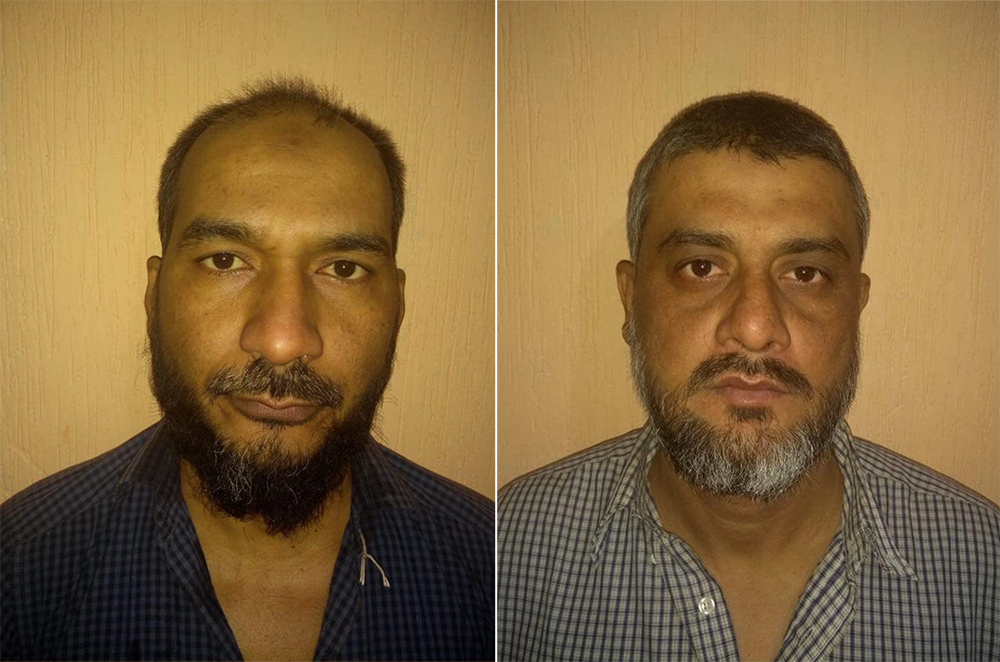


The mugshots show Kamran Haider Zaidi (left) and Syed Ali Raza who were arrested in Karachi on Feb. 11, 2020. (Photo courtesy: Counter Terrorism Department)

According to Awan, Zaidi had confessed to committing several sectarian killings between 2007 and 2018.
A police press release on Wednesday said the accused belonged to Zainebiyoun and had also fought against Daesh in Syria.
“Several of Zaidi’s fellows are still fighting in Syria,” Awan said, saying he was quoting Zaidi’s confession.
The Zaynabiyoun Brigade was placed on the US Treasury’s financial blacklist in January 2019.


Pakistan welcomes Afghan scholars’ reported resolution against use of soil for cross-border attacks

Updated 5 sec ago
Follow

Pakistan welcomes Afghan scholars’ reported resolution against use of soil for cross-border attacks

  • Around 1,000 Afghan scholars passed a resolution this week prohibiting use of Afghan soil for cross-border attacks against another country, Afghan media reported
  • Development takes place as tensions persist between Pakistan and Afghanistan amid Islamabad’s allegations of Taliban supporting cross-border attacks against it 

ISLAMABAD: Pakistan’s foreign office spokesperson on Thursday welcomed a resolution reportedly passed by Afghan scholars against allowing the use of Afghan soil for attacks against any other country, but still demanded written assurances of the same from the Afghan leadership. 

According to a report published by Afghan news channel Tolo News, around 1,000 Afghan scholars gathered in Kabul on Wednesday to pass a resolution that, among other things, said no one will be allowed to use Afghanistan’s soil against other countries for attacks. The resolution also said that if anyone fails to comply with this decision, the Afghan government has the right to take action against them.

The development takes place as tensions persist between Afghanistan and Pakistan. Both countries have engaged in border clashes since October, with Islamabad accusing Kabul of harboring militants that launch attacks on Pakistan.

Afghanistan denies the allegation and says it cannot be held responsible for Pakistan’s security. 

Speaking to reporters during a weekly press briefing, Foreign Office spokesperson Tahir Andrabi said he had not seen the full text of the resolution. 

“Any developments with regards to the fact that Afghan leadership, the segment of Afghan society, realized the gravity of the situation that their soil is being used by not just TTP, but also by their own nationals to perpetrate terrorism in Pakistan — any realization to this effect is positive and one would certainly welcome it,” Andrabi said.

However, he said similar commitments by Kabul on preventing cross-border attacks have been made in the past but were not honored. 

Pakistan and Kabul engaged in a series of peace talks in Istanbul and Doha recently after their deadly border clashes in October. Andrabi pointed out that Islamabad had insisted on getting written assurances from the Afghan leadership that they would prevent Afghan soil from being used by the Pakistani Taliban and other militant groups. However, he said Islamabad had not received any. 

He said the resolution by Afghan scholars does not qualify as a proper written assurance from Kabul as it does not explicitly mention Pakistan or the Pakistani Taliban.

’NO FORMAL EXTRADITION TREATY’

Commenting on media reports of Islamabad seeking extradition of certain individuals from the UK, Andrabi confirmed that there exists no formal extradition treaty between Pakistan and the UK. However, he said cases can still be processed individually.

“In the absence of a formal treaty, the extradition cases can be processed on a case-to-case basis,” the FO spokesperson said. “And certain cases were submitted to the British High Commission in Islamabad for their consideration.”

Pakistan last week asked the UK to extradite two prominent pro-Imran Khan figures, former accountability aide Shehzad Akbar and YouTuber-commentator Adil Raja, saying they were wanted on charges of anti-state propaganda.

The issue had been brought up during Pakistan Interior Minister Mohsin Naqvi’s meeting with British High Commissioner Jane Marriott in Islamabad. The Interior Ministry said Naqvi had formally handed over Pakistan’s extradition documents, requesting that Raja and Akbar be returned to Pakistan without delay.