

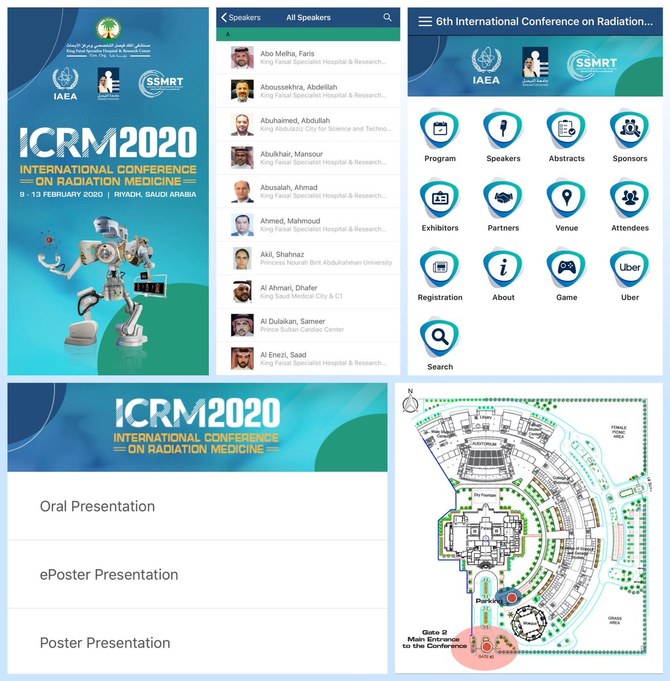

RIYADH: The sixth International Conference on Radiation Medicine began at Alfaisal University in Riyadh on Sunday.
About 1,500 delegates are registered for the conference, the largest of its kind in the Middle East, including 50 international speakers. Discussion topics include diagnostic and interventional radiology, medical physics, nuclear medicine, radiation oncology, radiation protection and safety and radiation emergency management.
“What makes (the conference) unique this year is that we have created new subjects that are related to innovation in health care and Saudi Arabia’s vision in this sector,” said Prof. Khalid Al-Kattan, dean of the College of Medicine at Alfaisal University, and consultant and head of thoracic surgery at King Faisal Specialist Hospital and Research Center (KFSHRC).
Among the topics that will be discussed, Al-Kattan said, is “the use of artificial intelligence that will facilitate the utilization of robotic surgery and medicine.” Imaging is an important innovation for better patient care, he added.
Dr. Ali Zailae, a research adviser at the Ministry of Health, said that the conference is focusing on developments and challenges in the field at a time when the Kingdom is undertaking ambitious development projects in the health sector.
“It is a great opportunity for all professionals in the radiation medicine field to learn about what’s new in this field, meet top-notch speakers (from around) the world and find out about new trends with the transformation in the health sector in the Kingdom, and how to deal with the future,” Zailae said.
Dr. Robert Paul Guillerman, professor of radiology at Baylor College of Medicine and chief of academic affairs and faculty development with the Department of Pediatric Radiology at Texas Children’s Hospital in Houston, said he was impressed with the level of knowledge and the capabilities of physicians and practitioners in the region.
“I gave some of the local participants very challenging cases, and I was very impressed how well they were able to interpret them,” he said.
Dr. Khalid Al-Ismail, a musculoskeletal radiologist at KFSHRC, and chairman of the scientific committee, highlighted the important role medical conferences can play in correcting wrong perceptions of the capabilities of the healthcare sector in the Kingdom.
He said that many of the international participants were impressed by the level of development and the technological advancement of healthcare institutes in the Kingdom in general, and at KFSHRC in particular.
The conference continues until Feb. 13. It is organized by KFSHRC in collaboration with Alfaisal University, the International Atomic Energy Agency and the Saudi Society for Medical Radiologic Technology, in partnership with other institutions in Riyadh.
Authorities in the Kingdom are working to modernize health-care services. According to a national survey late last year, 70 percent of Saudi citizens have a positive view of health services in the Kingdom.


