Tunisian innovation brings hope to epilepsy sufferers

Tunis startup Epilert’s high-tech bracelet provides detailed information for epilepsy patients and their doctors. (Supplied)
Short Url
Updated 08 February 2020
Follow

Tunisian innovation brings hope to epilepsy sufferers

  • High-tech bracelet made by Epilert alerts friends and family that a seizure has happened
  • Severity and location of a patient is sent instantly and automatically to caregivers

TUNIS: Millions of epilepsy patients across the Arab world are in daily danger of suffering a potentially fatal seizure, with multiple factors influencing when an attack might strike.

The condition’s unpredictability makes it tough to manage, and a quick response from caregivers is essential.

Three Tunisian entrepreneurs have created a high-tech bracelet that automatically alerts friends and family that a seizure has happened.

“Usually, people who have seizures don’t know when one is going to strike. We could see the problem, and wanted to use technology to create a solution,” said 25-year-old Haroun Moula, cofounder and chief operating officer of Tunis-based Epilert.

The sister of fellow cofounder Firas Rhaiem, 25, suffers from epilepsy, which inspired the two schoolfriends and third cofounder Amine Riahi, 26, to act.
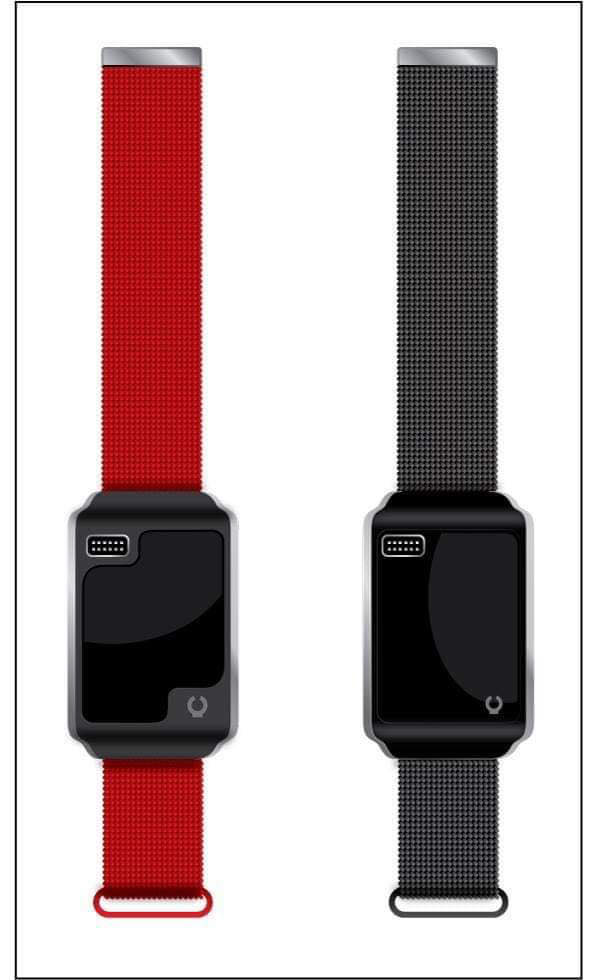


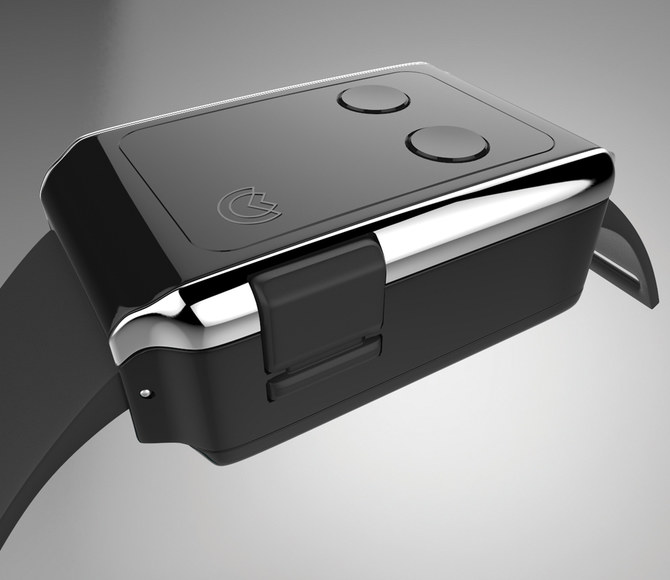
The Epilert, a high-tech bracelet, automatically alerts friends and family that a seizure has happened. (Supplied)

Together, they launched Epilert in 2017 with a few hundred dollars, recruiting unpaid graduates and students to work for the company in return for a stake in the firm. The company also formed a partnership with a Tunis university medical school.

“The first challenge was to make our engineers aware of the medical and scientific background of epilepsy so we could design an optimal solution,” said Moula. “Our research led us to decide on a bracelet because it’s easy to wear and use, and isn’t stigmatizing.”

A seizure puts the epilepsy sufferer in danger, not only from the attack itself but from harm caused if they were to fall: Every year, one in 1,000 people with epilepsy dies from a seizure, according to the US Epilepsy Foundation. “Imagine if a seizure were to happen when someone is in the shower or riding a bike,” said Moula, a computer engineer.

Epilert’s bracelet monitors a patient’s heartbeat, temperature, neurological activity and other physiological data.

It will recognize that a wearer is having a seizure within 30 seconds of a fit starting, and automatically contact the person’s caregivers, which are registered on the patient’s account on the Epilert app.

The bracelet will provide info on the seizure’s severity and the patient’s location. Alerts can be delivered via SMS or automated phone call. The device, which syncs to the wearer’s smartphone via Bluetooth, can predict when a seizure is likely.

“If a patient is able to know a seizure is likely, they can ensure they’re in a safe environment,” said Moula. “Our added value is in the signal processing of the data, especially the neurological data, which isn’t something you can find on other devices.”

As well as automatically collecting physiological information including wearers’ sleep patterns, users can add other important data to their profile such as their age, sex, weight and height.

They can also log other data such as their most recent meal and emotional status, which can all influence the likelihood of a seizure and its severity.

“The idea is to use the app as an awareness tool and as a tool for the patient to track themselves, logging detailed data to better help the algorithms and the doctors,” said Moula.

There should be a huge market for Epilert’s technology. Ten of the 22 Arab League member states provide no public data on epilepsy, according to a 2016 academic study, but among the 12 members that do provide data, 7.5 people per 1,000 suffer from epilepsy.

The combined population of Arab League members is around 420 million, so extrapolating the academics’ data would mean there are around 3.15 million epilepsy suffers in the region.

Epilert is conducting preclinical trials of its bracelet, and filing for US regulatory approval in order to start selling it in the US. Moula expects to receive the go-ahead by the end of 2020.

Patients will be able to buy the bracelet directly from Epilert, although the company also plans to partner with doctors specializing in epilepsy in order to boost awareness of the product.

The bracelet will cost $150, while a subscription to Epilert’s services costs a further $10 per month.


• This report is being published by Arab News as a partner of the Middle East Exchange, which was launched by the Mohammed bin Rashid Al Maktoum Global Initiatives and the Bill and Melinda Gates Foundation to reflect the vision of the UAE prime minister and ruler of Dubai to explore the possibility of changing the status of the Arab region. 


Adrien Brody reflects on craft, collaboration and creative resolve at RSIFF 2025

Updated 07 December 2025
Follow

Adrien Brody reflects on craft, collaboration and creative resolve at RSIFF 2025

JEDDAH: Two-time Academy Award winner Adrien Brody captivated audiences at the Red Sea International Film Festival in Jeddah, where he spoke candidly about craft, collaboration, and the evolving landscape of global cinema.

Brody, who first made history in 2003 as the youngest-ever Best Actor Oscar winner for “The Pianist,” arrived at the festival following a triumphant year with Brady Corbet’s “The Brutalist,” a film that has earned him the Academy Award, BAFTA, Golden Globe, and Critics’ Choice Award for Best Actor.

The film, which premiered to acclaim at Venice and has since become an international success, features Brody as architect Laszlo Toth in one of his most demanding roles to date. His career, spanning decades and genres, includes standout performances in “Asteroid City,” “Blonde,” “Succession,” “The Grand Budapest Hotel,” “Peaky Blinders,” and “Winning Time.” He has collaborated with some of cinema’s most distinct voices, from Wes Anderson and Peter Jackson to Spike Lee and Roman Polanski.

Beyond acting, Brody leads Fable House Films and maintains a parallel career as a visual artist, exhibiting works in New York, Art Basel and international galleries. Raised in New York City, he trained at LaGuardia High School and the American Academy of Dramatic Arts, roots he often credits for shaping his artistic appetite.

Brody began his “In Conversation” session by expressing admiration for Saudi Arabia’s rapid creative growth: “It’s been pretty packed. Lots of activities but just wonderful to be here and witness the evolution of the festival and what Saudi’s doing in film and creative empowerment for so many people.”

He went on to praise the new generation of storytellers emerging from the region:

“New directors, women whose voices are underserved, and I find that really wonderful and admirable … It’s been very special.”

Before taking the stage, the packed audience was shown a clip from “The Brutalist,” a fitting prelude for a conversation that dove deeply into the complexity of portraying driven, conflicted characters.

Saudi director Hakeem Jomah, who moderated the session, asked Brody about the pressure of embodying characters shaped by real history.

Brody began by clarifying the creative space within “The Brutalist,” saying: “As real and true to life that ‘Brutalist’ is, it’s a fictional story … My journey primarily is about the struggle for driven artistic people to persevere and have their vision endure in spite of the wants and needs of the benefactor.”

He explained how the film reflects universal challenges faced by artists and creators, adding: “Sometimes you are blessed with the support of your financiers … and sometimes you’re not. This film really delves very deeply into the oppressiveness of that.”

Brody emphasized the personal and emotional toll these narratives carry.

“Every film, every role that an actor agrees to undertake is its own journey,” he said, describing acting as an intensely internal and empathetic process.

Brody described his method as one rooted in emotional truth and responsiveness:

“If you can find ways to connect at least to the emotionality and the circumstances that feel relatable … it is expressed somehow through the responsibility of carrying out the dialogue.”

He acknowledged the difficulties of portraying experiences far removed from his own, especially in films set in other eras or involving trauma. Actors, he said, must “find ways to understand those better, internalize them” and convey them responsibly.

When asked whether he prefers working collaboratively or in isolation during preparation, Brody emphasized balance: “I have to show up knowing who I am, what I’m here to do … There has to be a degree of malleability because making a movie is a collaboration … yet an actor has a very distinct responsibility.”

He added that defending a character’s authenticity is sometimes necessary, noting how fortunate he has been to work with directors who are “greatly respectful and inspiring.”

He explained that cinematography and performance must function as a unified language, saying the camera’s distance or intimacy can radically shape the emotional connection with the audience. This, he stressed, requires alignment among actor, director, and cinematographer to ensure that the visual storytelling truly serves the narrative.

Brody reflected briefly on his long experience in the industry, “I’ve been working professionally on camera since I was 12.”

He expressed gratitude for a lifetime in film, noting that his experience helps him support the process while also recognizing that the director ultimately shapes the final work. He spoke about the unpredictable nature of filmmaking, technical issues, lost footage, and the surprises of the editing room, reminding the audience that even the best work can be undone by a corrupted file or a physical flaw on celluloid.

Shifting to the physical and emotional demands of filmmaking, Brody explained that there is no such thing as holding back on set.

He noted that time feels distorted during a production, especially one as intense as “The Brutalist,” which, despite being a three-and-a-half-hour epic shot on VistaVision, was completed in just 23 days. The process left the entire team depleted but also bonded them through shared stamina and commitment.

Brody described his own methods of preserving emotional depth: “I don’t hang out with my fellow actors and crew when I have any heavy lifting … I’m often alone. I sometimes won’t eat lunch to not be tired.”

These disciplined rituals allow him to show up fully for demanding scenes, though he reminds younger actors that “it’s not a science, and you’re not a machine.”

When Jomah asked how Brody decides which scripts to accept, the actor joked warmly about the host’s career change: “These are wonderful questions and thank you … This man is a doctor as well … I’m very impressed by him.”

He then explained his criteria for choosing projects, calling each film “a journey” that must offer artistic meaning and the potential for personal discovery. Commercial success, he noted, is a consideration, but never the only one.

Asked whether his accolades make him feel freer or more pressured in his choices, Brody responded, “I assumed that I had less to prove … but you have a responsibility to a career trajectory … I’ve not taken films since ‘The Brutalist’ … They didn’t feel quite right.”

Brody closed with reflections on the transformations reshaping the industry: “We’re living in a time that there’s immense shifts in every field … Technology is a major factor.”

He spoke nostalgically about growing up before digital devices, learning from filmmakers who relied on physical stunts and in-camera effects. While he acknowledged the power of new tools, he stressed that technology must never overshadow human emotion.

“There is nothing to replace emotion … We should always cherish and support the creative process and the beauty of filmmaking.”