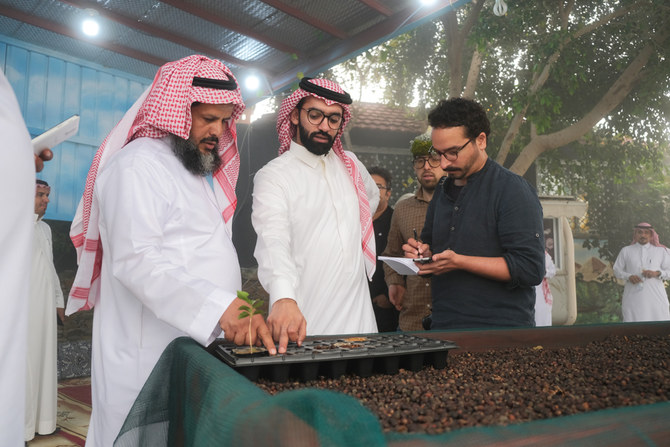

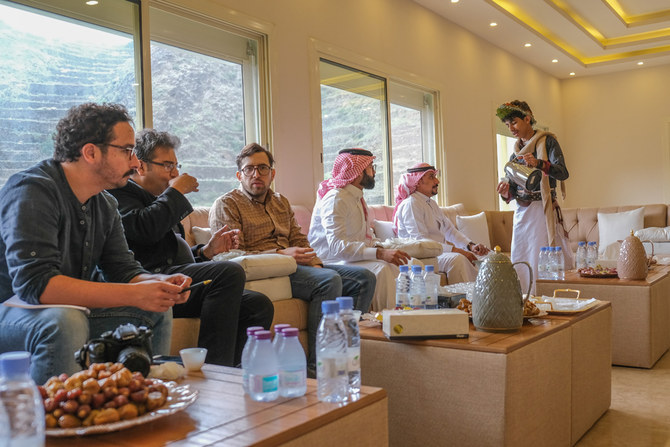
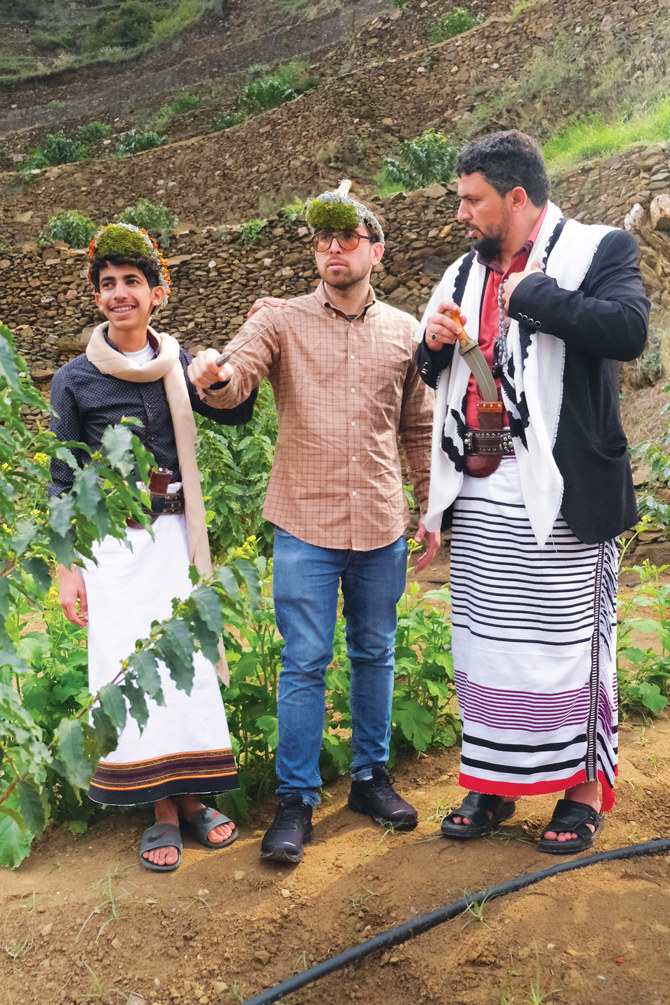

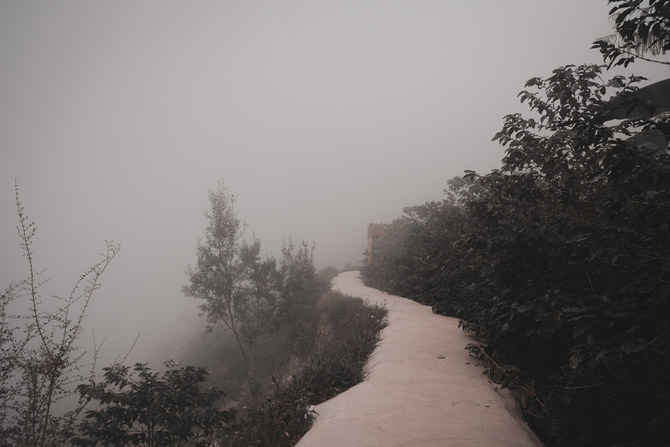

JAZAN: For the seventh year in a row, a bustling crowd of farmers and families gathered in Al-Dayer governorate, in the eastern part of the mountainous Jazan region of Saudi Arabia, to participate in the Coffee Beans Festival, which concluded on Tuesday.
For six days, about 200 farmers — nearly three times the size of previous festivals — displayed a variety of coffee products to visitors eager to try out various coffee beans, aromas and tastes from the surrounding areas.
Although Jazan continues to be known for its most famous Khawlani coffee bean, the increase in visitors, farmers and leisure activities at this year’s festival marked a palpable shift in a region that is increasingly popular for its natural landscape, heritage and economic opportunities.
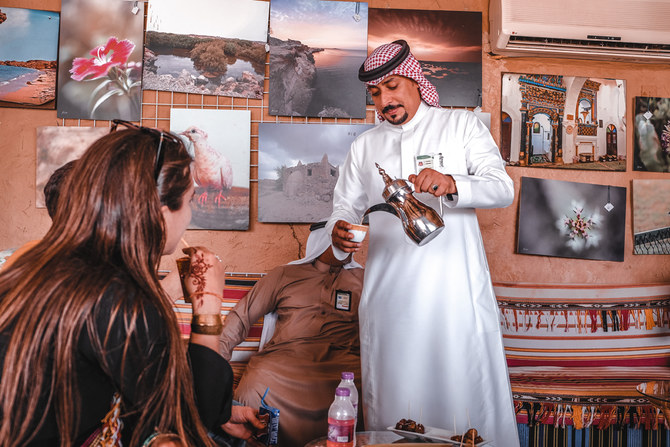
The event offered an enhanced program for visitors, in the form of a cinema playing films about the importance of coffee, a line of stalls offering home cooked dishes by women from the area, highlights from a local museum that reveal Jazan’s rich history, and numerous boutiques selling local honey, perfumes, garments and jewelry, with the latter incorporating the local coffee bean.
Hussain Hadi Al-Malki, an award-winning coffee farmer and owner of Mefraz, a local coffee brand, told Arab News that this year’s festival was significantly larger than that of 2019.
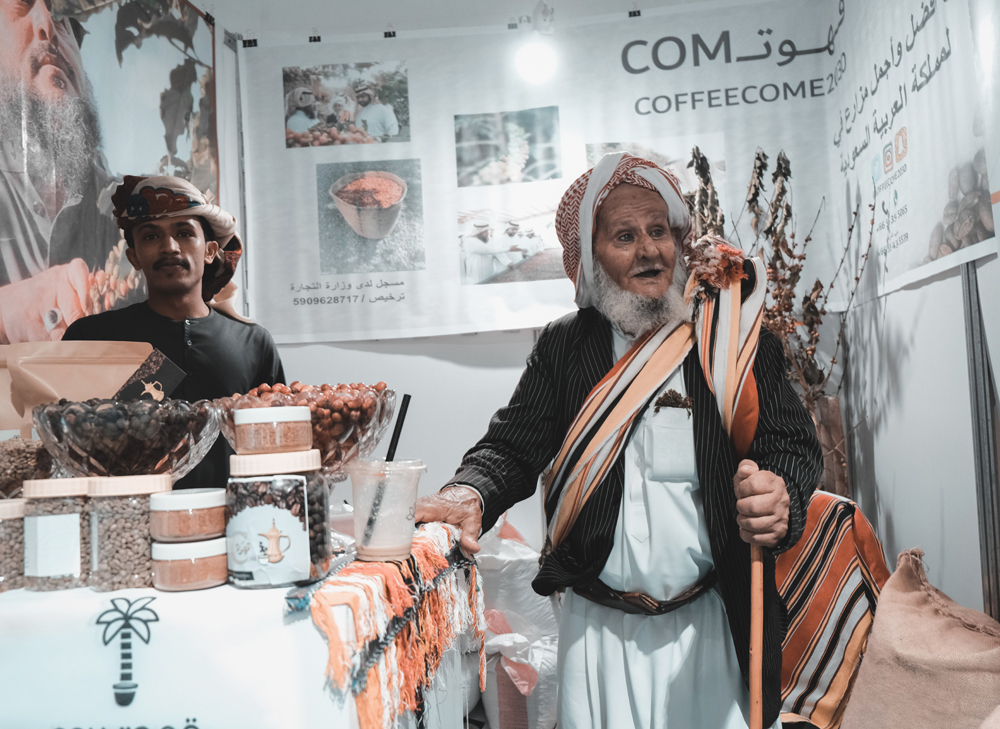
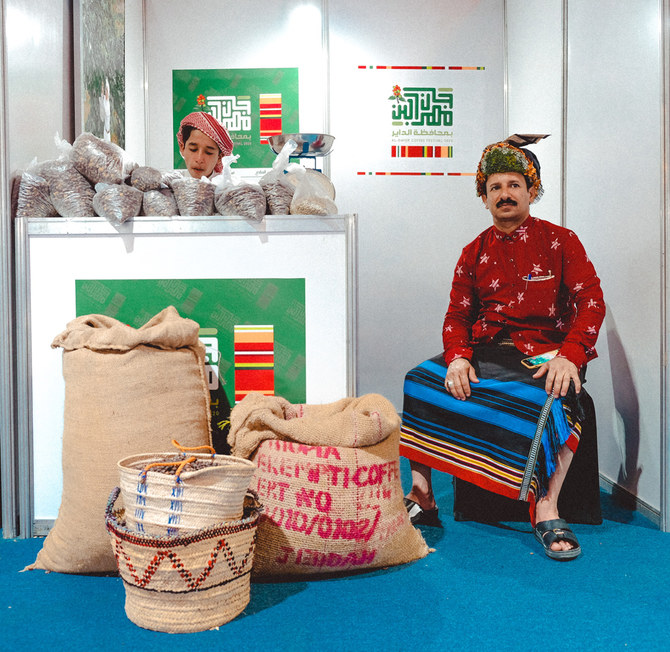
An elderly vendor beckons visitors to his booth at the Jazan Coffee Beans Festival. (AN photo by Mohammed Albaijan)
“We now have more farmers,” said Al-Malki. “Private businesses have started to invest in coffee. The number of visitors is increasing yearly.”
Al-Malki, who hails from Al-Dayer governorate, added: “Some young farmers are utilizing modern technology in displaying and promoting their coffee.
“They are also now using a special type of packing materials to preserve their products and keep its attractive smell for as long a time as possible.”
The festival featured more than five new coffee brand names, all created by young farmers from Jazan.
“This year nearly 100 women participated in the festival, around 70 percent more than previous years,” said Mohammad Jibran Al-Maliki, chairman of the tourism committee in Al-Salma.
Speaking to Arab News, Suada Al-Aleely, a vendor selling homemade food, pointed to the importance of the festival as a social gathering place for families and friends. “We don’t only sell home-produced dolma and traditional dishes like aseeda, but also meet up friends and spend a good period of time together,” she said.
Echoing that view, Al-Malki said the production of coffee beans had transformed both the economy and the society of Jazan.
“The festival has attracted many people other than coffee farmers,” he said. “Families can be seen here displaying and selling their homemade food and people interested in old items are there to show their collectibles. “In the long run this will give a push forward to the region’s economy by attracting more and more tourists.”
Coffee apart, Jazan is the site of a number of mega projects as Saudi Arabia pours billions of dollars into the region’s infrastructure. Saudi Aramco is currently completing the Jazan Refinery and Terminal, a major oil and gas project in the region. Associated terminal facilities are located on the Red Sea.
The government of Jazan is also keen to develop the local tourism industry. In fact, Al-Dayer has already begun to receive tourists from various regions of the world.
On the third day of the Coffee Beans Festival, Mefraz’s booth received 10 non-Arab tourists, according to Al-Malki.
“Four people came from the US and the others are Europeans,” he told Arab News.
“We have prepared programs for the visitors, such as folk dances and live performances, to introduce them to our culture.”
Ahmed Jubran, an expert farmer and owner of a model farm, said Jazan is on course to produce up to 336 tons of coffee beans this year, compared with last year’s 119 tons.
He said Al-Dayer governorate had 65 percent of this, adding that he expected production to double next year.
Meanwhile, farmers in the region have been told by the Ministry of Environment, Water and Agriculture that a coffee factory, lab and research center are in the pipeline. “We are planning to be self-sufficient by 2040,” said Jubran. “We have now some 158,000 trees, and by 2030 we will have a million trees that can give us some 5,000 tons.
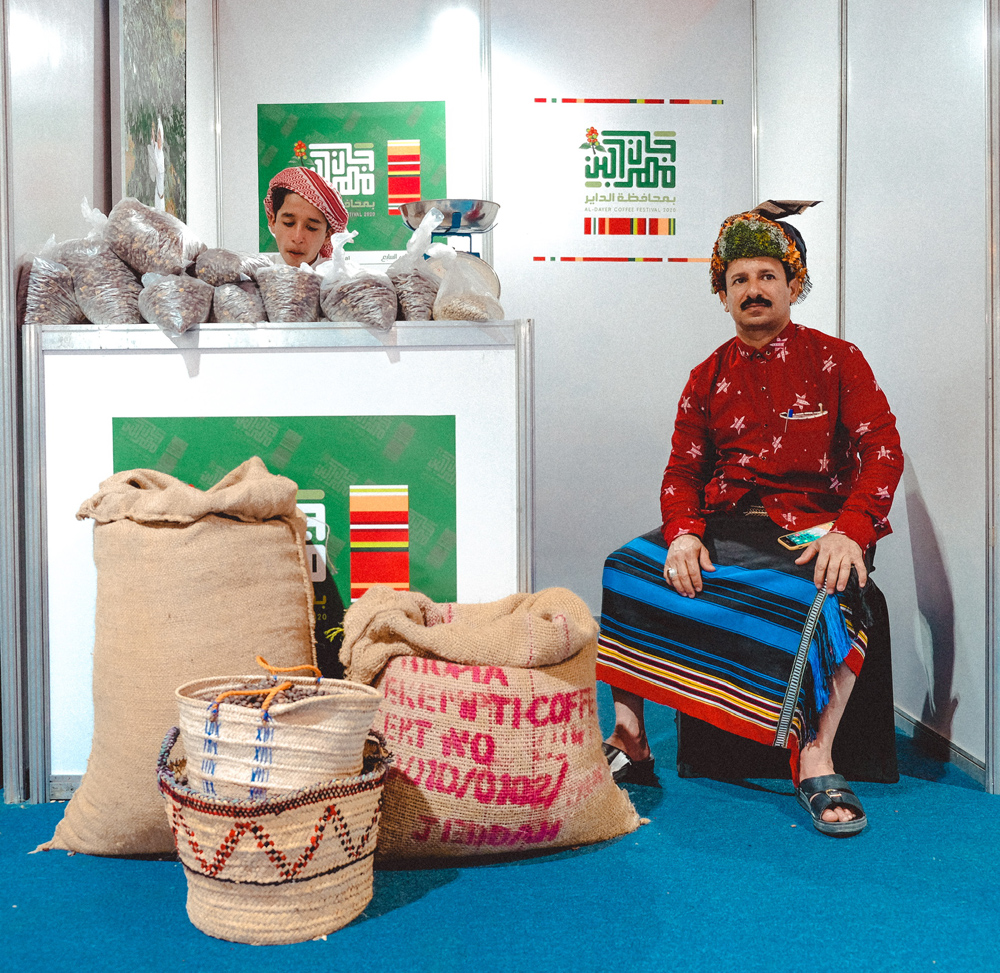
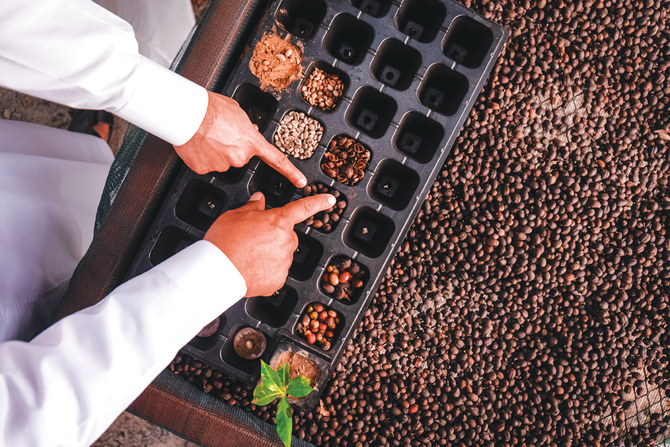
Jazan’s famous Khawlani coffee beans have changed the economic landscape of the region. (AN photo by Mohammed Albaijan)
“By 2050 we plan to start exporting.” The future may come sooner than expected. Jubran said the government has allocated SR12 billion ($3.2 billion) for rural development programs that would help them achieve their targets ahead of time.
The Sustainable Agricultural Rural Development Program, meanwhile, aims to increase production, processing and marketing of fruit, fish, livestock, coffee and cultivation of rain-fed crops. The program will not only boost investment in Jazan’s agriculture but also diversify the sector, improve small farmers’ incomes, create job opportunities and contribute to food security and sustainable development.
As the Coffee Beans Festival concluded, the future looked more promising than ever.
“The future of farming coffee in Jazan is prosperous at all levels,” Prince Badr bin Farhan, Saudi Arabia’s minister of culture, said via Twitter. “Culturally, planting coffee beans is considered an intangible heritage, inherited for hundreds of years.
“On the economic level, it is a promising investment and development sector. I am really proud of the strong determination of the farmers and the passion of the people of Al-Dayer.”