Saudi Minister of Culture signs MOUs with leading media organizations

1 / 2
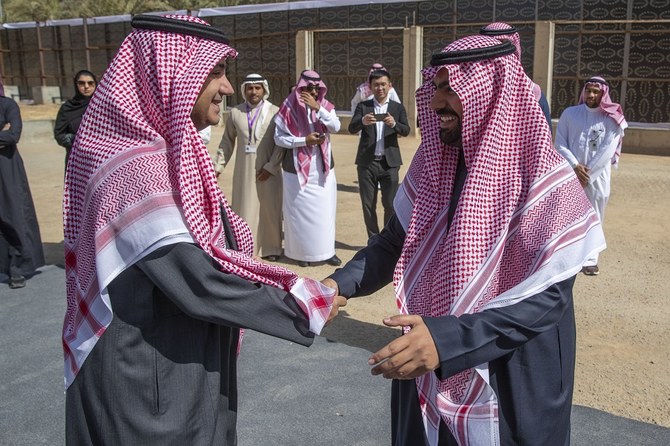
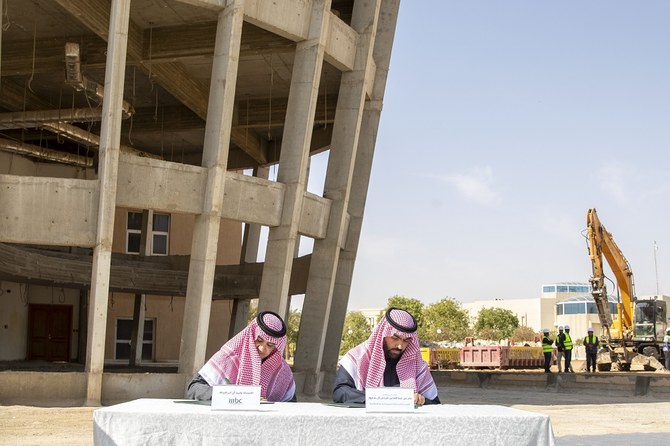
The new deal comes as part of the Media City project, which will include the sectors of culture, technology and media. (Supplied)
2 / 2
Short Url
Updated 05 February 2020
Follow

Saudi Minister of Culture signs MOUs with leading media organizations

Leading media and technology companies are to set up operations in Saudi Arabia’s planned new “media city” in the diplomatic quarter of the capital, Riyadh.
The Minister of Culture, Prince Badr bin Farhan, signed agreements on Tuesday with Al-Arabiya News channel, MBC, and the Saudi Research and Marketing Group, publishers of Arab News.
Al-Arabiya has announced that it is expanding its operations to include new offices in Saudi Arabia. 


Israel designates 5 Palestinian media platforms ‘terrorist organizations’

Updated 23 February 2026
Follow

Israel designates 5 Palestinian media platforms ‘terrorist organizations’

  • Defense Minister Israel Katz issues ban on Al-Asima News, M3raj Network, Al-Quds Albawsala Network, Maydan Al-Quds, Plus Quds Network, accusing them of ‘incitement’
  • Jerusalem-based digital outlets provide essential minute-by-minute coverage from the Old City, Palestinian neighborhoods, Al-Aqsa Mosque compound

LONDON: Israel has designated five Palestinian media platforms “terrorist organizations” over their coverage of Israeli measures in East Jerusalem, accusing them of “incitement.”

The Ministry of Defense issued a ban on Sunday on Al-Asima News, M3raj Network, Al-Quds Albawsala Network, Maydan Al-Quds, and Plus Quds Network.

Israel’s Channel 12 reported that Defense Minister Israel Katz had signed the order and that the attorney general “confirmed that there is no legal obstacle” to the move.

Israeli authorities said the outlets incited unrest by focusing on developments in East Jerusalem and at Al-Aqsa Mosque. They alleged that Hamas used the platforms to stir tensions among Palestinians during Ramadan.

Israeli authorities ordered internet service providers and social networking companies to block access to the specified accounts.

Al-Asima, one of the banned outlets, said on Monday it was suspending operations.

The network said: “In a new step added to Israel’s record of repression and gagging, the occupation has banned the work of several Jerusalem-based news networks in an attempt to isolate Jerusalem and Al-Aqsa, monopolize them, and suppress their news from the world.

“This is not a retreat from our mission, but a measure to protect our journalists from the occupation’s brutality.”

The right-wing government of Prime Minister Benjamin Netanyahu has intensified measures in the West Bank, including East Jerusalem, since taking office at the end of 2022.

Since the start of the Gaza war in October 2023, Israeli authorities have imposed tighter restrictions on movement for West Bank residents at checkpoints leading into East Jerusalem.

The actions come amid a broader land-grab agenda that is expected to accelerate after the Israeli security cabinet approved measures to increase Israeli civilian authority in Areas A and B of the West Bank, which together make up about 40 percent of the territory.

UN High Commissioner for Human Rights Volker Turk has condemned those steps, warning they “will undoubtedly accelerate the dispossession of Palestinians and their forcible transfer,” and further deprive them of natural resources and other basic rights.

In this heavily fragmented environment — marked by checkpoints, gates and roadblocks — the Jerusalem-based digital outlets have played a key role, providing minute-by-minute coverage from the Old City, Palestinian neighborhoods and, crucially, the Al-Aqsa Mosque compound.

They have also documented daily realities often absent from mainstream media coverage, including home demolitions, land seizures, settler takeovers, arrests and repeated incursions into holy sites.

It remains unclear whether Israel’s move against the media platforms will be temporary or permanent.

However, concerns are growing that the action forms part of a wider effort to isolate the West Bank not only physically, but also by constraining Palestinian narratives, a trend likely to come under increased international scrutiny.