

Arabic calligraphy to be registered as UNESCO intangible heritage

1 / 5
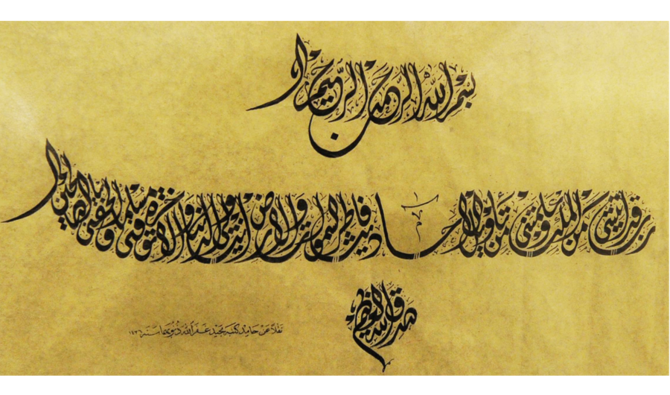
Saudi Arabia has succeeded in registering seven items on UNESCO’s Lists of Intangible Cultural Heritage. (SPA)
2 / 5
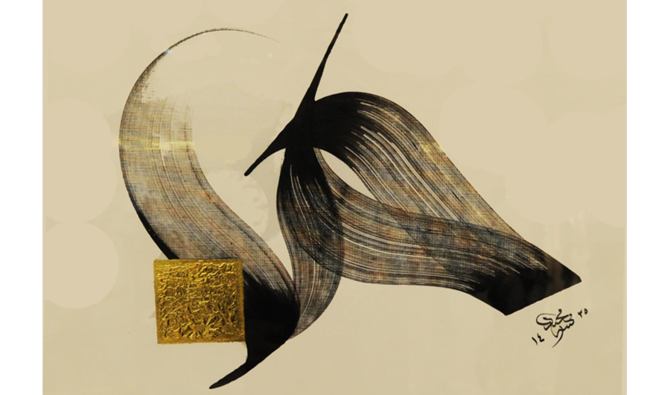
Saudi Arabia has succeeded in registering seven items on UNESCO’s Lists of Intangible Cultural Heritage. (SPA)
3 / 5
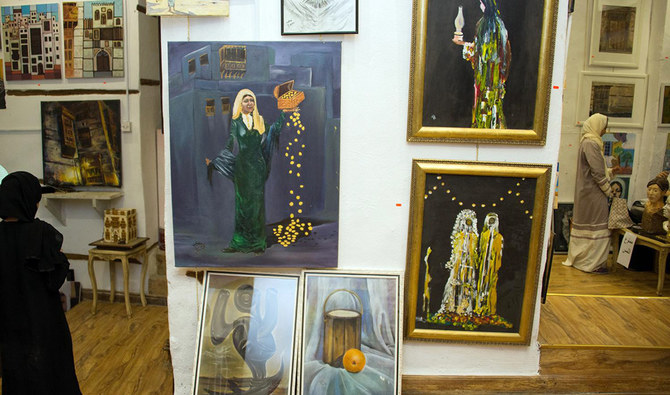
Saudi Arabia has succeeded in registering seven items on UNESCO’s Lists of Intangible Cultural Heritage. (SPA)
4 / 5
Saudi Arabia has succeeded in registering seven items on UNESCO’s Lists of Intangible Cultural Heritage. (SPA)
5 / 5
Saudi Arabia has succeeded in registering seven items on UNESCO’s Lists of Intangible Cultural Heritage. (SPA)
Short Url
Updated 03 February 2020
Follow

Arabic calligraphy to be registered as UNESCO intangible heritage

  • Arabic calligraphy has been — and will continue to be — the focus and passion of experts, stakeholders and those involved in cultural affairs, education and science, who are interested in both human and cultural heritage

RIYADH: The Saudi Ministry of Culture on Sunday hosted a workshop and coordination meeting to register Arabic calligraphy on UNESCO’s Lists of Intangible Cultural Heritage in Riyadh.

Sixteen Arab countires are participating in the five-day meeting in partnership with the Arab League Educational, Cultural and Scientific Organization (ALECSO).
This move will strengthen the presence of Arabic calligraphy in local and international forums and conferences. The ministry assigned the Saudi Heritage Preservation Society (SHPS) the management of this file in cooperation with the Saudi National Committee for Education, Culture and Science to present it in full to UNESCO in March.
Hattan bin Mounir bin Samman, the secretary-general of the Saudi National Commission for Education, Culture and Science, said that Arabic calligraphy had an exceptional value due to its long history and uniqueness as one of the richest aspects of Arab and Islamic cultural identity.

FASTFACT

Saudi Arabia has succeeded in registering seven items on UNESCO’s Lists of Intangible Cultural Heritage; falconry, the majlis, coffee, the Najdi ardah, Almezmar, Al-Qatt Al-Asiri, and the palm tree.

“Arabic calligraphy has been — and will continue to be — the focus and passion of experts, stakeholders and those involved in cultural affairs, education and science, who are interested in both human and cultural heritage,” he said.
Abdulrahman Al-Eidan, the director general of SHPS, said that the art of Arabic calligraphy was an important knowledge vessel that contained Arab culture and contributed to passing it from one generation to the next.
Al-Eidan said that registering Arabic calligraphy with UNESCO complements the minister of culture’s announcement that 2020 was the year of Arabic calligraphy.


Cabinet reviews Founding Day celebrations, rejects Israeli land laws

Updated 8 sec ago
Follow

Cabinet reviews Founding Day celebrations, rejects Israeli land laws

  • The meeting also acknowledged the start of the holy month of Ramadan

RIYADH: King Salman chaired a Cabinet meeting on Tuesday to review plans for this year’s Saudi Founding Day celebrations in Riyadh on Sunday, the Saudi Press Agency reported.

The annual event, which falls on Feb. 22, commemorates the history of the Saudi state and its values of justice, cohesion and development established over nearly three centuries.

The meeting also acknowledged the start of the holy month of Ramadan, on Tuesday evening, and the continued success of the Hajj and Umrah seasons, which saw 19.5 million foreign pilgrims visiting the Kingdom last year, reflecting the progress toward the goals of Saudi Vision 2030.

Minister of Information Salman Al-Dossari said after the meeting that the Cabinet was also briefed on the recent discussions between Saudi Arabia and other countries aimed at strengthening cooperation and enhancing security, stability, development and prosperity at both the regional and international level.

The ministers also condemned Israel’s decision to convert West Bank land into what it calls “state property” and reiterated their rejection of these illegal measures.

The meeting reviewed developments in the economic, cultural and social sectors and  expressed the nation’s continued support for the National Campaign for Charitable Work, the sixth edition of which will be held on Friday.

The ministers praised the success of the latest World Defense Show held in Riyadh last week, at which several agreements and strategic partnerships were reached to localize technologies, develop military industries and strengthen local supply chains in line with Vision 2030.

The Cabinet approved a memorandum of understanding between the General Directorate of Financial Investigations and the Anti-Money Laundering Monitoring and Analysis Center of the People’s Bank of China to enhance cooperation on financial investigations related to money laundering, terrorist financing and related crimes.

It also approved the National Strategy for Biosafety and Security, endorsed regulations governing the continued presence of vehicles registered in Gulf Cooperation Council states within Saudi Arabia and approved amendments to the basic statute of the World Esports Cup Foundation, which will be renamed the Esports Foundation.