

School at Pakistani hospital helps children conquer chronic pain

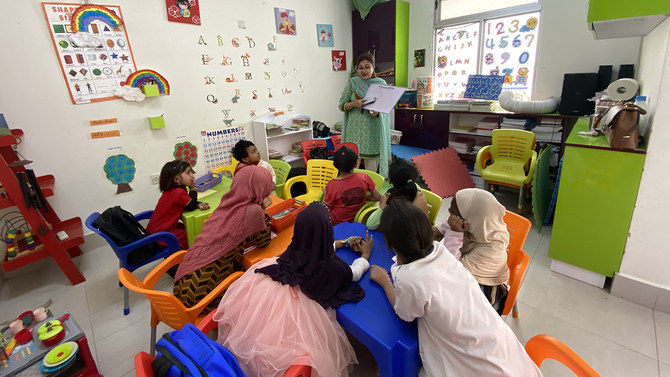
Kaneez Fizza explains a lesson at the Indus Ke Sitaray school of Indus Hospital in Karachi on Jan. 30, 2020. (AN photo)
Short Url
Updated 01 February 2020
Follow

School at Pakistani hospital helps children conquer chronic pain

  • Indus Ke Sitaray gives chronically ill children continuity of education
  • Its curriculum is designed by the Aga Khan University Board

KARACHI: Zoyia Ijaz was rejected from her area school when she tested positive for HIV, following blood transfusion to treat thalassemia. Now she goes to classes again and would never miss them, even when she has a high fever. “I come to school because I enjoy it a lot and because I want to become a doctor,” the 12-year-old said.
She is enrolled in Indus Ke Sitaray, a school established at the pediatric clinic of Indus Hospital in Korangi area of Karachi.
“I start my day with ironing my clothes. After school, I clean the house and help mother in her work at home. But when I am free, I pick my books and start reading them,” Ijaz told Arab News.
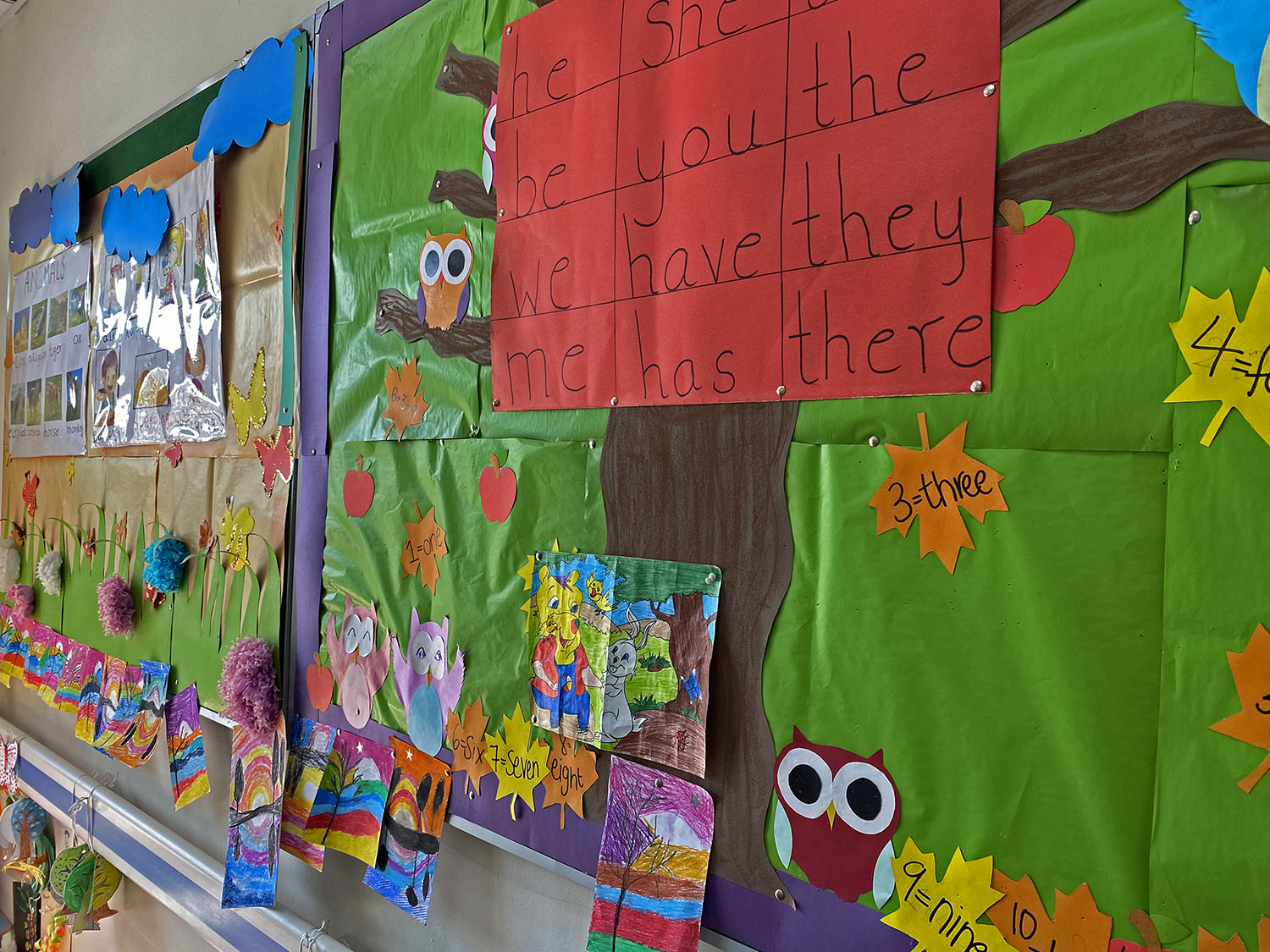


Indus Ke Sitaray is run in collaboration with Shahwilayat Public School (SWiPS). Photo taken on Jan. 30, 2020. (AN photo)

Indus Ke Sitaray, which means “stars of Indus,” was established in 2018 for children who due to chronic disease found it difficult to reconcile school with treatment. Its first batch had 18 students, now there are 27. Dr. Muhammad Fareeduddin, head of pediatric medicine at the hospital, who also oversees the school, said the children are “our future stars and this the reason why we named the school Indus Ke Sitaray.”
“These children were diagnosed with chronic diseases like cancer, severe diabetes ... but their learning is super excellent,” said Kaneez Fizza, a teacher in charge of the school. Classes are run in collaboration with Shahwilayat Public School (SWiPS), with a curriculum designed by the Aga Khan University Board.
Once they finish their courses, the children are examined by SWiPS and receive certificates allowing them to continue their education at other institutions.


A student is taking notes during a lesson at the Indus Ke Sitaray school on Jan. 30, 2020. (AN photo)

Eight-year-old Ishtihar Ali from Quetta, who currently lives with his father in Karachi to be able to undergo treatment, told Arab News that later he will go to school in his own city. “I want to become a pilot, so once my treatment is complete, I will continue my school in Quetta.”
“With this school they forget their disease ... they are focused on their school activities,” Fareeduddin said, as he explained that participation in classes has a positive impact on treatment.
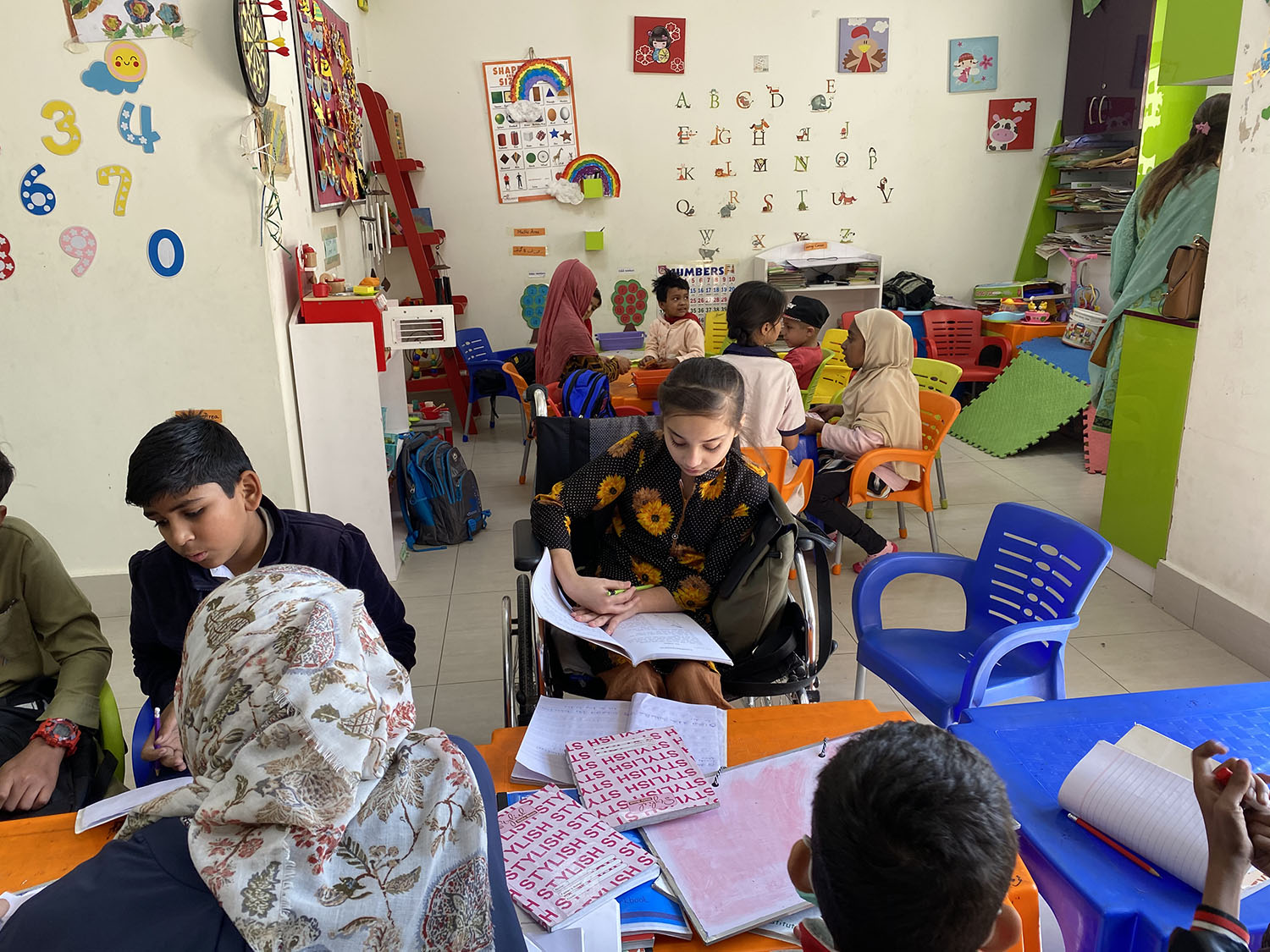


Children are engaged in schoolwork at the pediatric department of Indus Hospital in Karachi on Jan. 30, 2020. (AN photo)

Fizza gave as an example Meerab, a girl who would not allow doctors to touch her. “Meerab was very much detached, but today it’s her voice that reverberates in the classroom,” she said. The girl’s doctor also observed a significant improvement since she joined the class.
The Indus Hospitals, a network of charity hospitals in Pakistan, was founded in 2007 by former graduates of Karachi’s Dow Medical College who provide free treatment, including cardiac surgery and procedures for chronic diseases, to 350,000 patients every month.


Sindh assembly passes resolution rejecting move to separate Karachi

Updated 21 February 2026
Follow

Sindh assembly passes resolution rejecting move to separate Karachi

  • Chief Minister Shah cites constitutional safeguards against altering provincial boundaries
  • Calls to separate Karachi intensified amid governance concerns after a mall fire last month

ISLAMABAD: The provincial assembly of Pakistan’s southern Sindh province on Saturday passed a resolution rejecting any move to separate Karachi, declaring its territorial integrity “non-negotiable” amid political calls to carve the city out as a separate administrative unit.

The resolution comes after fresh demands by the Muttahida Qaumi Movement (MQM) and other voices to grant Karachi provincial or federal status following governance challenges highlighted by the deadly Gul Plaza fire earlier this year that killed 80 people.

Karachi, Pakistan’s largest and most densely populated city, is the country’s main commercial hub and contributes a significant share to the national economy.

Chief Minister Syed Murad Ali Shah tabled the resolution in the assembly, condemning what he described as “divisive statements” about breaking up Sindh or detaching Karachi.

“The province that played a foundational role in the creation of Pakistan cannot allow the fragmentation of its own historic homeland,” Shah told lawmakers, adding that any attempt to divide Sindh or separate Karachi was contrary to the constitution and democratic norms.

Citing Article 239 of Pakistan’s 1973 Constitution, which requires the consent of not less than two-thirds of a provincial assembly to alter provincial boundaries, Shah said any such move could not proceed without the assembly’s approval.

“If any such move is attempted, it is this Assembly — by a two-thirds majority — that will decide,” he said.

The resolution reaffirmed that Karachi would “forever remain” an integral part of Sindh and directed the provincial government to forward the motion to the president, prime minister and parliamentary leadership for record.

Shah said the resolution was not aimed at anyone but referred to the shifting stance of MQM in the debate while warning that opposing the resolution would amount to supporting the division of Sindh.

The party has been a major political force in Karachi with a significant vote bank in the city and has frequently criticized Shah’s provincial administration over its governance of Pakistan’s largest metropolis.

Taha Ahmed Khan, a senior MQM leader, acknowledged that his party had “presented its demand openly on television channels with clear and logical arguments” to separate Karachi from Sindh.

“It is a purely constitutional debate,” he told Arab News by phone. “We are aware that the Pakistan Peoples Party, which rules the province, holds a two-thirds majority and that a new province cannot be created at this stage. But that does not mean new provinces can never be formed.”

Calls to alter Karachi’s status have periodically surfaced amid longstanding complaints over governance, infrastructure and administrative control in the megacity, though no formal proposal to redraw provincial boundaries has been introduced at the federal level.