

School at Pakistani hospital helps children conquer chronic pain

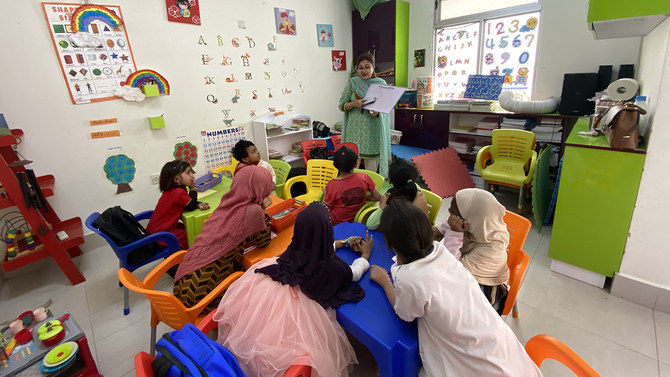
Kaneez Fizza explains a lesson at the Indus Ke Sitaray school of Indus Hospital in Karachi on Jan. 30, 2020. (AN photo)
Short Url
Updated 01 February 2020
Follow

School at Pakistani hospital helps children conquer chronic pain

  • Indus Ke Sitaray gives chronically ill children continuity of education
  • Its curriculum is designed by the Aga Khan University Board

KARACHI: Zoyia Ijaz was rejected from her area school when she tested positive for HIV, following blood transfusion to treat thalassemia. Now she goes to classes again and would never miss them, even when she has a high fever. “I come to school because I enjoy it a lot and because I want to become a doctor,” the 12-year-old said.
She is enrolled in Indus Ke Sitaray, a school established at the pediatric clinic of Indus Hospital in Korangi area of Karachi.
“I start my day with ironing my clothes. After school, I clean the house and help mother in her work at home. But when I am free, I pick my books and start reading them,” Ijaz told Arab News.
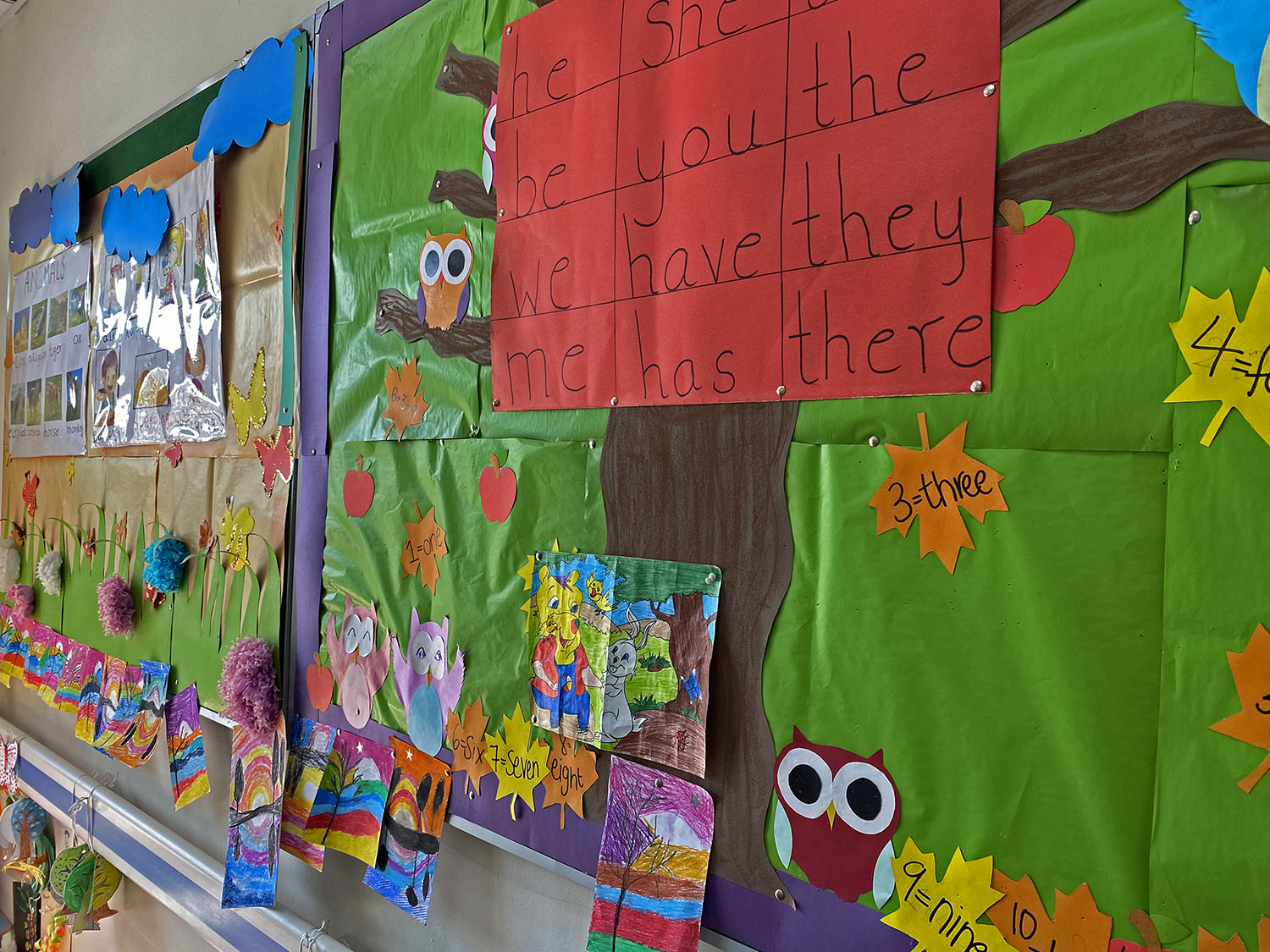


Indus Ke Sitaray is run in collaboration with Shahwilayat Public School (SWiPS). Photo taken on Jan. 30, 2020. (AN photo)

Indus Ke Sitaray, which means “stars of Indus,” was established in 2018 for children who due to chronic disease found it difficult to reconcile school with treatment. Its first batch had 18 students, now there are 27. Dr. Muhammad Fareeduddin, head of pediatric medicine at the hospital, who also oversees the school, said the children are “our future stars and this the reason why we named the school Indus Ke Sitaray.”
“These children were diagnosed with chronic diseases like cancer, severe diabetes ... but their learning is super excellent,” said Kaneez Fizza, a teacher in charge of the school. Classes are run in collaboration with Shahwilayat Public School (SWiPS), with a curriculum designed by the Aga Khan University Board.
Once they finish their courses, the children are examined by SWiPS and receive certificates allowing them to continue their education at other institutions.


A student is taking notes during a lesson at the Indus Ke Sitaray school on Jan. 30, 2020. (AN photo)

Eight-year-old Ishtihar Ali from Quetta, who currently lives with his father in Karachi to be able to undergo treatment, told Arab News that later he will go to school in his own city. “I want to become a pilot, so once my treatment is complete, I will continue my school in Quetta.”
“With this school they forget their disease ... they are focused on their school activities,” Fareeduddin said, as he explained that participation in classes has a positive impact on treatment.
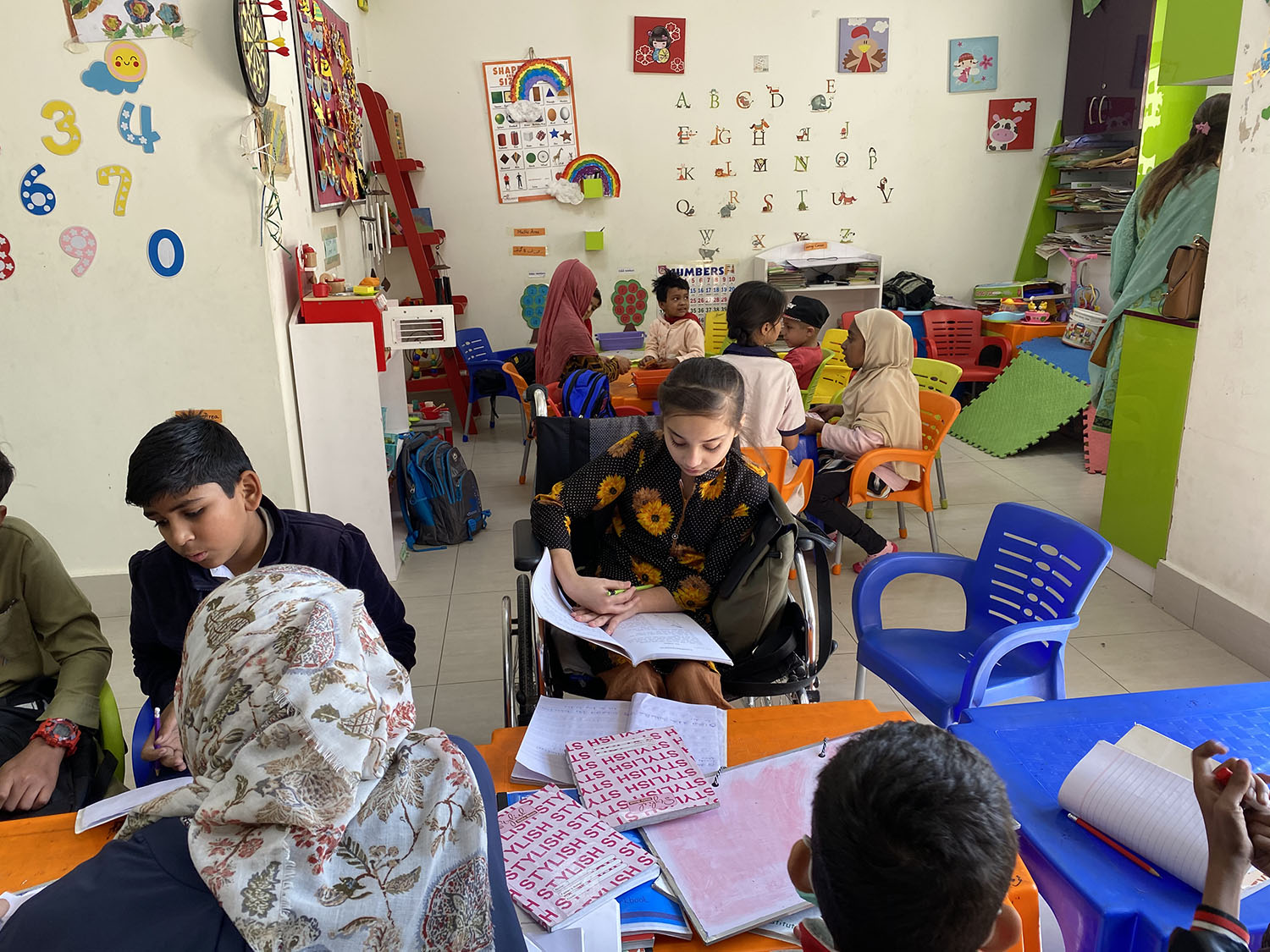


Children are engaged in schoolwork at the pediatric department of Indus Hospital in Karachi on Jan. 30, 2020. (AN photo)

Fizza gave as an example Meerab, a girl who would not allow doctors to touch her. “Meerab was very much detached, but today it’s her voice that reverberates in the classroom,” she said. The girl’s doctor also observed a significant improvement since she joined the class.
The Indus Hospitals, a network of charity hospitals in Pakistan, was founded in 2007 by former graduates of Karachi’s Dow Medical College who provide free treatment, including cardiac surgery and procedures for chronic diseases, to 350,000 patients every month.


Pakistan forms committee to negotiate financial advisory services for Islamabad airport privatization

Updated 18 February 2026
Follow

Pakistan forms committee to negotiate financial advisory services for Islamabad airport privatization

  • Committee to engage Asian Development Bank to negotiate terms of financial advisory services agreement, says privatization ministry
  • Inaugurated in 2018, Islamabad airport has faced criticism over construction delays, poor facilities and operational inefficiencies

ISLAMABAD: Pakistan’s Privatization Ministry announced on Wednesday that it has formed a committee to engage the Asian Development Bank (ADB) to negotiate a potential financial advisory services agreement for the privatization of Islamabad International Airport.

The Islamabad International Airport, inaugurated in 2018 at a cost of over $1 billion, has faced criticism over construction delays, poor facilities, and operational inefficiencies.

The Negotiation Committee formed by the Privatization Commission will engage with the ADB to negotiate the terms of a potential Financial Advisory Services Agreement (FASA) for the airport’s privatization, the ministry said. 

“The Negotiation Committee has been mandated to undertake negotiations and submit its recommendations to the Board for consideration and approval, in line with the applicable regulatory framework,” the Privatization Ministry said in a statement. 

The ministry said Islamabad airport operations will be outsourced under a concession model through an open and competitive process to enhance its operational efficiency and improve service delivery standards. 

Pakistan has recently sought to privatize or outsource management of several state-run enterprises under conditions agreed with the International Monetary Fund (IMF) as part of a $7 billion bailout approved in September last year.

Islamabad hopes outsourcing airport operations will bring operational expertise, enhance passenger experience and restore confidence in the aviation sector.

In December 2025, Pakistan’s government successfully privatized its national flag carrier Pakistan International Airlines (PIA), selling 75 percent of its stakes to a consortium led by the Arif Habib Group. 

The group secured a 75 percent stake in the PIA for Rs135 billion ($482 million) after several rounds of bidding, valuing the airline at Rs180 billion ($643 million).

Pakistan’s Finance Minister Muhammad Aurangzeb said this week the government has handed over 26 state-owned enterprises to the Privatization Commission.