


AS IT HAPPENED: Davos 2020 Day Three – G20, AI, gender balance and health top the bill

1 / 3
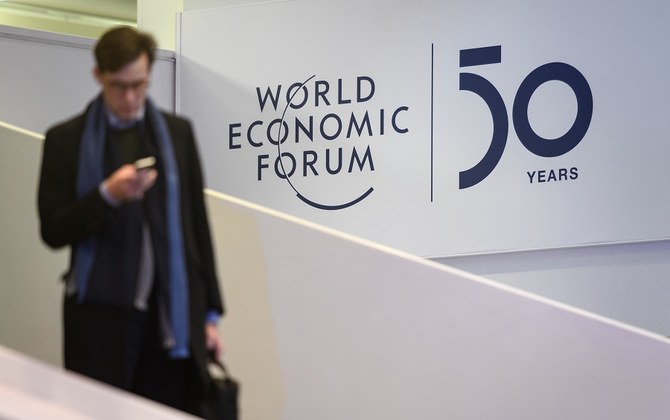
The World Economic Forum 2020 will run until Jan. 24. (File/AFP)
2 / 3
Adel Al-Jubeir, speaking on a World Economic Forum panel about the situation in the Middle East, said Iran should stop ‘meddling’ in Iraqi affairs and worry about its own people. (Screenshot: WEF)
3 / 3
Gebran Bassil - one of the targets of angry Lebanese protesters in recent months - was involved in a very awkward interview during Day Three of WEF. (WEF/Flickr)
Short Url
Updated 23 January 2020
Follow

AS IT HAPPENED: Davos 2020 Day Three – G20, AI, gender balance and health top the bill

  • Government ministers from Saudi Arabia speaking ahead of Kingdom hosting high-profile G20 Riyadh summit
  • Discussions about health technology, digital economy, gender equality, and the disability movement

DAVOS, Switzerland: Thursday saw Day Three of the 2020 World Economic Forum get underway, which included government ministers from Saudi Arabia speaking ahead of the Kingdom hosting the high-profile G20 Riyadh summit in November.

There were also discussions about health technology, digital economy, gender equality, and the disability movement among many other global issues.

Follow Arab News coverage below:

18:30 - And that's a wrap on the third day of talks in Davos. We hope you enjoyed our coverage throughout the week. See you next year!

18:00 - Day Three's panels are closed out by UN Secretary General Antonio Guterres who, like many this week, has used his address to call for action on climate change...

17:15 - Artificial intelligence has been one of the big talking points this week in Davos, with discussions revolving around where AI fits in with the ever-changing employment roles for humanity. Here are some handy Arab News infographics on the subject...

16:45 - In case you missed it, Gebran Bassil - one of the targets of angry Lebanese protesters in recent months - was involved in a very awkward interview earlier today during a controversial panel. You can read more about it here...

16:00 - "I know everyone thinks Davos is all about lushing it up in the Alps with the global elite, but actually — if you take it seriously — it is very hard work. I don’t expect any sympathy..." - Arab News' man on the ground in Davos has shared the lowdown on what happens at WEF once the panels come to a close of an evening...

Read his account here...

15:15 - Adel Al-Jubeir, speaking on a World Economic Forum panel about the situation in the Middle East, said Iran should stop ‘meddling’ in Iraqi affairs and worry about its own people...

READ THE FULL ARTICLE HERE: Saudi Arabia’s Al-Jubeir tells Iran to stop ‘meddling’ in Iraqi affairs

14:30 - German Chancellor Angela Merkel was in no mood to mince her words on the Iran nuclear deal, saying it's the best option for the Islamic Republic but any violations would not go unpunished...

14:00 - Speaking during a hard-hitting panel discussion the controversial Gebran Bassil said Lebanon’s youth were calling for an end to the country’s current political system in favor of a secular one.

12:00 - This year’s G20 Summit in Riyadh was also discussed, with a look into some of the topics that will be on the agenda.

WEF president, Borge Brende, revealed to delegates that the next Middle East summit will be held in Saudi Arabia in April.

11:15 - Gender disparity continues to be a problem around the world a panel discussion was told. The issue remains through industry, politics and culture.

10:15 - The day started with a discussion on the use of artificial intelligence (AI) and robotics in healthcare - would the loss of a human interface help or hinder patient care?


Uganda army denies seizing opposition leader as vote result looms

Updated 58 min 6 sec ago
Follow

Uganda army denies seizing opposition leader as vote result looms

  • Election day was marred by significant technical problems after biometric machines
  • There were also reports of violence against the opposition in other parts of the country

KAMPALA: Uganda’s army denied claims on Saturday that opposition leader Bobi Wine had been abducted from his home, as counting continued in an election marred by reports of at least 10 deaths amid an Internet blackout.
President Yoweri Museveni, 81, looked set to be declared winner and extend his 40-year rule later on Saturday, with a commanding lead against Wine, a former singer turned politician.
Wine said Friday that he was under house arrest, and his party later wrote on X that he had been “forcibly taken” by an army helicopter from his compound.
The army denied that claim.
“The rumors of his so-called arrest are baseless and unfounded,” army spokesman Chris Magezi told AFP.
“They are designed to incite his supporters into acts of violence,” he added.
AFP journalists said the situation was calm outside Wine’s residence early Saturday, but they were unable to contact members of the party due to continued communications interruptions.
A nearby stall-owner, 29-year-old Prince Jerard, said he heard a drone and helicopter at the home the previous night, with a heavy security presence.
“Many people have left (the area),” he said. “We have a lot of fear.”
With more than 80 percent of votes counted on Friday, Museveni was leading on 73.7 percent to Wine’s 22.7, the Electoral Commission said.
Final results were due around 1300 GMT on Saturday.
Wine, 43, whose real name is Robert Kyagulanyi, has emerged as the main challenger to Museveni in recent years, styling himself the “ghetto president” after the slum areas where he grew up in the capital, Kampala.
He has accused the government of “massive ballot stuffing” and attacking several of his party officials under cover of the Internet blackout, which was imposed ahead of Thursday’s polls and remained in place on Saturday.
His claims could not be independently verified, but the United Nations rights office said last week that the elections were taking place in an environment marked by “widespread repression and intimidation” against the opposition.

- Reports of violence -

Analysts have long viewed the election as a formality.
Museveni, a former guerrilla fighter who seized power in 1986, has total control over the state and security apparatus, and has ruthlessly crushed any challenger during his rule.
Election day was marred by significant technical problems after biometric machines — used to confirm voters’ identities — malfunctioned and ballot papers were undelivered for several hours in many areas.
There were reports of violence against the opposition in other parts of the country.
Muwanga Kivumbi, member of parliament for Wine’s party in the Butambala area of central Uganda, told AFP’s Nairobi office by phone that security forces had killed 10 of his campaign agents after storming his home.