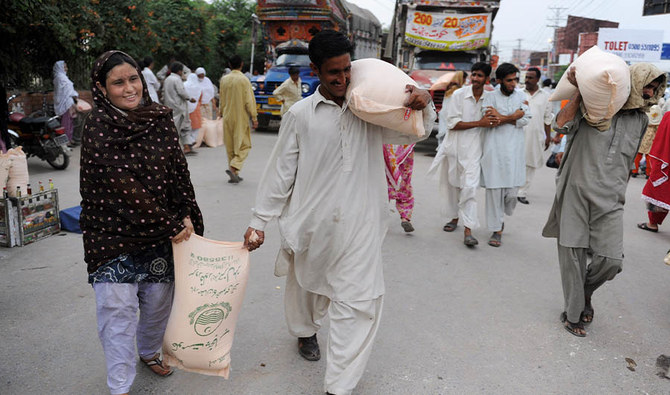
ISLAMABAD: Pakistan on Monday approved the import of 300,000 tons of wheat to relieve a shortage of flour supplies that has created a crisis for the government of Prime Minister Imran Khan.
Prices of flour and bread shot up last week as the ingredient disappeared from shops and wholesale markets, while bread makers shut in protest at what they called government pressure to sell the staple at controlled prices.
“It is not possible for me to sell bread for eight rupees a piece if I buy flour bags at high prices,” said Sheraz Khan, a shopkeeper in the garrison city of Rawalpindi, next to Islamabad, the capital.
“Gas prices have also shot up multiple times since this new government came into power,” he added estimating that the bill for his gas-powered oven had increased four times.
Pakistan’s energy pricing regulator has proposed yet another hike, which officials say is likely to be approved.
Monday’s import decision was made by the Economic Coordination Council, with the first shipment expected to arrive by Feb. 15, the finance ministry said in a statement, adding that it would wave regulatory duties on the grain, which could be shipped in until March 31.
It was not yet clear from which country or countries Pakistan will import the wheat.
Pakistan exported more than 600,000 metric tons of wheat from late 2018 to June 2019, its statistics bureau says. Although the government banned exports in July last year, 48,000 metric tons was still sent overseas until October 2019.
Economic experts say it made no sense to export the wheat after poor crop yields in the last harvest, and called for an inquiry into the exports despite the ban.
“Someone made billions,” said opposition party leader Khawaja Asif said, adding that he suspected the wheat crises might be the result of a scam.
Rising wheat prices have drawn sharp criticism of Khan’s government, already under tremendous pressure after a key party in his coalition government quit his cabinet, and other allies also raised questions over the government’s performance.
Pakistan is a mostly agricultural country that normally grows enough to meet the needs of its population.
Opposition parties and some economists have called for an inquiry into why Pakistan needs to import wheat when it was exporting the grain until late last year.


![]()

Pakistan approves import of 300,000 tons of wheat to meet flour shortage
Short Url
https://arab.news/26tum
Pakistan approves import of 300,000 tons of wheat to meet flour shortage
- First wheat shipment expected to arrive by Feb. 15
- A nationwide crackdown has been launched against hoarders after flour prices jumped abnormally the last week
Latest updates




© 2026 SAUDI RESEARCH & PUBLISHING COMPANY, All Rights Reserved And subject to Terms of Use Agreement.