

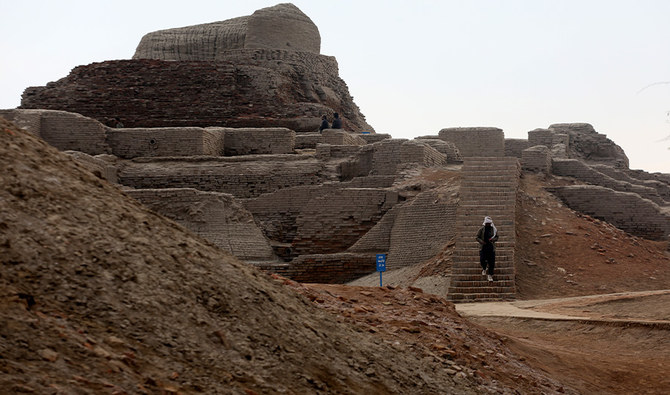

MOHENJO DARO, LARKANA: Streets running at right angles to each other, well-structured and elegant administrative, residential and industrial units, waste containers, and a covered drainage system are what modern urban planning should offer. It did, but 5,000 years ago. Welcome to Mohenjo Daro.
The ancient cosmopolitan city on the banks of the Indus River in Pakistan’s Larkana district, which spreads on over 620 acres of land, flourished between 2500 BC and 1800 BC.
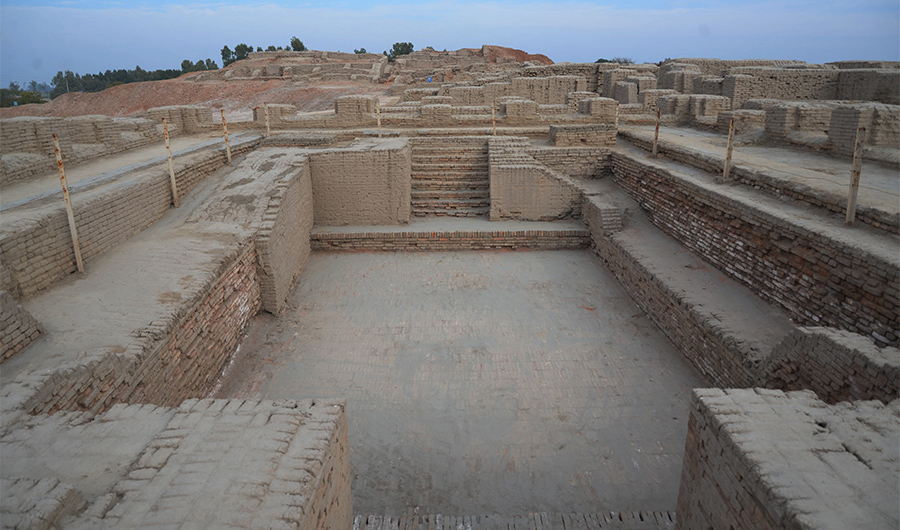
An enormous public bath was most likely used by Mohenjo Daro inhabitants also for ritual purposes. It displays fine joint masonry work. A thin layer of bitumen covered the outer face of its wall. The photo was taken at the excavation site of Mohenjo Daro in Larkana, Sindh, on Jan. 10, 2020. (AN photo by S.A. Babar)
It was lost for nearly two millennia, as its remains were discovered only in 1920. While excavation works on the site started in 1923, only 10 percent of it has so far been uncovered.
The civilization of which Mohenjo Daro is part, ancient Indus civilization, is culturally as important as those of Sumer and ancient Egypt.
“It was one of the enormous ancient civilizations. More than a thousand sites have been recorded so far, from north Afghanistan to Gujrat in India. The ancestors of Indus civilization were highly advanced and their social, cultural, economic and religious conditions are well reflected through their town planning,” Ghulam Akbar Leghari, secretary of the Sindh Culture and Tourism Department, told Arab News.
“Their architecture is plain and utilitarian, with straight streets and covered drains, showing how civilized they were,” he said.
The city has distinctive purpose-built units, including public areas and a commercial center where, for example, clothes would be dyed.
Mohenjo Daro’s upper city was both a religious and administrative center of the municipality. A Buddhist stupa and a monastery were constructed on the ruins of its citadel in the second century CE. The area has public baths, a state granary, and buildings for priests.
The the lower city, which was built in accordance with distinctive principles of urban planning, is divided into rectangular blocks made from burnt bricks, which are separated by narrow lanes that lead to the main street. Drains, stone waste container, and water channels demonstrate a high state of sanitation.
Arab News invites you on a journey through the streets of this ancient city, which cleanliness and order are unmatched by many modern urban centers.

One of the main streets of Mohenjo Daro’s lower city would serve as its commercial center. Photo taken on Jan. 10, 2020. (AN photo by S.A. Babar)

A lone lane at Mohenjo Daro’s lower city. Photo taken on Jan. 10, 2020. (AN photo by S.A. Babar)
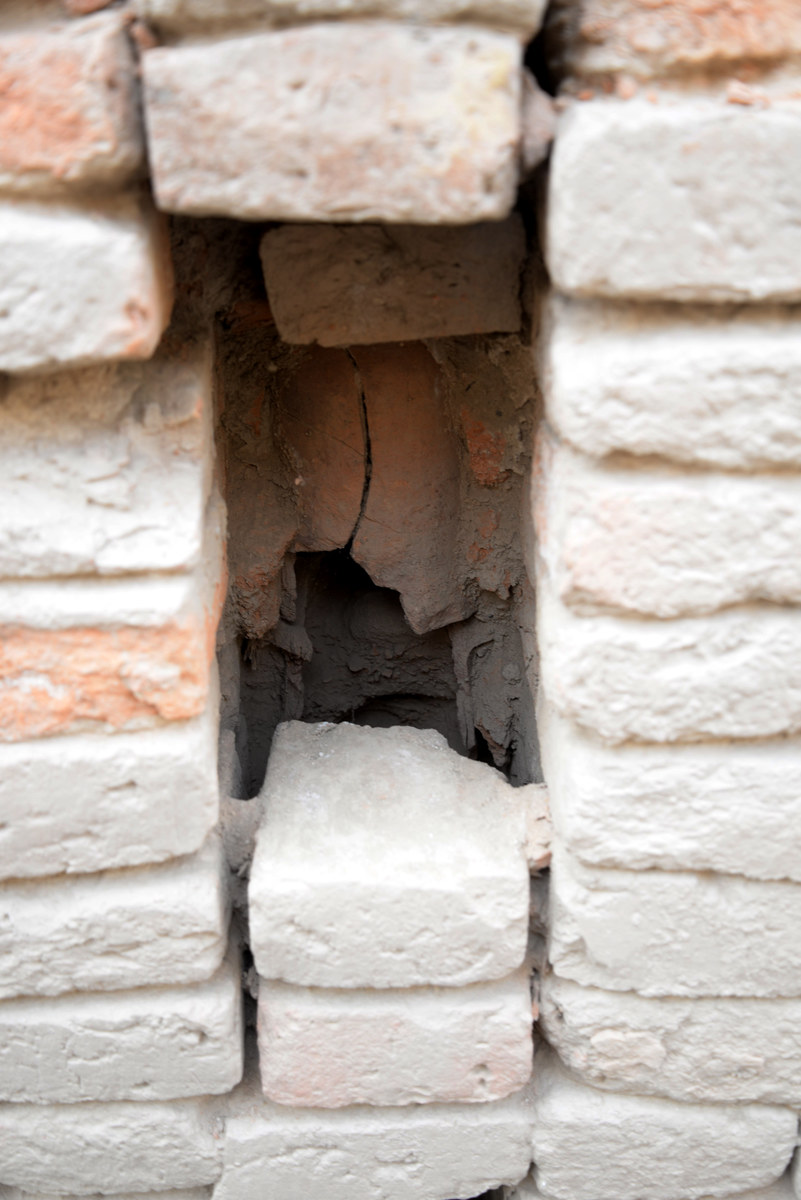
A pipe inside a wall of a Mohenjo Daro building is evidence of the ancient city's well-developed sanitation system. Photo taken on Jan. 10, 2020. (AN photo by S.A. Babar)

An ancient trash container makes proves that waste management was not an alien concept to Mohenjo Daro residents. Photo taken on Jan. 10, 2020. (AN photo by S.A. Babar)

Around 70 wells were discovered in the excavated remains of Mohenjo Daro. The height of the well seen in the center of the photo indicates that houses in this municipality were two-story buildings. Photo taken on Jan. 10, 2020. (AN photo by S.A. Babar)

A water chute is seen inside a wall of a house in Mohenjo Daro's lower city. Water bathrooms was carried through pipes or open chutes into the covered street drainage system. Photo taken on Jan. 10, 2020. (AN photo by S.A. Babar)

Jewelry recovered from Mohenjo Daro ruins is on display at the excavation site's museum. Photo taken on Jan. 10, 2020. (AN photo by S.A. Babar)

Indus Valley pottery, on display at the Mohenjo Daro Museum, shows the advancement of the ancient civilization's craftsmen. Photo taken on Jan. 10, 2020. (AN photo by S.A. Babar)


